Hemisteptia lyrata
(Bunge) Fisch. & C. A. Mey.
Early tartary potherb
iNaturalist· cc0
no rights reserved, uploaded by 葉子
iNaturalist· cc-by-nc
(c) baorong, some rights reserved (CC BY-NC)
iNaturalist· cc-by-nc
(c) Stuart Fisher, some rights reserved (CC BY-NC), uploaded by Stuart Fisher
Description
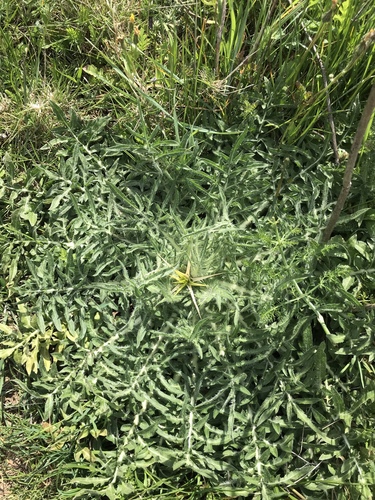
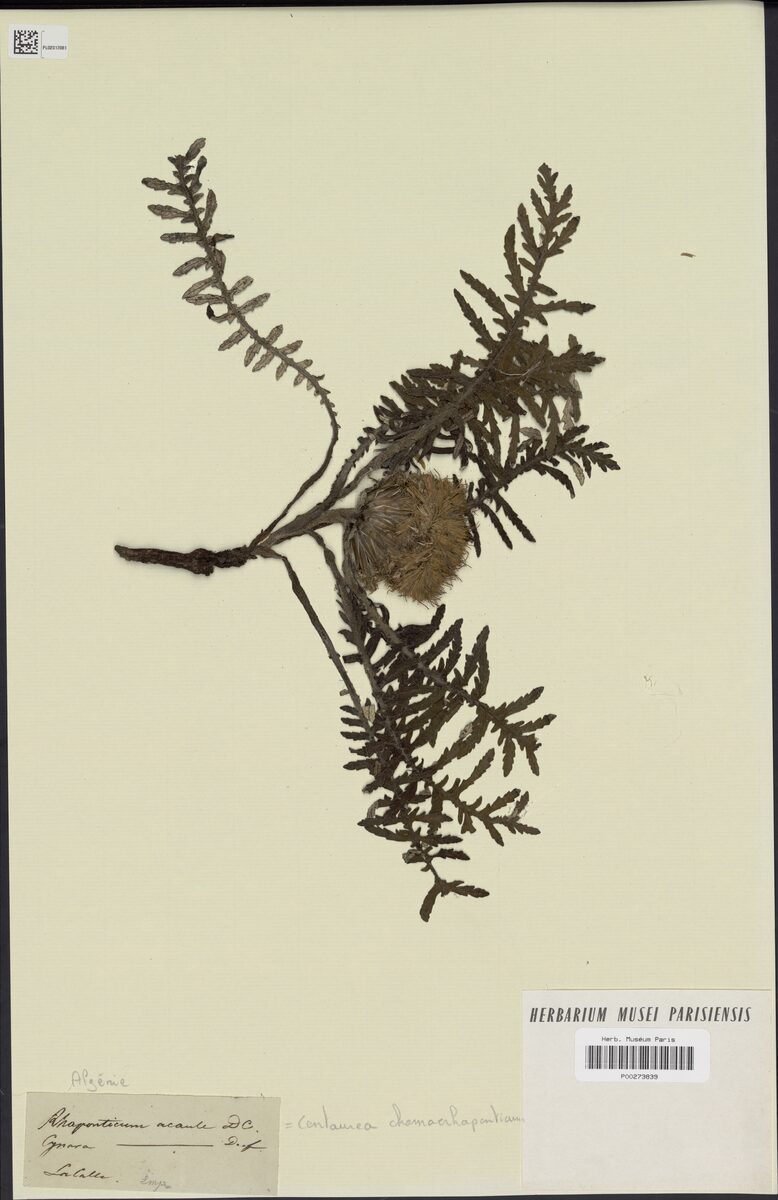
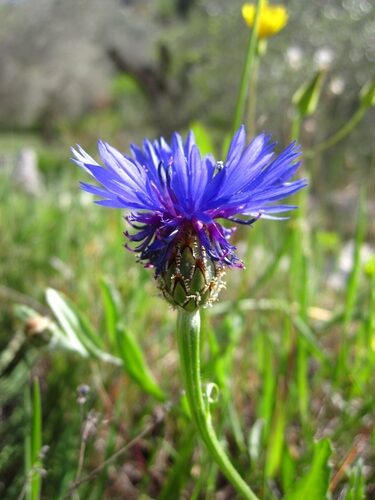
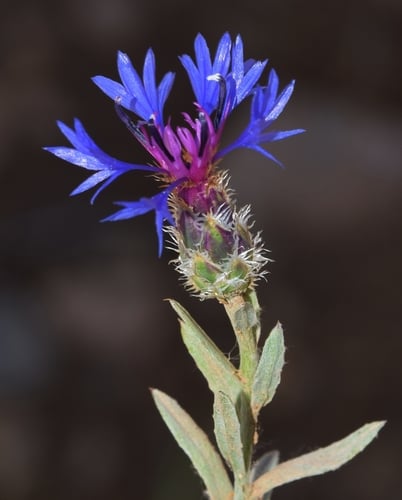
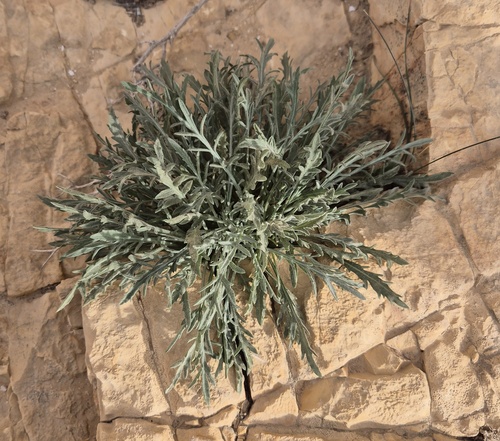
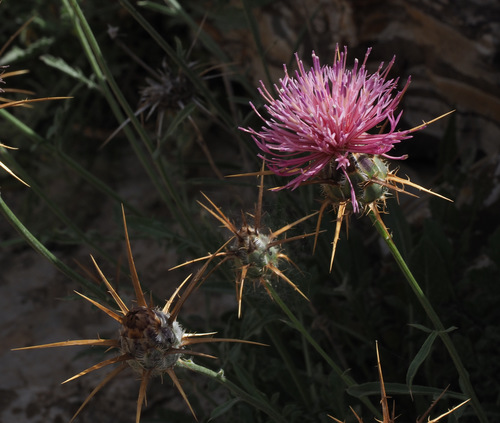
A herb. The stems are 40-100 cm tall. They have lines along them and are often covered with long hairs. The lower leaves are thin and with a white covering underneath. The leaves are broadly oval and 7-21 cm long with fan shaped leaflets. There are 7 or 8 side pairs and one at the end which is larger and triangle shaped. There can be several flower heads with a purple tinge.
Edible Uses
The young plant is prepared by rubbing and washing off the white covering, then boiled with cracked cereals. The leaves are edible.
Traditional Uses
The young plant has the white covering rubbed and washed of and then it is boiled with cracked cereals.
This uses section is brief — help expand it
Distribution
A tropical plant. It grows as an annual in spring. In Taiwan it grows from sea level to about 800 m altitude. In Sichuan and Yunnan.
Where It Grows
Asia, Australia, Bangladesh, Bhutan, China, Himalayas, India, Indochina, Japan, Korea, Laos, Myanmar, Nepal, SE Asia, Taiwan, Thailand, Vietnam,
Other Information
It is an emergency or famine food.
Notes
There is one Hemisteptia species.
Nutrition
| Part | Moisture | kJ | kcal | Protein | Vit A | Vit C | Iron | Zinc |
|---|---|---|---|---|---|---|---|---|
| Leaves | 74.8 | 88 | 21 | 2.6 | — | 85 | — | — |
Synonyms
Also Known As
Wuoguoguoha
References (7)
- Flora of Taiwan Vol. 4:989
- Hu, Shiu-ying, 2005, Food Plants of China. The Chinese University Press. p 736
- Hwang, H., et al, 2013, A Study on the Flora of 15 Islands in the Western Sea of Jeollanamdo Province, Korea. Journal of Asia-Pacific Biodiversity Vol. 6, No. 2 281-310
- Index sem. hort. petrop. 2:38. 1836
- Kuo, W. H. J., (Ed.) Taiwan's Ethnobotanical Database (1900-2000), http://tk.agron.ntu.edu.tw/ethnobot/DB1.htm
Show all 7 references Hide references
- Mot So Rau Dai an Duoc O Vietnam. Wild edible Vegetables. Ha Noi 1994, p 96
- Xu, You-Kai, et al, 2004, Wild Vegetable Resources and Market Survey in Xishuangbanna, Southwest China. Economic Botany. 58(4): 647-667.