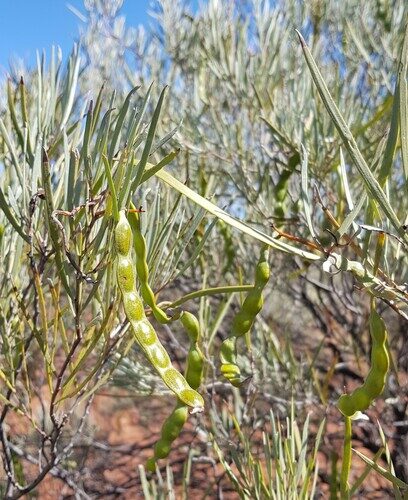
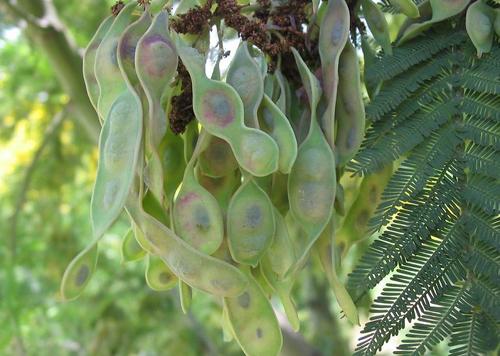
Abrus precatorius subsp. africanus
Verdc.
gbif· cc-by-nc
Troos van der Merwe
gbif· cc-by-nc
Troos van der Merwe
gbif· cc-by-nc
Troos van der Merwe
Summary
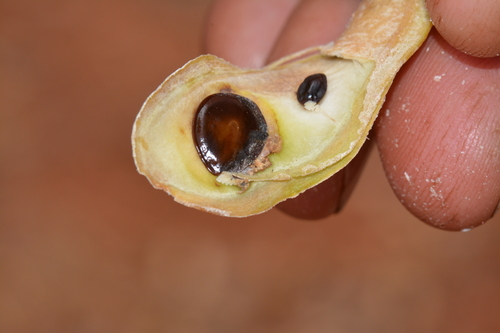
Source: WikipediaAbrus precatorius, commonly known as jequirity bean or rosary pea, is a herbaceous flowering plant in the bean family Fabaceae. It is a slender, perennial climber with long, pinnate-leafleted leaves that twines around trees, shrubs, and hedges. The plant is best known for its seeds, which are used as beads and in percussion instruments, and which are toxic because of the presence of abrin. Ingestion of a single seed, well chewed, can be fatal to both adults and children. The plant is native to Asia and Australia. It has a tendency to become weedy and invasive where it has been introduced.
Description
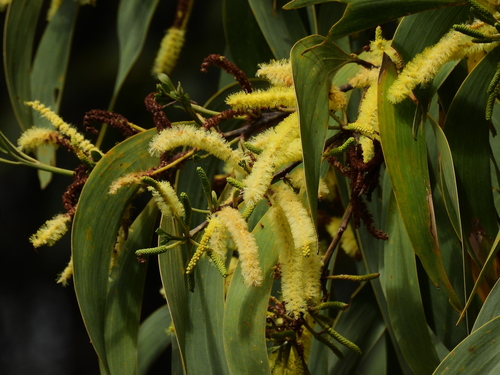
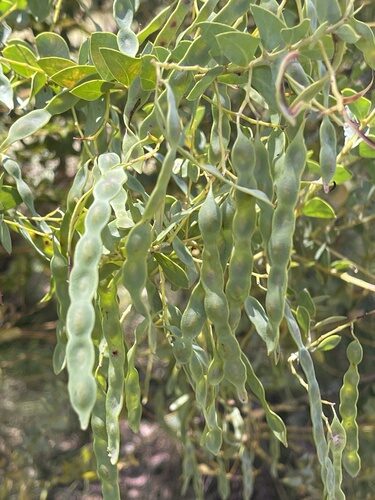
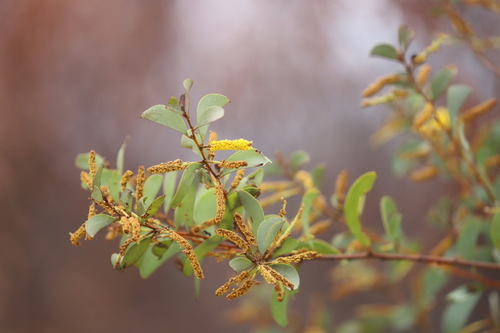
A shrub or small tree. It grows 5 m tall. There are prickles along the stem. The leaves are twice divided and there are 8-18 pairs of pinnae. There are up to 50 pairs of pinnules on each pinnae. The flowers are yellow. They are in large clusters at the ends of branches. The pods are flattened.
Edible Uses
The leaves are eaten.
Medicinal Uses
Abrus precatorius, called Gulaganji in Kannada, kundu mani in Tamil, Guruvinda ginja in Telugu and Kunni kuru in Malayalam, has been used in Siddha medicine for centuries. The white variety is used to prepare oil that is claimed to be an aphrodisiac. A tea is made from the leaves and used for fevers, coughs and colds. Seeds are poisonous and therefore are only consumed after heat treatment. The Tamil Siddhars knew about the toxic effects in plants and suggested various methods which is called "suththi seythal" or purification. This is done by boiling the seeds in milk and then drying them. Like with castor oil, the protein toxin is denatured when subjected to high temperatures rendering it innocuous. The 1889 book 'The Useful Native Plants of Australia' records that "The roots of this plant are used in India as a substitute for liquorice, though they are somewhat bitter. In Java the roots are considered demulcent. The leaves, when mixed with honey, are applied to swellings, and in Jamaica are used as a substitute for tea. Under the name of "Jequirity" the seeds have recently been employed in cases of ophthalmia, a use to which they have long been put in India and Brazil." The plant is also used in Ayurveda and is said to promote hair growth. It is sometimes used as an ingredient in Indian hair products. The leaves of Abrus precatorius are used by the indigenous communities of the Western region of Ghana as an anti-diabetic medicine.
Known Hazards
The seeds are very poisonous.
Distribution
It is a tropical plant.
Where It Grows
Africa*, Botswana, East Africa, Uganda,
Also Known As
Ewinyiwiny
References (1)
- Ojelel, S. & Kakudidi, E. K., 2015, Wild edible plant species utilized by a subsistence farming community in the Obalanga sub-county, Amuria district, Uganda. Journal of Ethnobiology and Ethnomedicine. 11:7