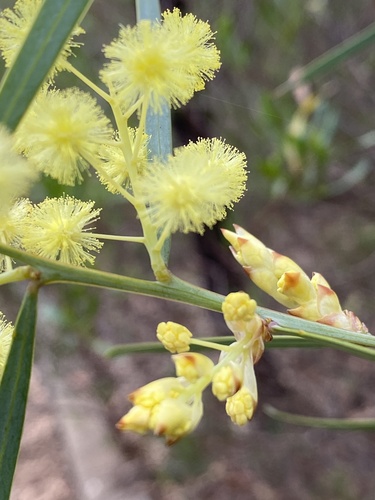
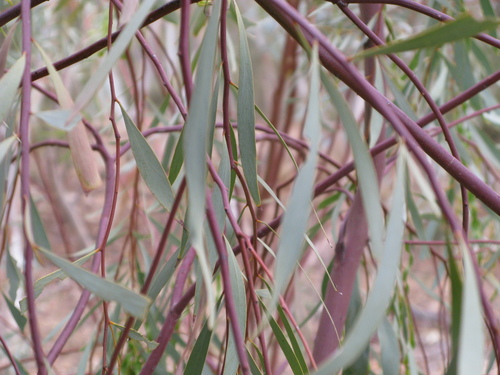
Afzelia xylocarpa
(Kurz.) Craib
Rosewood
iNaturalist· cc-by-nc
(c) Didier Levasseur, some rights reserved (CC BY-NC), uploaded by Didier Levasseur
iNaturalist· cc-by-nc
(c) Didier Levasseur, some rights reserved (CC BY-NC), uploaded by Didier Levasseur
iNaturalist· cc-by
(c) Utain Pummarin, some rights reserved (CC BY)
Summary
Source: WikipediaAfzelia xylocarpa is a species of tree in the family Fabaceae. It is from Southeast Asia and grows in Thailand, Vietnam, Cambodia, Laos and Burma in deciduous forests. It can reach 30 metres tall with a trunk up to 2 metres in diameter in a mature specimen.
Description
A tree. It grows to 30 m high. It loses its leaves during the year. The trunk is stout and up to 1 m across. The crown is rounded. The tree is usually divided near the base into large spreading branches. The bark is pale grey and slightly rough. The leaves are 18-25 cm long with 3-5 pairs of opposite leaflets. These are 5-9 cm long by 4-5 cm wide. The flowers are about 3 cm across and in branched clusters at the ends of the twigs. They have bright green sepals and one bright red petals. The fruit is a pod 12-20 cm long by 7-9 cm wide and dull brown. It split into 2 sections with 2-4 seeds. The seeds are black with a fleshy orange coat.
Edible Uses
The fatty cotyledons of young seeds are eaten. An oil is also obtained from the seeds. Young leaves are edible.
Traditional Uses
The young seeds are eaten.
This uses section is brief — help expand it
Medicinal Uses
The plant is used medicinally for relieving toothaches and eye diseases. The bark is astringent and is used in local medicine.
Distribution
It is a tropical plant. It grows between 100-650 m above sea level in areas with a uniform rainfall. In XTBG Yunnan.
Where It Grows
Asia, Cambodia, China, Indochina, Indonesia, Laos, Myanmar, SE Asia, Thailand, Vietnam,
Cultivation
Plants can be grown by seeds.
Propagation
Seed. The seedcoat is extremely hard and pre-treatment with boiling water may not be sufficient to break dormancy. The large aril surrounding the seed also delays germination and must be removed. Using a sharp knife, the aril can be cut away along with a small chip of the seedcoat, taking care not to damage the radicle. If the seedcoat is not scarified during aril removal, the seed should be nicked at the opposite end. After cutting, seeds are soaked in water for 12 hours before sowing. Germination ability generally lasts 1–2 years when seeds are stored at low temperatures.
Other Uses
The tree is grown in agroforestry systems, where it improves soil conditions through nitrogen-fixing ability and leaf fall. The seeds are used for carving, and an adhesive is made from the seed pulp. The bark contains tannins. The heartwood is reddish-yellow to red or dirty red-brown, often with streaks, clearly demarcated from the grey-white sapwood; texture is moderately fine to moderately coarse. The wood is heavy, hard, and very durable — durability tests show a service life of approximately 10 years under tropical exposure conditions. It is moderately difficult to work but easier than other high-density woods; planed surfaces are often glossy and take a high finish. The wood is highly valued, particularly in Thailand, and is sold by the kilogram. Wood burls are especially prized for the beautiful figures they produce when cut. Uses include round wood, building poles, sawn and hewn timbers, heavy and light construction, beams, flooring, wall panelling, shingles, engineering structures, bridges, railway sleepers, tool handles, musical instruments, wood carvings, furniture, veneers, boats, vehicle bodies, plywood, fuel wood, and charcoal.
Notes
There are 15 Afzelia species. They occur in the tropics. Also as Caesalpinaceae.
Synonyms
Also Known As
Beng, Go do, Go ca-te, Go to-te, Kha, Sae ki mae, Tae kha
References (10)
- Cengel, D. J. & Dany. C., (Eds), 2016, Integrating Forest Biodiversity Resource Management and Sustainable Community Livelihood Development in the Preah Vihear Protected Forest. International Tropical Timber Organization p 117
- Gardner, S., et al, 2000, A Field Guide to Forest Trees of Northern Thailand, Kobfai Publishing Project. p 166
- Kachenchart, B., et al, 2008, Phenology of Edible Plants at Sakaerat Forest. In Proceedings of the FORTROP II: Tropical Forestry Change in a Changing World. Bangkok, Thailand.
- Kaewjampa, N., et al, 2014, Investigation Species of Edible Tree and Medicinal Plants in Faculty of Agriculture, Khon Kaen University. International Journal of Environmental and Rural Development (2014) 5-1
- Martin, F.W. & Ruberte, R.M., 1979, Edible Leaves of the Tropics. Antillian College Press, Mayaguez, Puerto Rico. p 197
Show all 10 references Hide references
- Pham-Hoang Ho, 1999, An Illustrated Flora of Vietnam. Nha Xuat Ban Tre. p 866
- Sam, H. V. et al, 2004, Trees of Laos and Vietnam: A Field Guide to 100 Economically or Ecologically Important Species. BLUMEA 49: 201-349
- Sukarya, D. G., (Ed.) 2013, 3,500 Plant Species of the Botanic Gardens of Indonesia. LIPI p 108
- Sutjaritjai, N., et al, 2019, Traditional Uses of Leguminosae among the Karen in Thailand. Plants 2019, 8, 600 p 5
- Turreira Garcia, N., et al, 2017, Ethnobotanical knowledgeof the Kuy and Khmer people in Prey Lang, Cambodia. Cambodian Journal of Natural History 2017 (1): 76-101