Albizia altissima
Hook. f.
Spirit's marbles
iNaturalist· cc-by-nc
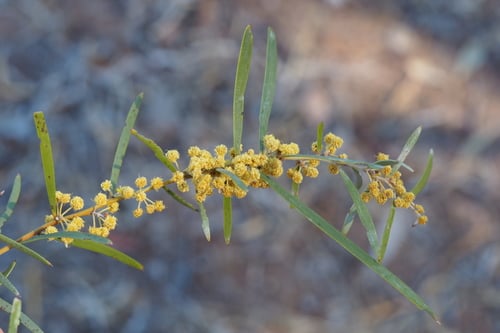
(c) Bart Wursten, some rights reserved (CC BY-NC), uploaded by Bart Wursten
iNaturalist· cc-by-nc
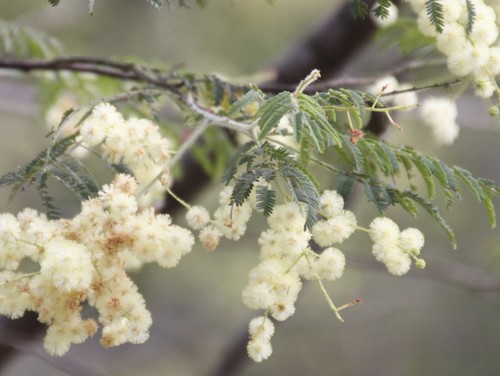
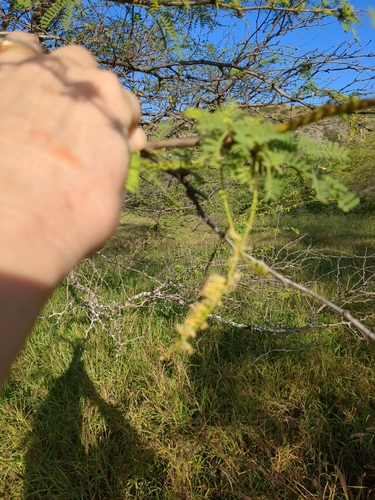
(c) Carel Jongkind, some rights reserved (CC BY-NC), uploaded by Carel Jongkind
iNaturalist· cc-by-nc
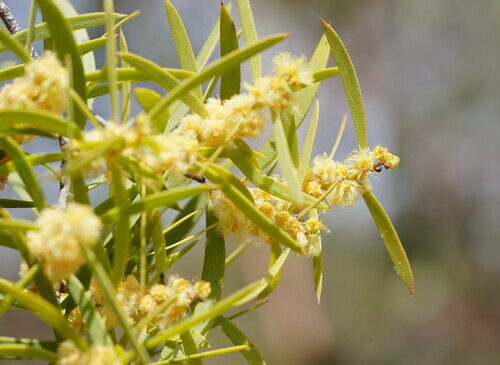
(c) Carel Jongkind, some rights reserved (CC BY-NC), uploaded by Carel Jongkind
Description
A tree. It can grow to 35 m tall. The trunk is often short and bent. It is 80 cm across. The bark is dull grey ad scaly. The crown is open. The leaves are alternate and compound. They are twice divided with 4 to 8 pairs of leaflets. The flowers are in a round head in the axils of leaves. The fruit is a long narrow pod. It is 10-28 cm long and 1.2 cm wide. It is usually curved or twisted. There can be 20 seeds. The seeds are 6-9 mm long.
Edible Uses
Fruit pulp. The pulp surrounding the seeds is eaten. Seed - cooked. The seeds are fermented to make a dish called 'oso', which is used as condiment in soups. An analysis of the fermented seeds showed 25.3% protein, 16.9% lipid and 10.0% carbohydrate. Several bacteria are responsible for the fermentation process.
Traditional Uses
Fermented seeds are used as a flavouring in soup.
This uses section is brief — help expand it
Medicinal Uses
Bark extracts used to treat tooth and stomach ache in parts of Nigeria, fermented seed used as condiment. Leave decoction used to treat cold while some other plant extracts are used as a topical treatment of sores.. Wood used for local construction work and as a material used to make tool handles.
Known Hazards
Saponins are present in different parts of the plant, especially the bark, which explains its use as a fish poison.
Distribution
It is a tropical plant. It grows in forest and along rivers.
Where It Grows
Africa, Angola, Benin, Cameroon, Central Africa, Central African Republic, CAR, Congo, Côte d'Ivoire, East Africa, Guinea, Guinée, Guinea-Bissau, Ivory Coast, Niger, Nigeria, Sahel, Sierra Leone, Sudan, Togo, Uganda, West Africa, Zambia,
Cultivation
Plants are grown from seed. Seeds germinate in about 6-30 days. Plants grow better if inoculated with the correct bacteria (Bradyrhizobium). This could usually be collected from the nodules on the roots of a plant growing well.
Propagation
Seed - when sown fresh, it usually germinates within 6 - 30 days from sowing. Stored seed develops a hard seedcoat and may benefit from scarification before sowing to speed up germination. This can usually be done by pouring a small amount of nearly boiling water on the seeds (being careful not to cook them!) and then soaking them for 12 - 24 hours in warm water. By this time they should have imbibed moisture and swollen - if they have not, then carefully make a nick in the seedcoat (being careful not to damage the embryo) and soak for a further 12 hours before sowing.
Other Uses
The fruits are a source of tannins. They can be used for tanning and dyeing, and to prepare an ink. Saponins are found in various parts of the plant, especially the bark, and can be used as a soap substitute. The scraped inner bark is beaten up in water and used as a soap to wash clothes. The heartwood is pale brown to yellowish brown, often with darker stripes; it is distinctly demarcated from the whitish sapwood. The grain is often wavy or interlocked; the texture moderately fine. The wood is moderately heavy, hard and durable. Reports on workability vary from easy to difficult; when finished it has an attractive polish. The wood is used locally for furniture and implements such as tool handles.
Notes
Also as Mimosaceae.
Synonyms
Also Known As
Abobonkakyere, Musepa, Netechango
References (10)
- Abbiw, D.K., 1990, Useful Plants of Ghana. West African uses of wild and cultivated plants. Intermediate Technology Publications and the Royal Botanic Gardens, Kew. p 46 (As Cathormion altissimum)
- Burkill, H. M., 1985, The useful plants of west tropical Africa, Vol. 3. Kew.
- Dalziel, J. M., 1937, The Useful plants of west tropical Africa. Crown Agents for the Colonies London. (As Cathormion altissimum)
- Fowler, D. G., 2007, Zambian Plants: Their Vernacular Names and Uses. Kew. p 34
- J. Hutchinson & J. M. Dalziel, Fl. W. trop. Afr. 1:364. Jul 1928 (Bull. Misc. Inform. Kew 1928:401. Dec 1928) (As Cathormion altissimum)
Show all 10 references Hide references
- Jardin, C., 1970, List of Foods Used In Africa, FAO Nutrition Information Document Series No 2.p 40, 126 (As Cathormion altissimum)
- Lemmens, R.H.M.J., 2006. Albizia altissima Hook.f. [Internet] Record from Protabase. Louppe, D., Oteng-Amoako, A.A. & Brink, M. (Editors). PROTA (Plant Resources of Tropical Africa / Ressources végétales de l’Afrique tropicale), Wageningen, Netherlands. < http://database.prota.org/search.htm>. Accessed 13 October 2009.
- Menninger, E.A., 1977, Edible Nuts of the World. Horticultural Books. Florida p 91 (As Cathormion altissimum)
- Peters, C. R., O'Brien, E. M., and Drummond, R.B., 1992, Edible Wild plants of Sub-saharan Africa. Kew. p 129 (As Cathormion altissimum)
- World Checklist of Useful Plant Species 2020. Royal Botanic Gardens, Kew