Albizia adianthifolia
(Schumach.) W. F. Wight
Flat-crown, Rough-bark flat-crown
iNaturalist· cc-by-nc
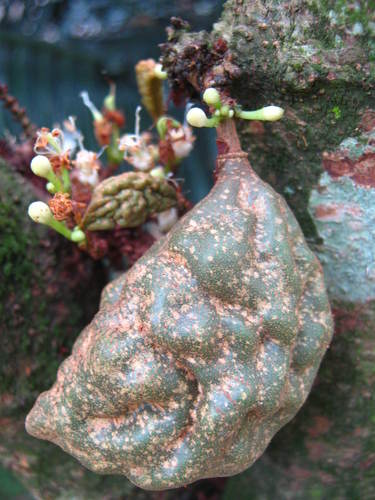
(c) Peter Vos, some rights reserved (CC BY-NC), uploaded by Peter Vos
iNaturalist· cc-by-nc
(c) Bill Crins, some rights reserved (CC BY-NC), uploaded by Bill Crins
iNaturalist· cc-by-nc
(c) Ricky Taylor, some rights reserved (CC BY-NC), uploaded by Ricky Taylor
Summary
Source: WikipediaAlbizia adianthifolia is a tree in the family Fabaceae. It is commonly known as the flat-crown. Its range extends from eastern South Africa to Tropical Africa.
Description
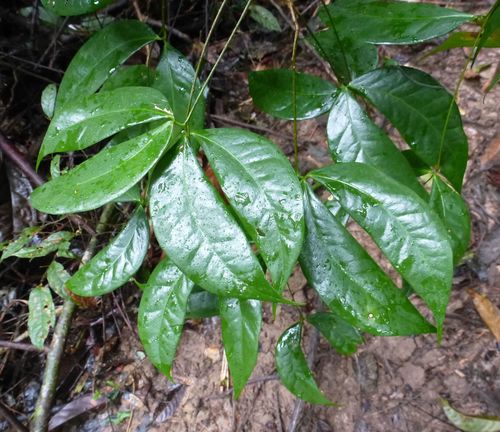
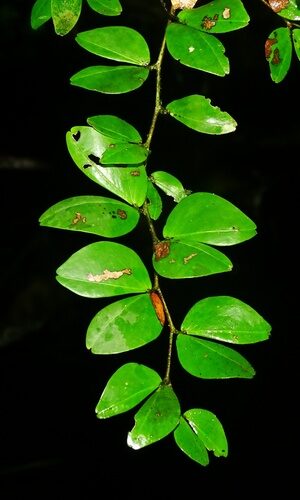
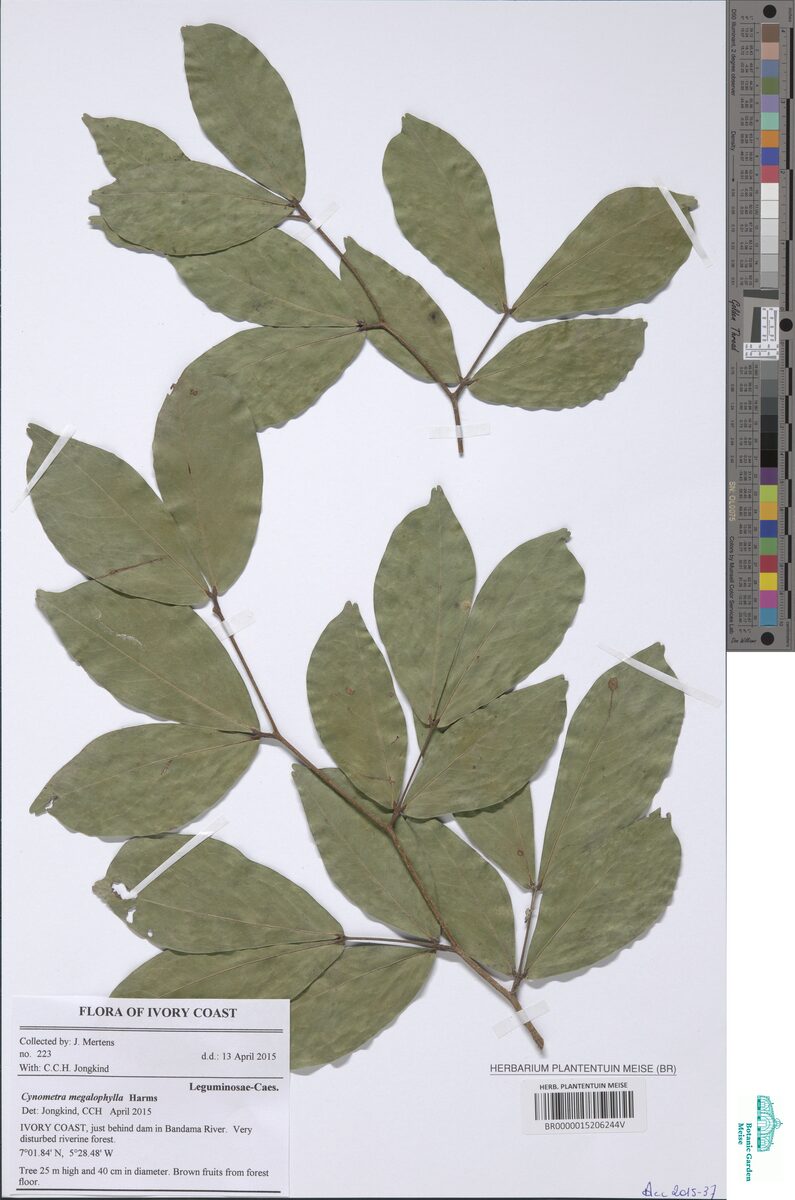
A very large tree. It grows to 40 m high. It is often smaller. It has a flat crown. The bark is grey to yellow-brown. The leaves are compound. They have 4-7 pairs of leaf stalks and each one has 6-12 pairs of leaflets. The leaflets have a rectangular shape. They are 2 cm long by 0.5-0.8 cm wide. They are dark green with yellow hairs below. The flowers are half round heads. There are few flowers in a head so it is lax. The fruit is a brown flattened pod. These are 12.5 cm long.
Edible Uses
The leaves are cooked and eaten or made into relish. The seeds are used to make a sauce.
Traditional Uses
The seeds are used for making a sauce. The leaves are cut and cooked than eaten. They are also used to make a relish.
This uses section is brief — help expand it
Medicinal Uses
Albizia adianthifolia is an important and widely used medicinal plant in African traditional medicine. More research is desirable on its active compounds, some of which have already shown interesting pharmacological activities. Various plant parts are used in traditional medicine. The sap of the bark is taken internally in the treatment of respiratory complaints, as an anodyne and to treat allergic reactions. Externally, the sap is applied to the eye to treat river blindness and conjunctivitis. The sap is also applied to sores and to allay toothache. The bark is used internally as a vermifuge. In traditional South African medicine the bark is used to improve memory and to treat Alzheimer’s disease. A twig-bark decoction is administered as a purgative and anodyne. Externally, the bark is administered to treat scabies and other skin complaints, and to treat fever. The powdered roots are administered to women in labour or with irregular menstruation. A root infusion is applied to treat eye complaints. The leaves are used internally against diarrhoea and gonorrhoea, and externally to treat wounds and sore feet. A fruit extract is drunk to relieve stomach-ache.
Distribution
It is a tropical plant. It occurs naturally in tropical Africa. It grows on the edges of forests and in ravines. It grows in woodland savannah and palm groves. It suits hardiness zones 9-12.
Where It Grows
Africa, Angola, Australia, Benin, Cameroon, Central Africa, Central African Republic, CAR, Congo DR, Congo R, Côte d'Ivoire, East Africa, Equatorial Guinea, Eswatini, Gabon, Gambia, Ghana, Guinea, Guinée, Guinea-Bissau, Ivory Coast, Kenya, Liberia, Madagascar, Malawi, Mozambique, Nigeria, Rwanda, Senegal, Sierra Leone, South Africa, Southern Africa, Sudan, Swaziland, Tanzania, Togo, Uganda, West Africa, Zambia, Zimbabwe,
Cultivation
Plants can be grown from seeds. Seeds are hard to collect as the pod splits open when ripe and scatters the seeds. Self sown seedlings can be collected and re-planted.
Propagation
Seed - it has a hard seedcoat and may benefit from scarification before sowing to speed up germination. This can usually be done by pouring a small amount of nearly boiling water on the seeds (being careful not to cook them!) and then soaking them for 12 - 24 hours in warm water. By this time they should have imbibed moisture and swollen - if they have not, then carefully make a nick in the seedcoat (being careful not to damage the embryo) and soak for a further 12 hours before sowing. Seedlings are classified as strong light demanders. The germination rate of seeds in the light and dark may be equal, but seedlings soon die in the shade. Regeneration is most abundant in forest disturbed by logging. In burnt forest, seedlings are less abundant. There are about 25,000 seeds per kg. Seeds should be collected from pods still attached to the tree to reduce damage by insects, and they should be dried immediately after collection. They can be stored for up to 3 months if ash is added to reduce insect damage. In cultivation seed may be used for propagation, but wildlings are sometimes also used for planting. Experiments in Ghana showed that Albizia adianthifolia can be successfully propagated vegetatively by root cuttings.
Other Uses
An insoluble gum is obtained from the bark. It is sometimes used in local cosmetics. The wood is straight grained or interlocked, moderately coarse, moderately light and moderately durable. The heartwood is pale brown or golden brown, sometimes with a greenish tinge, and distinctly demarcated from the around 5cm wide whitish or pale yellow sapwood. It generally saws and works easily with ordinary hand and machine tools. The use of a filler is necessary to obtain a good finish. The wood nails satisfactorily, and gluing and staining properties are good. It is used for light construction (e.g. Posts, rafters) and carving (e.g. Images, spoons, masks, clubs). It is also suitable for light flooring, joinery, interior trim, furniture, cabinet work, boat building, vehicle bodies, toys and novelties, tool handles, baseball bats, boxes, crates, hardboard and particle board. The wood is used as firewood, although it burns quickly; it is also made into charcoal. A natural pioneer species, commonly invading disused farmland. It is very fast-growing, fixes atmospheric nitrogen and has a wide range of uses, so could make an ideal species for restoring native woodland and also for establishing woodland gardens. Trees are planted, or retained when other trees are removed, for soil improvement and conservation. They are locally valued as shade trees for crops such as cocoa and coffee plantations. Albizia adianthifolia is often recommended as an auxiliary tree in agroforestry systems, improving the soil with its nitrogen-fixing root nodules, providing mulch with its leaf litter, reducing erosion with its large rooting system, and protecting crops from too much sun. However, the results of screening trials were quite variable, from disappointing due to slow initial growth in Tanzania and Zambia, to very good locally in Ghana. The existence of different ecotypes has been suggested, and this deserves more research attention because it may offer possibilities for optimizing the use of Albizia adianthifolia in agroforestry systems and reforestation programmes under different ecological conditions.
Production
The tree is long lived.
Notes
There are 145-150 Albizia species. They grow in the tropics and subtropics. Also as Mimosaceae.
Synonyms
Also Known As
Alfarroba, Bianque, Caroubier, Catchena, Cobaga-e, Conecam, Empantanca, Faroba-de-lala, Inhlangushane, Inhlangutjane, Ligowane, Marnei, Masamp-thai, Mepupe, Muanze, Mulu, Nadji, Netemhae, Neto-faro, Nipovera, Platkroon, Sambala, Uasa-fike, Umusebeya, Unchampo, Untchaintchain, Usolo
References (27)
- Burkill, H. M., 1985, The useful plants of west tropical Africa, Vol. 3. Kew.
- Chapman, J. D. & Chapman, H. M., 2001, The Forest Flora of Taraba and Andamawa States, Nigeria. WWF & University of Canterbury. p 183
- Codjia, J. T. C., et al, 2003, Diversity and local valorisation of vegetal edible products in Benin. Cahiers Agricultures 12:1-12
- Etherington, K., & Imwold, D., (Eds), 2001, Botanica's Trees & Shrubs. The illustrated A-Z of over 8500 trees and shrubs. Random House, Australia. p 84
- Fowler, D. G., 2007, Zambian Plants: Their Vernacular Names and Uses. Kew. p 33
Show all 27 references Hide references
- Hearne, D.A., & Rance, S.J., 1975, Trees for Darwin and Northern Australia. AGPS, Canberra p 16
- ILDIS Legumes of the World http:www;ildis.org/Legume/Web
- Jardin, C., 1970, List of Foods Used In Africa, FAO Nutrition Information Document Series No 2.p 52
- Katende, A.B., Birnie, A & Tengnas B., 1995, Useful Trees and Shrubs for Uganda. Identification, Propagation and Management for Agricultural and Pastoral Communities. Technical handbook No 10. Regional Soil Conservation Unit, Nairobi, Kenya. p 72
- Kew Plants of the World Online
- Latham, P., 2004, Useful Plants of Bas-Congo province. Latham & DFID p 18
- Latham, P. & Mbuta, A. K., 2014, Useful Plants of Bas-Congo Province, Democratic Republic of Congo. Volume 1. p 27
- Latham, P. & Mbuta, A. K., 2017, Plants of Kongo Central Province, Democratic Republic of Congo. Volume 1. 3rd ed p 31
- Long, C., 2005, Swaziland's Flora - siSwati names and Uses http://www.sntc.org.sz/flora/
- Martin, F.W. & Ruberte, R.M., 1979, Edible Leaves of the Tropics. Antillian College Press, Mayaguez, Puerto Rico. p 197
- Mawunu, M., et al, 2022, Ethnobotanical uses of wild edible plants of Mucuba municipality, Angola. Natural Resources for Human Health. 2022, 0:1-10
- Mutie, F. M., et al, 2023, Important Medicinal and Food Taxa (Orders and Families) in Kenya, Based on Three Quantitative Approaches. Plants 2023, 12, 1145
- Palgrave, K.C., 1996, Trees of Southern Africa. Struik Publishers. p 217
- Ruiters-Welcome, A. K., 2019, Food plants of southern Africa. Ph.D. thesis. Univ. of Johannesburg p 55
- Swaziland's Flora Database http://www.sntc.org.sz/flora
- U.S.D.A. Bur. Pl. Industr. Bull. 137:12. 1909
- van Wyk, B, van Wyk, P, and van Wyk B., 2000, Photographic guide to Trees of Southern Africa. Briza. p 48
- van Wyk, Ben-Erik, 2019, The diversity and multiple uses of southern African legumes. Australian Systematic Botany, 2019, 32, 519–546
- Welcome, A. K. & Van Wyk, B.-E., 2019, An inventory and analysis of the food plants of southern Africa. South African Journal of Botany 122 (2019) 136–179
- White, F., Dowsett-Lemaire, F. and Chapman, J. D., 2001, Evergreen Forest Flora of Malawi. Kew. p 312
- World Checklist of Useful Plant Species 2020. Royal Botanic Gardens, Kew
- www.worldagroforestrycentre.org/treedb/