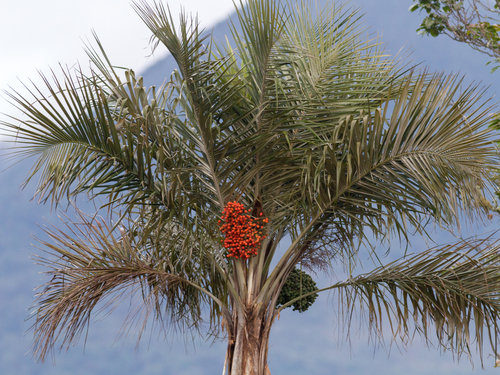
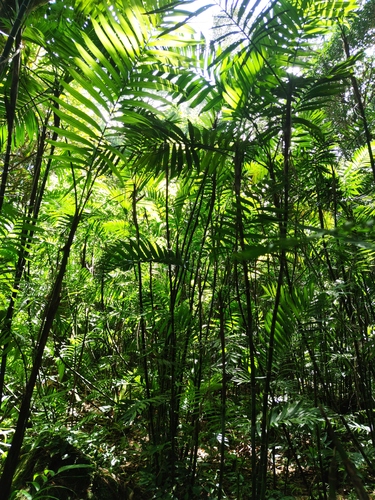
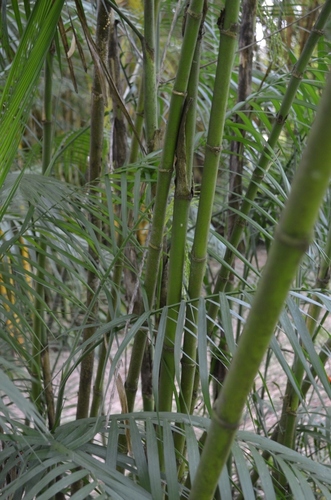
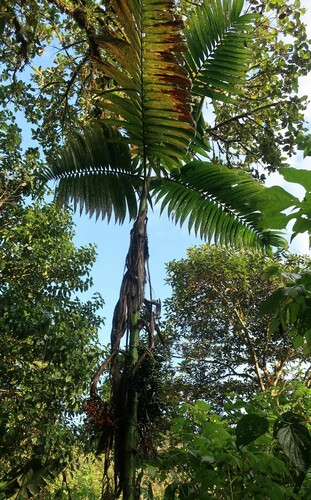
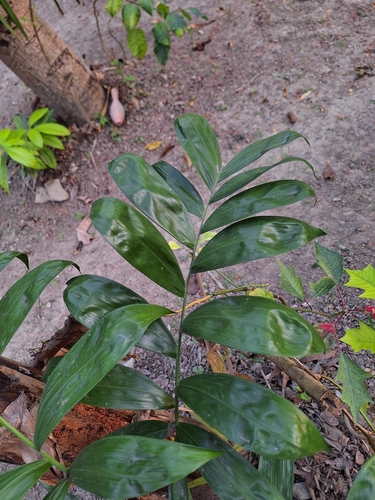
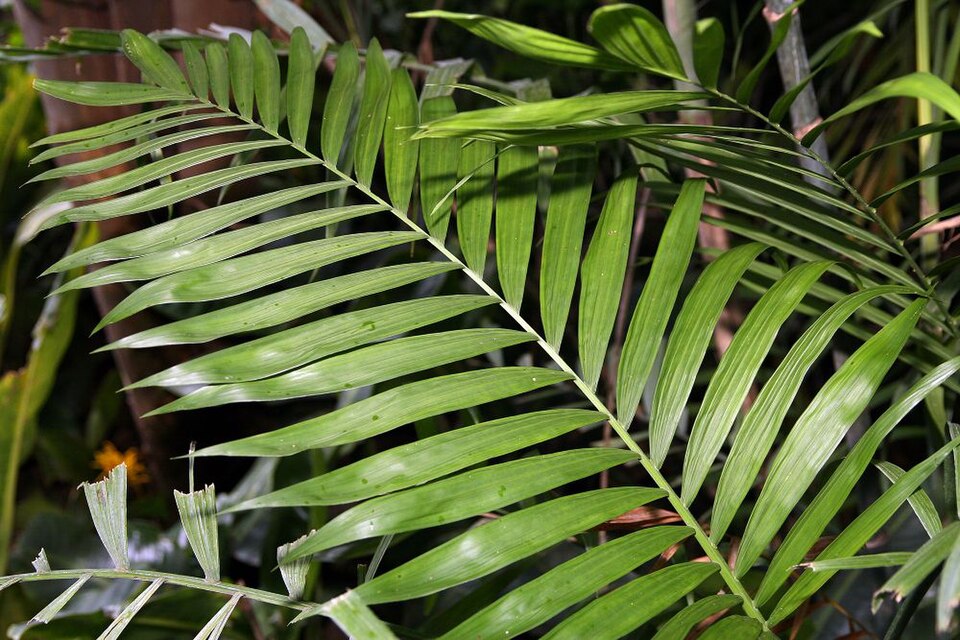
Caryota obtusa
Griffith
Thai Giant fishtail palm
iNaturalist· cc-by-nc
(c) Tobias Spanner, some rights reserved (CC BY-NC), uploaded by Tobias Spanner
iNaturalist· cc-by
(c) T R Shankar Raman, some rights reserved (CC BY)
iNaturalist· cc-by
(c) T R Shankar Raman, some rights reserved (CC BY)
Summary
Source: WikipediaCaryota obtusa is a species of flowering plant in the palm family Arecaceae. It is native to India, Laos and Thailand. The palm is commonly called giant fishtail palm or Thai giant caryota. It can reach 20 meters or more in height and is thus considered a tree. It is monocarpic meaning it flowers once, then dies. Its inflorescence can reach 6 meters or more in length.
Description
A palm. It has one stem. It grows 40 m tall and the trunk is 50-90 cm wide. It is often swollen. The leaves are in a compact crown at the top. The leaf stalks are 1-2 m long and the leafy shoots are 4-6 m long with 19-22 leaflets on each side. There are 20-27 secondary leaflets on each side of the secondary shoots. The ends are blunt and the edges jagged. The flowering shoot is 6 m long and produced amongst the leaves.
Edible Uses
The stems are processed into flour, and the stems, leaves, and palm heart are cooked in stir-fries and sold in local markets. Young shoots are also eaten.
Traditional Uses
The stems are processed to produce flour. The stems and leaves are cooked in stir-fries.
This uses section is brief — help expand it
Medicinal Uses
The plant has traditional uses relating to its edible parts.
Distribution
It is a tropical plant. It grows in mountain rain forests usually on limestone between 1,400-1,800 m above sea level. In Yunnan.
Where It Grows
Asia, China, India, Indochina, Laos, Myanmar, SE Asia, Thailand, Vietnam,
Cultivation
It flowers once then dies.
Other Information
It is sold in local markets.
Synonyms
Also Known As
A lei, Dei din, Guo bang, La wo ba ma
References (4)
- Cao, Y., et al, 2020, Ethnobotanical study on wild edible plants used by three trans-boundary ethnic groups in Jiangcheng County, Pu’er, Southwest China. Journal of Ethnobiology and Ethnomedicine (2020) 16:66
- Cheng, Z., et al, 2022, Ethnobotanical study on wild edible plants used by Dulong people in northwestern Yunnan, China. Journal of Ethnobiology and Ethnomedicine (2022) 18:3
- Flora of China Volume 23 p 151
- World Checklist of Useful Plant Species 2020. Royal Botanic Gardens, Kew