Calamus thysanolepis
Hance
iNaturalist· cc-by-nc
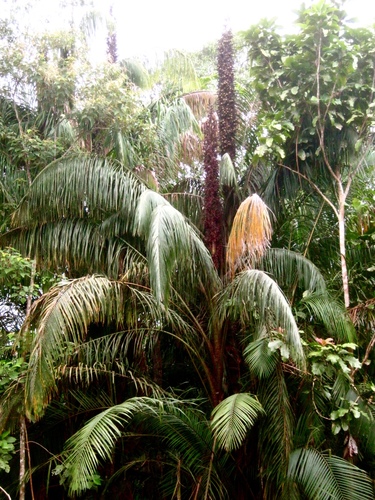
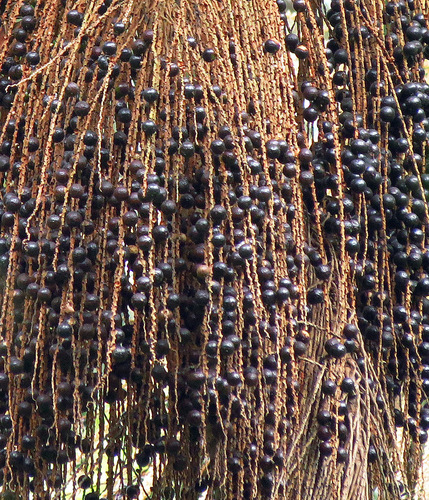
(c) Stargazer, some rights reserved (CC BY-NC), uploaded by Stargazer
iNaturalist· cc-by-nc
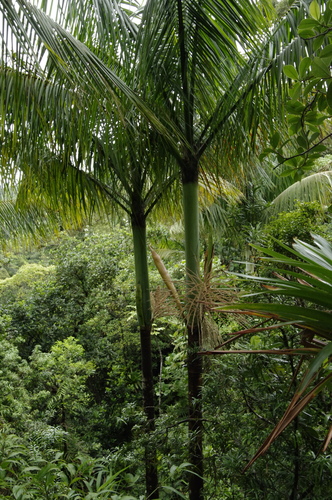
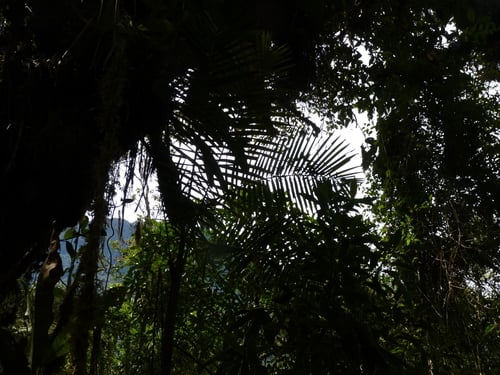
(c) Alexey P. Seregin, some rights reserved (CC BY-NC), uploaded by Alexey P. Seregin
iNaturalist· cc-by-nc
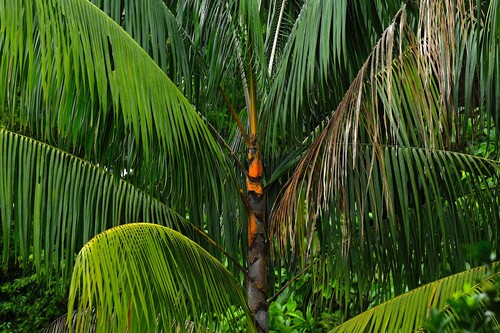
(c) Stargazer, some rights reserved (CC BY-NC), uploaded by Stargazer
Description
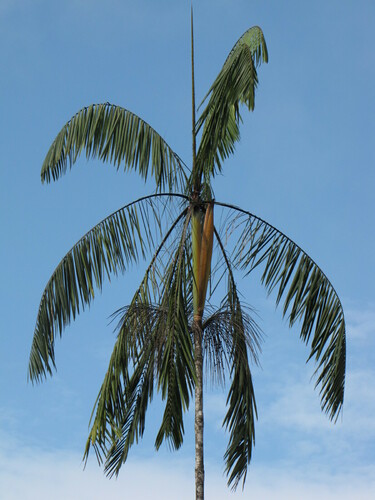
A cane or rattan. The stems are in clusters and are not climbing. They can be underground or erect and 5 m tall. They are 5 cm across. The leaf sheaths are greenish brown. There are needle like spines 2 cm long. The leafy stalk is 1.5 m long with 28-49 sword shaped leaflets on each side. These are clustered and spread in different planes. The middle ones are 30-37 cm long and 2 cm wide. The fruit are yellow and edible. They are oval and 1.5 cm long by 1 cm wide.
Edible Uses
Fruit. The reddish brown, ovoid or ellipsoid fruits are up to 15mm long and 10mm wide. Although we have no specific information for this species, many members of this genus have potentially edible young shoots. Indeed, in Laos the shoots are considered to be a delicacy and over half the species growing there are said to be cooked and eaten as a vegetable. The top 100cm of the plant is used. If the leaf sheaths are left in place until just before cooking then the shoot will remain fresh for up to one week.
Distribution
A tropical plant. It grows in lowland rain forests below 800 m above sea level.
Where It Grows
Asia, China, Indochina, SE Asia, Vietnam,
Cultivation
Most species in this genus are more or less vigorous climbing plants in rainforests. Leaves of young plants are normally damaged if exposed to too much light, though leaves of older plants will usually tolerate full sun. In general, plants are likely to grow best with their roots in the shade but with enough gap in the canopy to encourage their stems to grow up towards the light. They are also likely to grow best in a humus-rich soil. Many of the species require fairly moist conditions for good growth, in fact several of them grow in wet soils or in areas with seasonal inundation - where we have the information it will be included under the plant’s habitat. Overhead shade should be manipulated at about 6-monthly intervals for the first 2 - 3 years of a young plant’s life to ensure they receive sufficient light to grow vigorously. About 40 - 50% light penetration is generally considered to be ideal for promoting stem growth. Little care is needed once the seedlings are established. It is important, however, to weed the area surrounding the seedlings occasionally until the plants are more than 2 metres tall. A dioecious species, both male and female forms need to be grown if fruit and seed are required.
Propagation
Seed - it has a fairly short viability and is best sown as soon as it is ripe.
Notes
There are 375-400 Calamus species. There are 175 species in tropical Asia.
Synonyms
References (4)
- Altschul, S.V.R., 1973, Drugs and Foods from Little-known Plants. Notes in Harvard University Herbaria. Harvard Univ. Press. Massachusetts. no. 80
- Balick, M.J. and Beck, H.T., (Ed.), 1990, Useful palms of the World. A Synoptic Bibliography. Colombia p 266
- Evans, T. D., et al, 2002, A Synopsis of the Rattans (Arecaceae: Calamoideae) of Laos and Neighbouring Parts of Indochina. Kew Bulletin, Vol. 57, No. 1 (2002), pp. 1-84
- World Checklist of Useful Plant Species 2020. Royal Botanic Gardens, Kew