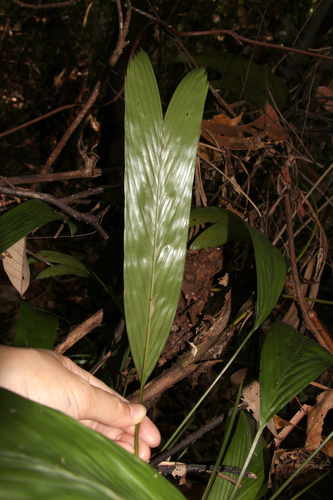
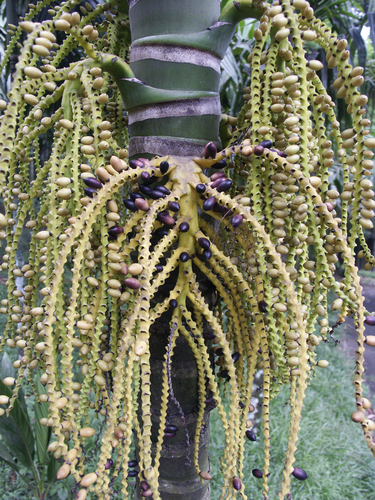
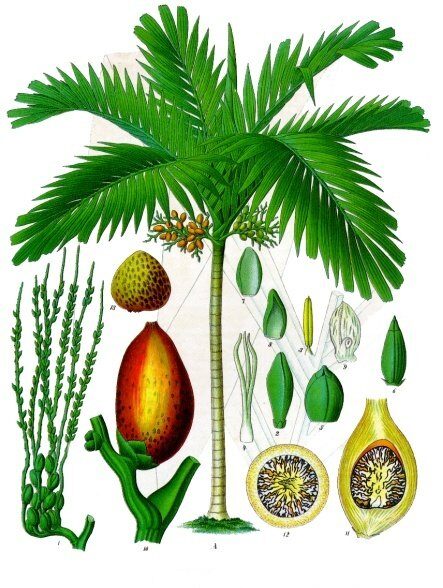
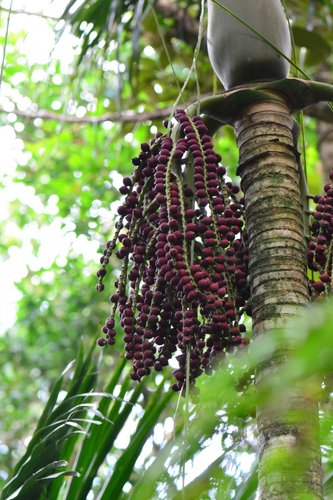
Calamus spp.
Various
Rattan Palm
No photos yet for Calamus spp.
Sign in to contribute a photoDescription
Calamus spp. is an evergreen Perennial growing to 50 m (164ft) by 4 m (13ft) at a medium rate. See above for USDA hardiness. It is hardy to UK zone 10. Suitable for: light (sandy), medium (loamy) and heavy (clay) soils and prefers well-drained soil. Suitable pH: mildly acid, neutral and basic (mildly alkaline) soils. It can grow in semi-shade (light woodland) or no shade. It prefers moist soil.
Edible Uses
Some species are edible. Check the individual plant. For example Calamus rotang has edible Shoots and Fruit. Young shoots - cooked and eaten as a vegetable. Fruit - raw. When ripe the fruit is roundish, as large as a hazelnut and is covered with small, shining scales, laid like shingles, one upon the other. The subacid pulp which surrounds the kernel is sucked out and eaten as a means of quenching the thirst. Sometimes the fruit is pickled with salt and eaten at tea-time. The globose fruits are about 13mm in diameter.
Medicinal Uses
In some species the The wood is vermifuge. The leaves are used in the treatment of biliousness and diseases of the blood. The root is used in the treatment of chronic fevers and as an antidote to snake venom. See the individual plant entries.
Distribution
Native to tropical and subtropical Asia, Africa, and Australia
Where It Grows
Coming Soon
Cultivation
Management: Coppice Other Systems: Multistrata Regional Crop. Climate: Tropical. Humidity: Humid. There are an estimated 400 species in this genus, all native to tropical and subtropical Asia, Africa, and Australia. They are mostly leaf-climbing lianas with slender, reedy stems. Carbon Farming Solutions - Cultivation: regional crop. Management: coppice (Describes the non-destructive management systems that are used in cultivation). .
Propagation
Most species in this genus are more or less vigorous climbing plants in rainforests. In general, they are likely to grow best with their roots in the shade but with their stems able to grow up to the light. They are also likely to grow best in a humus-rich soil. A dioecious species, both male and female forms need to be grown if fruit and seed are required.
Other Uses
Other uses rating: High (4/5). Other Uses: This is the species which yields the best Rattan Cane of commerce. Other species are, however, used as substitutes. It is split into strips and plaited or woven into baskets, chairs, sofas, and carriages. It is twisted into ropes, or stretched entire across rivers, as the main supports of indigenous suspension bridges. The core of the cane is made into furniture, basketry etc. The skin peel is used for weaving of chair seats and bags. Carbon Farming Solutions - Other Systems: multistrata.
Synonyms
Also Known As
Calamus species. Rattan, Rotang, Rattan Cane, Bet, Chachi bet, Heart, Pemu, Perambu, Raigong, Tingdon, Vetasa, Vetra, Rotan Rays. Radial Leaf Rotan