Calamus tenuis
Roxb.
Wai nyair
iNaturalist· cc-by-nc
(c) মহা বিদ্রোহী BUT রণ ক্লান্ত, some rights reserved (CC BY-NC), uploaded by মহা বিদ্রোহী BUT রণ ক্লান্ত
iNaturalist· cc-by-nc
(c) মহা বিদ্রোহী BUT রণ ক্লান্ত, some rights reserved (CC BY-NC), uploaded by মহা বিদ্রোহী BUT রণ ক্লান্ত
iNaturalist· cc-by-nc-nd
(c) Sabarni Sarker, some rights reserved (CC BY-NC-ND), uploaded by Sabarni Sarker
Summary
Source: WikipediaCalamus tenuis is a species of flowering plant in the family Arecaceae. It is native to Bangladesh, Bhutan, Cambodia, India, Laos, Myanmar, Thailand, Vietnam, Java and Sumatra. Its natural habitats are subtropical or tropical moist lowland forests and subtropical or tropical moist montane forests. It is threatened by habitat loss.
Description
A rattan. It is a climbing plant. It grows in clumps. The stems are very large. It has spines. The leaves are alternate. The leaves have leaflets along them. They are 45-75 cm long. There are 20-30 leaflets on each side. They are 30 cm long and 1.5 cm wide. The leaflets are pale green. The leaf stalk has curved spines underneath. The fruit is fleshy and round or oval. It is covered with scales.
Edible Uses
The soft inner section of young shoots is eaten as a cooked vegetable and can be stored for 7–8 days after harvesting; the ripe fruit and seeds are eaten raw. The plant is cultivated for its edible shoots.
Traditional Uses
The soft inner section of the young shoots is eaten as a vegetable. They are cooked. The harvested shoots can be stored for 7-8 days. The ripe fruit and seeds are eaten raw.
Distribution
It is a tropical plant. In Indochina it grows in scrub often in areas that flood regularly. It grows in swampy forest. It grows between 200-300 m altitude.
Where It Grows
Asia, Bangladesh, Himalayas, India, Indochina, Indonesia, Laos, Myanmar, Nepal, Northeastern India, Pakistan, SE Asia, Sikkim, Thailand, Vietnam,
Cultivation
Soils with a high moisture level are preferred by this species. Regular flooding of the planted area has been shown to increase shoot production. Most species in this genus are more or less vigorous climbing plants in rainforests. Leaves of young plants are normally damaged if exposed to too much light, though leaves of older plants will usually tolerate full sun. In general, plants are likely to grow best with their roots in the shade but with enough gap in the canopy to encourage their stems to grow up towards the light. They are also likely to grow best in a humus-rich soil. Seedlings are raised in nursery and planted out at the onset of the rainy season. When planted, they can be mixed with other crops like peanut. Overhead shade should be manipulated at about 6-monthly intervals for the first 2 - 3 years of a young plant’s life to ensure they receive sufficient light to grow vigorously. About 40 - 50% light penetration is generally considered to be ideal for promoting stem growth. Little care is needed once the seedlings are established. It is important, however, to weed the area surrounding the seedlings occasionally until the plants are more than 2 metres tall. In an experimental trial of this species, better survival and growth performance was attained at somewhat higher elevations under tree canopies. When fertilized with green manure or without any fertilizer, shoot length growth and production of new shoots was better than when biofertilizers were applied. A dioecious species, both male and female forms need to be grown if fruit and seed are required.
Propagation
Seed - it has a fairly short viability and is best sown as soon as it is ripe.
Other Uses
The stems are of high quality for such uses as basketry and weaving mats etc. The stems have a light-yellowish, vitreous surface. The long and slender stems of Calamus species are put to various uses according to their size, length, flexibility, elasticity and toughness. The most slender canes are employed entire for binding purposes, and in making chairs, blinds, mats, wicker or basketwork, fishing implements, etc. Twisted together, they make very strong cables. The largest and more resistent canes are used entire as cables, the framework of wicker chairs etc. Usually, however, for many purposes the stems are split throughout their length into 2 - 4 or more strips from which the inner soft brittle and spongy portion is removed by means of a knife or same other instrument, so as to leave the external portion, which is hard, tough, flexible, elastic and has its outer surface very clean and smooth as if it had been varnished. Strips vary in width according to the use to which they are to be put. Those for delicate work, such as the network of furniture, small bags, hats, etc, are from 1 - 3mm wide; those employed as lashings in native housebuilding or in fastening the removable head of the Malay axe to its handle are from 5-6 mm wide. Collecting and preparing the stems is very simple. The stem is cut near the ground and detached from the trees by taking a strong hold of its base and thus pulling down the entire plant with its leaves. The most recent growth at the top of the plant is removed and then, handling it from the upper end, the stem is forcibly drawn in the opposite direction between two pieces of wood, thus removing the spiny coverings. It is then cut into lengths of about 5 metres, each piece is bent into two equal parts and the stems are fastened into bundles ready for market. The most valued stems are not thicker than a man's little finger and have a fine polished straw-yellow glassy surface.
Production
In Nagaland fruit are available November to December.
Other Information
It is cultivated for its edible shoots.
Notes
There are 375-400 Calamus species. There are 175 species in tropical Asia.
Nutrition
| Part | Moisture | kJ | kcal | Protein | Vit A | Vit C | Iron | Zinc |
|---|---|---|---|---|---|---|---|---|
| Plant | 86 | — | — | 2.6 | — | — | — | — |
Synonyms
Also Known As
Bareilly-kyein, Bent, Bet gash, Betgaj, Garla bithra, Garlabata, Jali bet, Jatee-bhet, Jatibet, Jeing, Phal-bed, Pre tor, Raidang, Rih, Sanchi bet, Sha, Ta-ye-li-kyein, Thil te, Veijong, Vetasah, Wai chumphon
References (25)
- Barua, U., et al, 2007, Wild edible plants of Majuli island and Darrang districts of Assam. Indian Journal of Traditional Knowledge 6(1) pp 191-194
- Bohra, N., et al, 2017, Ethnobotany of wild edible plants traditionally used by the local people in the Ramnagar regions from Nainital District, Uttarakhand, India. Biolife 5(1): 12-19
- Deka, N. & Devi, N., 2015, Wild edible aquatic and marshland angiosperms of Baka district, BTC area, Assam, India. Asian J. Plant Sci. Res. 5(1):32-48
- Dransfield, J., et al, 2004, A preliminary checklist to Thai Palms. Thai For. Bull. (Bot.) 32:32-72
- Dutta, U., 2012, Wild Vegetables collected by the local communities from the Churang reserve of BTD, Assam. International Journal of Science and Advanced Technology. Vol. 2(4) p 119
Show all 25 references Hide references
- Evans, T. D., et al, 2002, A Synopsis of the Rattans (Arecaceae: Calamoideae) of Laos and Neighbouring Parts of Indochina. Kew Bulletin, Vol. 57, No. 1 (2002), pp. 1-84
- Johnson, N., 2002, Environmental Change in northern Thailand: Impact on Wild Edible Plant Availability. Ecology of Food and Nutrition, 41: 5, 373-399
- Kar, A., 2004, Common wild vegetables of Aka tribe of Arunachal Pradesh. Indian Journal of Traditional Knowledge 3(3) pp 305-313
- Kar, A., et al, 2013, Wild Edible Plant Resources used by the Mizos of Mizoram, India. Kathmandu University Journal of Science, Engineering and Technology. Vol. 9, No. 1, July, 2013, 106-126
- Lungphi, P., Wangpan, T. & Tangjang, S., 2018, Wild edible plants and their additional uses by the Tangsa community living in the Changlang district of Arunachal Pradesh, India. Pleione 12(2): 151 - 164. 2018.
- Manju, S., and Sundriyal, R. C., 2001, Wild Edible Plants of the Sikkim Himalaya: Nutritive Values of Selected Species. Economic Botany 55(3): 377-390
- Murtem, G. & Chaudhrey, P., 2016, An ethnobotanical note on wild edible plants of Upper Eastern Himalaya, India. Brazilian Journal of Biological Sciences, 2016, v. 3, no. 5, p. 63-81
- Narzary, H., et al, 2013, Wild Edible Vegetables Consumed by Bodo tribe of Kokrajhar District (Assam), North-East India. Archives of Applied Science Research, 5(5): 182-190
- Ochse, J. J. et al, 1931, Vegetables of the Dutch East Indies. Asher reprint. p 559
- Pasha, M. K. & Uddin, S. B., 2019, Minor Edible Fruits of Bangladesh. Bangladesh J. Plant Taxon. 26(2): 299–313
- Patiri, B. & Borah, A., 2007, Wild Edible Plants of Assam. Geethaki Publishers. p 150
- Pradheep, K., et al, 2016, Wild edible plants used by Konyak tribe in Mon district of Nagaland: Survey and inventorisation. Indian Journal of Natural Products and Resources. Vol 7(1) pp 74-81
- Saikia, M., 2015, Wild edible vegetables consumed by Assamese people of Dhemaji District of Assam, NE India and their medicinal values. Archives of Applied Science Research, 2015, 7 (5):102-109
- Salvi, J. et al, 2016, A review: Underutilized wild edible plants as a potential source of alternative nutrition. International Journal of Botany Studies. Volume 1; Issue 4; May 2016; Page No. 32-36
- Teron, R. & Borthakur, S. K., 2016, Edible Medicines: An Exploration of Medicinal Plants in Dietary Practices of Karbi Tribal Population of Assam, Northeast India. In Mondal, N. & Sen, J.(Ed.) Nutrition and Health among tribal populations of India. p 149
- Tsering, J., et al, 2017, Ethnobotanical appraisal on wild edible plants used by the Monpa community of Arunchal Pradesh. Indian Journal of Traditional Knowledge. Vol 16(4), October 2017, pp 626-637
- Upreti, K., et al, 2010, Diversity and Distribution of Wild Edible Fruit Plants of Uttarakhand. Bioversity Potentials of the Himalaya. p 162
- Uprety, Y., et al, 2016, Traditional use and management of NTFPs in Kangchenjunga Landscape: implications for conservation and livelihoods. Journal of Ethnobiology and Ethnomedicine (2016) 12:19
- Wild edible plants of Himachal Pradesh
- World Checklist of Useful Plant Species 2020. Royal Botanic Gardens, Kew
More from Arecaceae
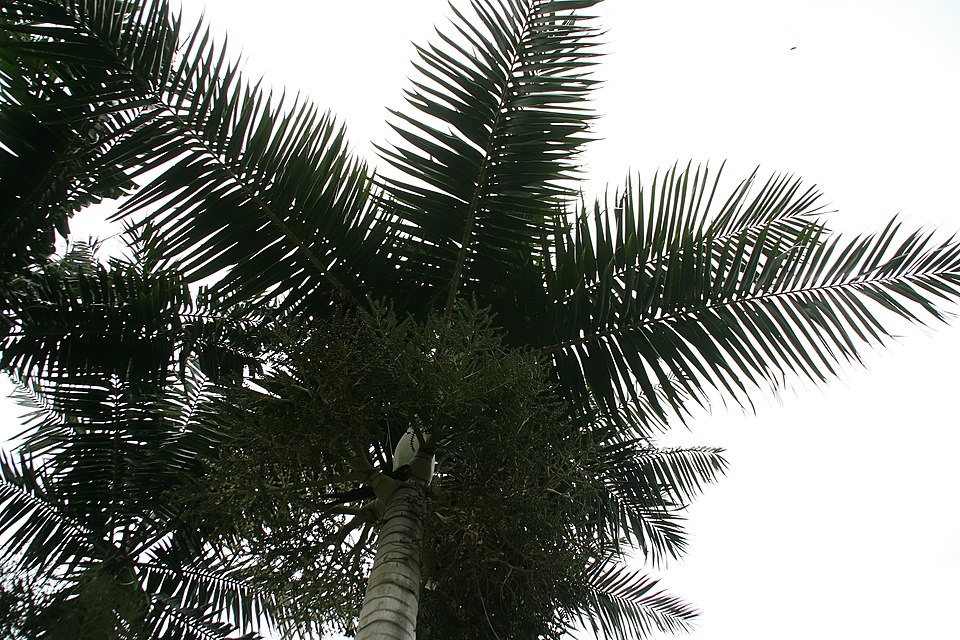
Veitchia winin
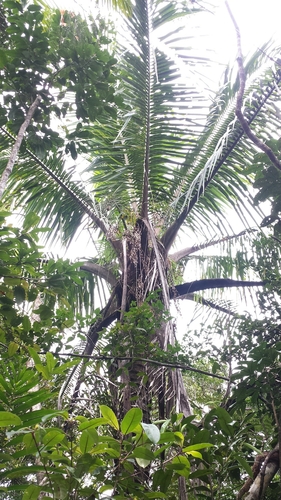
Voanioala gerardii
Voa-nio-ala
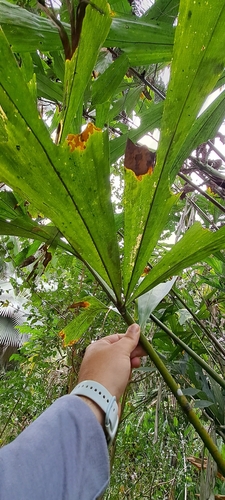
Wallichia caryotoides
Himalayan dwarf fishtail palm
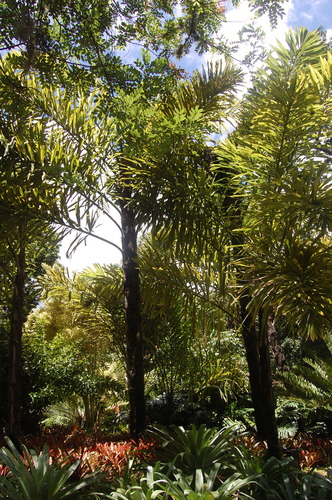
Wallichia disticha
Wallich's disticha palm, Fan-shaped feathery palm
Wallichia oblongifolia
Himalayan dwarf fishtail palm, Wallich's dwarf fishtail palm
Washingtonia filifera
Desert Fan Palm, Washington Fan palm