Magnolia virginiana
L.
Sweet bay, Laurel magnolia
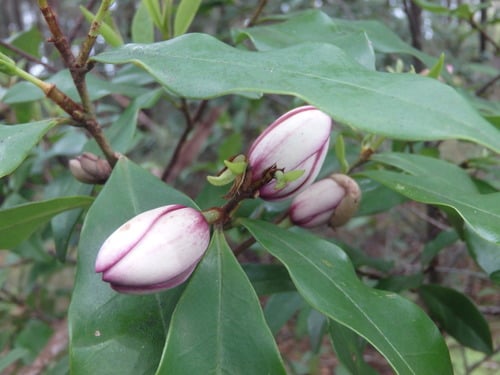
iNaturalist· cc-by
(c) Patty Mitchum, some rights reserved (CC BY), uploaded by Patty Mitchum
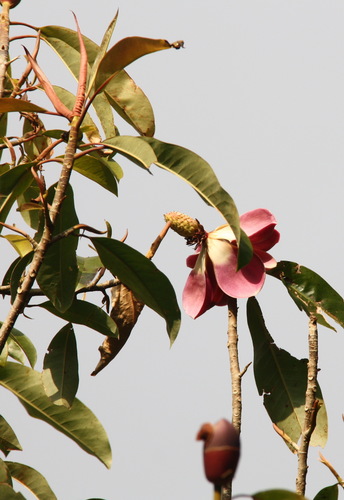
iNaturalist· cc-by-nc
(c) Misha Zitser, some rights reserved (CC BY-NC)
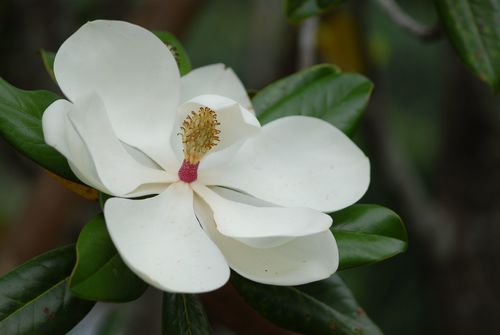
iNaturalist· cc-by-nc
(c) Misha Zitser, some rights reserved (CC BY-NC)
Summary
Source: WikipediaMagnolia virginiana, most commonly known as sweetbay magnolia, or merely sweetbay (also laurel magnolia, swampbay, swamp magnolia, white bay, or beaver tree), is a member of the magnolia family, Magnoliaceae. It was the first magnolia to be scientifically described under modern rules of botanical nomenclature, and is the type species of the genus Magnolia; as Magnolia is also the type genus of all flowering plants (magnoliophytes), this species in a sense typifies all flowering plants.
Description
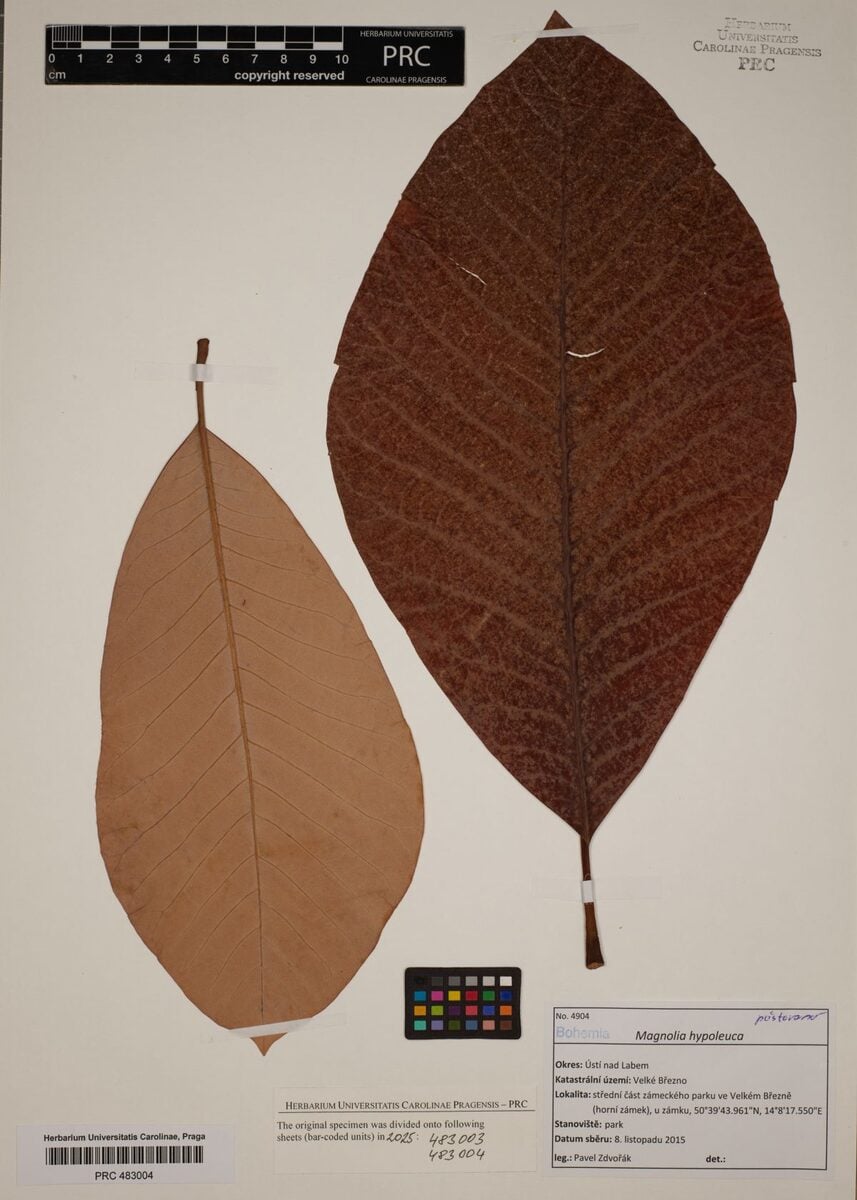
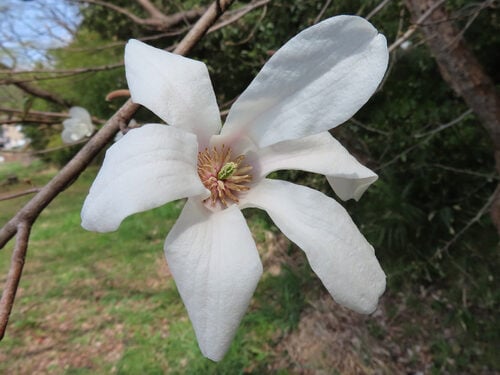
A deciduous tree. It grows 20 m high and spreads 4 m wide. The stem is erect and branching. The leaves are long and oval. They are shiny green but bluish underneath. The flowers are white. They have a scent. They are open and 7.5 cm across.
Edible Uses
The leaves can be used as a condiment in gravies and similar dishes, and a tea is also made from them.
Traditional Uses
The leaves are used to give flavour to roasts and gravies. The leaves are also used to brew a herbal tea.
This uses section is brief — help expand it
Medicinal Uses
A tea made from the bark is antiperiodic, aromatic, diaphoretic, laxative, stimulant, and tonic. It has historically been used as a substitute for quinine in treating malaria and is also taken internally for colds, bronchial diseases, upper respiratory tract infections, rheumatism, and gout. The bark has been chewed by people trying to break the tobacco habit. It is harvested in autumn and dried for later use, though it does not store well and stocks should be renewed annually. A tea made from the fruit is a tonic used for general debility and was formerly esteemed for treating stomach ailments. The leaves or bark have been placed in cupped hands over the nose and inhaled as a mild hallucinogen.
Distribution
It is a temperate plant. It needs well drained, moist soil. The soil should be well composted. It needs a protected and partly shady position. It is resistant to frost but sensitive to drought. It suits hardiness zones 6-9. Arboretum Tasmania.
Where It Grows
Australia, North America*, Tasmania, USA,
Cultivation
Requires a sunny sheltered position in a deep soil that does not dry out in the summer. Plants are also tolerant of wet soils. Succeeds in acid or neutral soils in sun or part shade. Dislikes limey soils. Tolerates some alkalinity so long as there is at least 50cm of good soil above the alkaline layer. The branches are brittle so a sheltered position is required. Plants are very tolerant of atmospheric pollution. Mature dormant plants are hardy to about -20°c but the flowers are easily damaged by frost or wind.. A warmth-loving species, it is best grown in the south and east of Britain. The fleshy roots are easily damaged and any transplanting is best done during a spell of mild moist weather in late spring. A slow growing tree but it flowers whilst young. The flowers have a delicious scent of lemons. A number of cultivars have been developed for their ornamental value. An evergreen.
Propagation
Sow seed as soon as it is ripe in a cold frame. Stored seed must be kept cold over winter and sown in late winter in a cold frame. Germination usually occurs in spring but can take 18 months. Prick seedlings into individual pots when large enough to handle and grow on in light shade in a cold frame or greenhouse for at least the first winter. They can be planted into permanent positions once they exceed 15cm in height, but should be well mulched and given some protection from winter cold for their first one or two winters outdoors. Layering can be done in early spring.
Other Uses
An essential oil from the flowers has been used in the manufacture of perfumes. The wood is straight-grained, light, soft, easily worked, finishes well, aromatic, and yellow in colour, weighing 31lb per cubic foot. It is used for furniture, broom handles, bowls, and light woodenware articles.
Notes
It has anticancer properties.
Synonyms
References (5)
- Facciola, S., 1998, Cornucopia 2: a Source Book of Edible Plants. Kampong Publications, p 146
- Jackes, D. A., Edible Forest Gardens
- Kermath, B. M., et al, 2014, Food Plants in the Americas: A survey of the domesticated, cultivated and wild plants used for Human food in North, Central and South America and the Caribbean. On line draft. p 508
- Kintzios, S. E., 2006, Terrestrial Plant-Derived Anticancer Agents and Plant Species Used in Anticancer research. Critical Reviews in Plant Sciences. 25: pp 79-113
- Sp. pl. 1:535. 1753