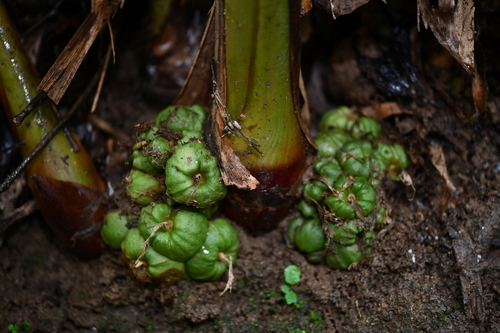
Meistera ochrea
(Ridley) Skornick. & Newman
Tepus batu
iNaturalist· cc-by-nc
(c) Gim Siew Tan, some rights reserved (CC BY-NC), uploaded by Gim Siew Tan
iNaturalist· cc-by-nc
(c) Gim Siew Tan, some rights reserved (CC BY-NC)
Description
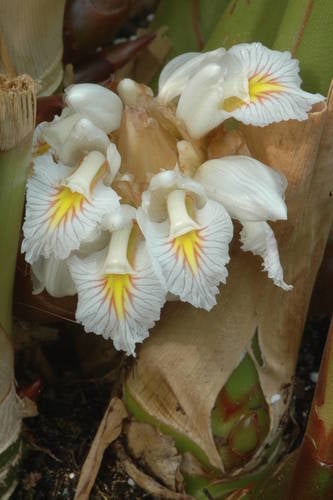
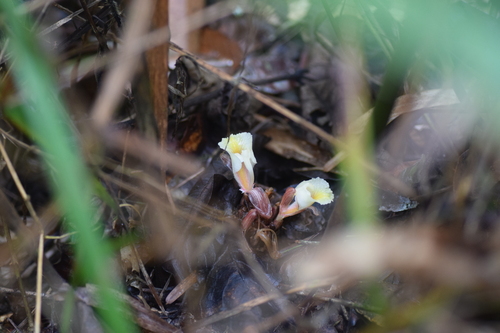
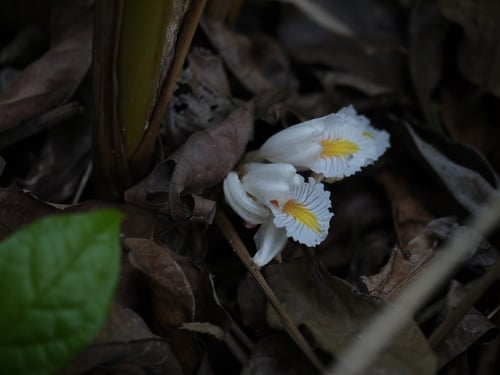
A ginger family herb. It has underground stems or rhizomes which produce leafy shoots. These occur 5-12 cm apart. They can have separate flower stalks. The leafy shoots are 1-5 m tall. The lower section only has leaf sheaths. The leaf stalk is 1-3 cm long. The blade is oblong and 40-52 cm long by 8-10 cm wide. The base is rounded. The tip has a point 5 cm long. The flowering spike is 5 cm long. It becomes 10 cm long when fruiting. The flowers are 3 cm by 3 cm and orange-yellow. They have red veins and spots. The fruit is round and 4.5 cm across. It has a few blunt, fleshy spines. The seeds are irregular and about 1 cm long.
Edible Uses
The seeds are used as a cardamom substitute.
Traditional Uses
The seed are used as a cardamom substitute.
This uses section is brief — help expand it
Distribution
A tropical plant. It occurs in the hills of Peninsula Malaysia at moderate altitudes.
Where It Grows
Asia, Indonesia, Malaysia, SE Asia,
Notes
There are about 150 Amomum species. They are mostly tropical.
Synonyms
References (6)
- Bircher, A. G. & Bircher, W. H., 2000, Encyclopedia of Fruit Trees and Edible Flowering Plants in Egypt and the Subtropics. AUC Press. p 24 (As Amomum ochreum)
- Burkill, I.H., 1966, A Dictionary of the Economic Products of the Malay Peninsula. Ministry of Agriculture and Cooperatives, Kuala Lumpur, Malaysia. Vol 1 (A-H) p 136 (As Amomum ochreum)
- PROSEA handbook Volume 13 Spices. p 245, (As Amomum ochreum)
- Ridley, 1924, Flora Mal. Penins. 4. p 264 (As Amomum ochreum)
- Seidemann J., 2005, World Spice Plants. Economic Usage, Botany, Taxonomy. Springer. p 37 (As Amomum ochreum)
Show all 6 references Hide references
- World Checklist of Useful Plant Species 2020. Royal Botanic Gardens, Kew