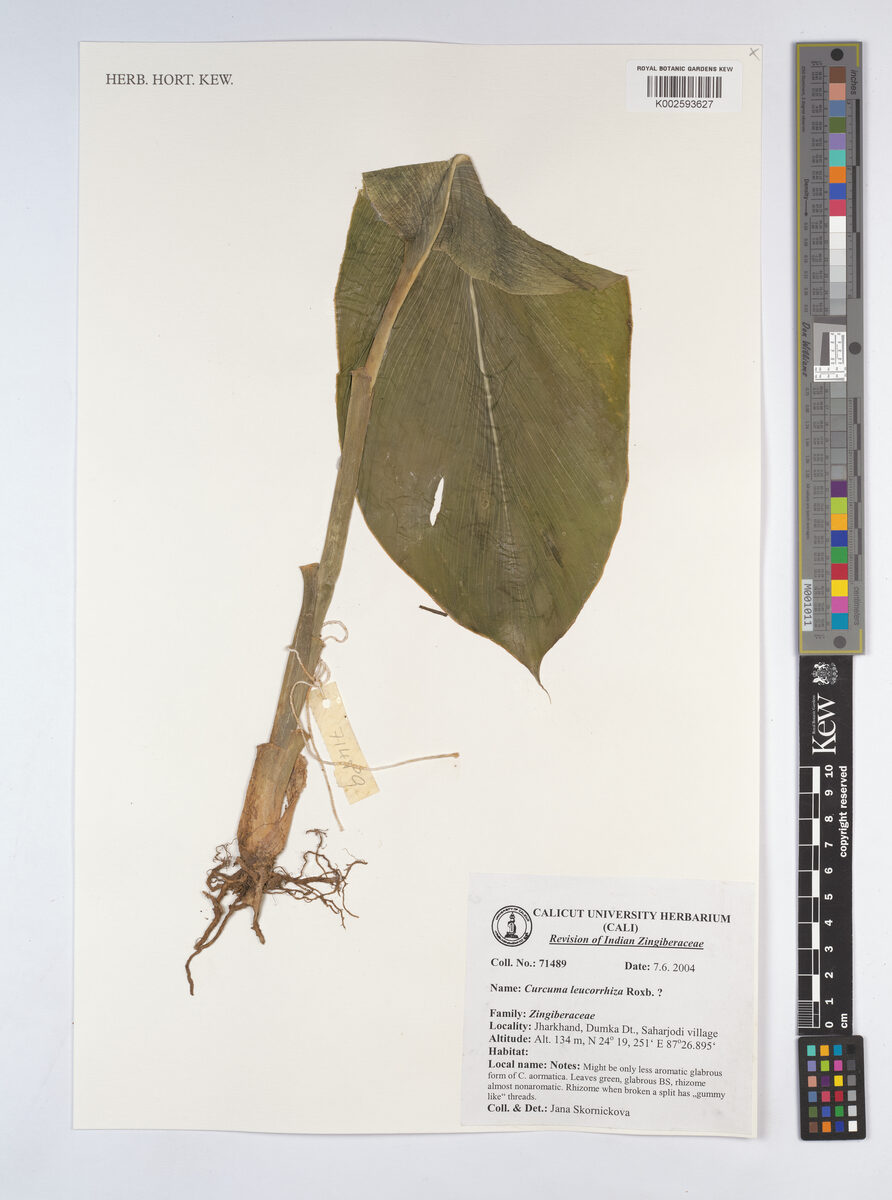
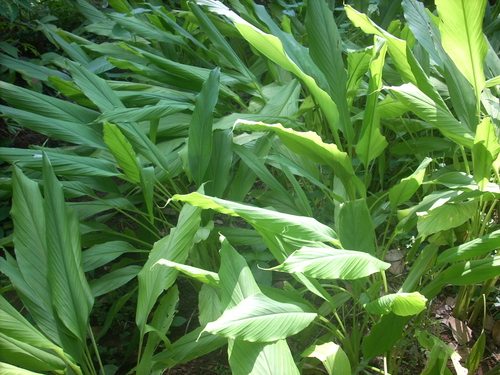
Plagiostachys crocydocalyx
(K. Schum.) Burtt & R. M. Smith
Silongon
iNaturalist· cc-by-nc
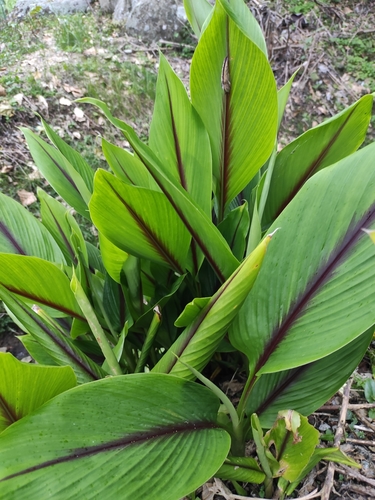
(c) SOW Rainforest Nature Education, some rights reserved (CC BY-NC), uploaded by SOW Rainforest Nature Education
iNaturalist· cc-by-nc
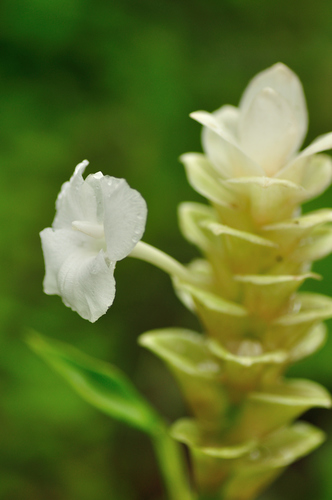
(c) nolliecilliers, some rights reserved (CC BY-NC)
Summary
Source: WikipediaPlagiostachys crocydocalyx is a monocotyledonous plant species first described by Karl Moritz Schumann, and given its current name by Brian Laurence Burtt and Rosemary Margaret Smith. Plagiostachys crocydocalyx is part of the genus Plagiostachys and the family Zingiberaceae. No subspecies are listed in the Catalog of Life.
Description
A large ginger family herb. The stems are yellow and 2 meters high and 2 cm across. The leaves are light green. There is a bunch of hard green brown fruit at the bottom. The fruit and young stems are eaten.
Edible Uses
The white shoots are cooked as flavouring and the pith of the stem is cooked and eaten. The fruit are eaten raw.
Traditional Uses
The white shoots are cooked as flavouring. The pith of the stem is cooked and eaten. The fruit are eaten raw.
This uses section is brief — help expand it
Distribution
A tropical plant. It grows in Sarawak.
Where It Grows
Asia, Brunei, Indonesia, Malaysia, SE Asia,
Notes
There are about 18 Plagiostachys species.
Nutrition
| Part | Moisture | kJ | kcal | Protein | Vit A | Vit C | Iron | Zinc |
|---|---|---|---|---|---|---|---|---|
| Shoots | 74.4 | 393 | 94 | 2.6 | — | 10.2 | 7.8 | 1.5 |
Synonyms
Also Known As
Banjang, Tubu becit
References (6)
- Burkill, I.H., 1966, A Dictionary of the Economic Products of the Malay Peninsula. Ministry of Agriculture and Cooperatives, Kuala Lumpur, Malaysia. Vol 2 (I-Z) p 1325 (As Alpinia crocydocalyx)
- Hoare, A., 2003, Food use of the Lundayeh SW Sabah. Borneo Research Council.
- Hoe, V. B. & Siong, K. H., 1999, The nutritional value of indigenous fruit and vegetables in Sarawak. Asia Pacific J. Clin. Nutr. 8(1):24-31
- Poulsen, A. D., 2006, Gingers of Sarawak. Natural History Publications, Borneo. p 75
- Siong, K. H., 2003, Indigenous Fruits of Sarawak. Forest Department Sarawak. p 165
Show all 6 references Hide references
- World Checklist of Useful Plant Species 2020. Royal Botanic Gardens, Kew