Cinnamomum oliveri
Bailey
Oliver's bark, Oliver’s Sassafras, Iron Range Cinnamonwood
iNaturalist· cc-by-nc
(c) Pete The Poet, some rights reserved (CC BY-NC)
iNaturalist· cc-by-nc
(c) Tanya Zubakin, some rights reserved (CC BY-NC)
Summary
Source: WikipediaCinnamomum oliveri is a rainforest tree growing in the eastern coastal region of Australia. It occurs from the Illawarra district (34° S) in New South Wales to Cape York Peninsula at the northern tip of Queensland. The southernmost limit of its natural distribution is on the volcanic cliffs above the town of Gerroa and nearby on sand in rainforest behind Seven Mile Beach, New South Wales. It is a medium to large tree reaching around 30 metres tall and 75 cm in diameter. Cinnamomum oliveri has several common names, such as camphorwood, Oliver's sassafras, black sassafras and cinnamonwood. The specific epithet honours Daniel Oliver of Kew Gardens.
Description
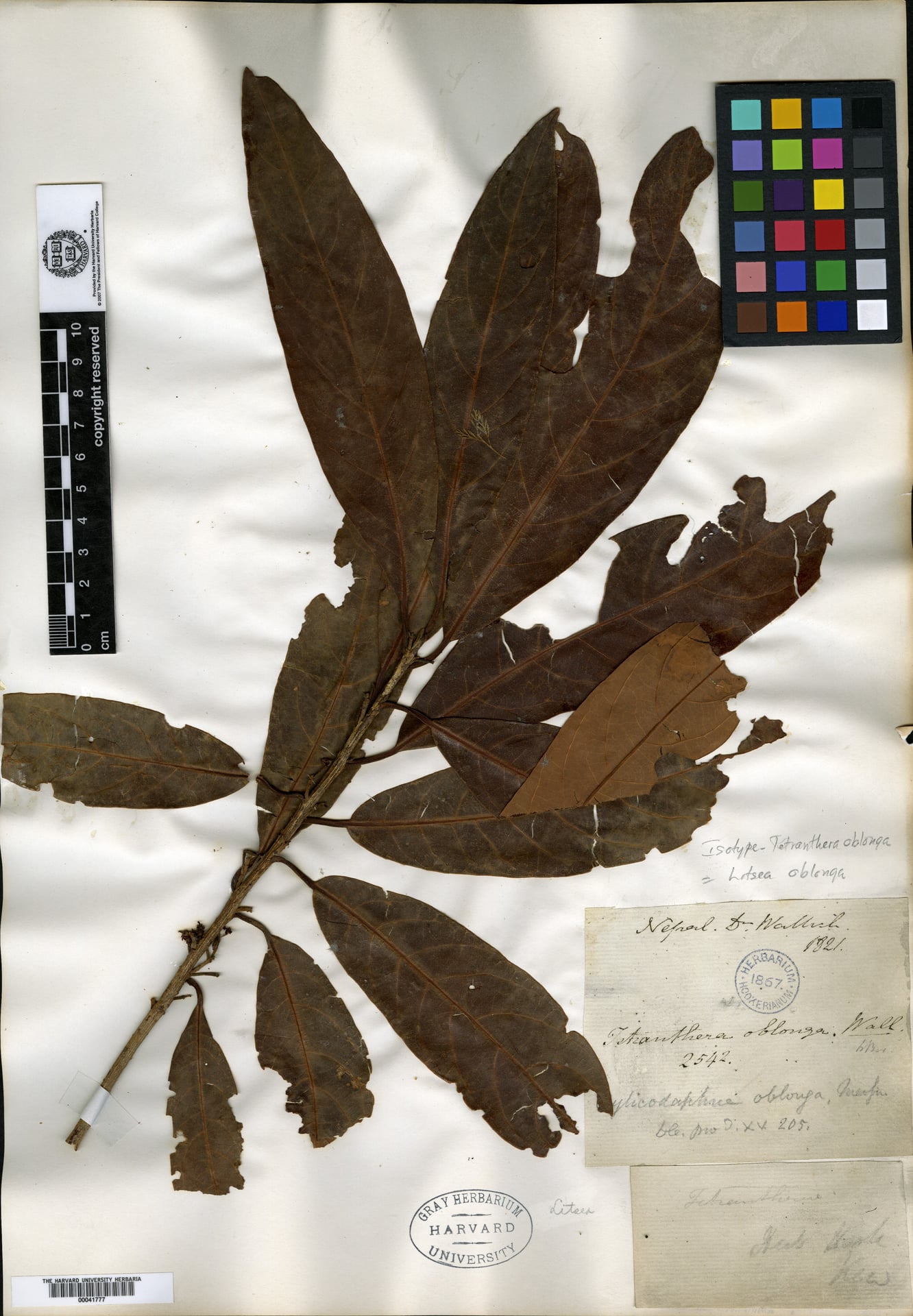
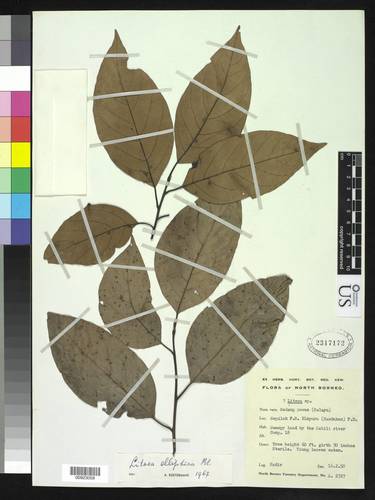
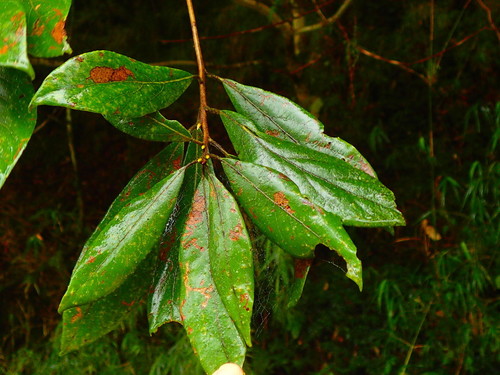
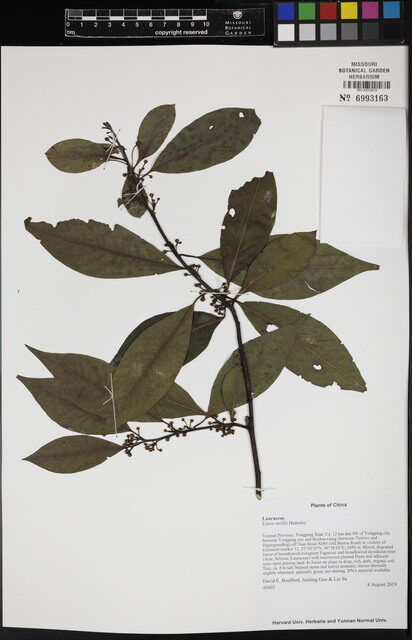
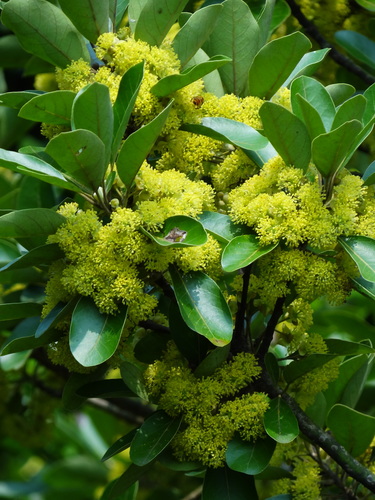
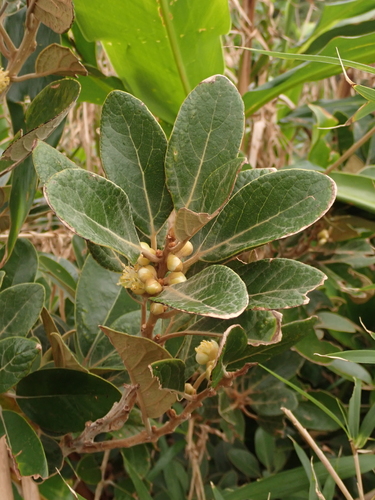
A large bushy tree. It grows 15-30 m tall. It can spread 5-12 m wide. The leaves are narrow and sword shaped. They are shiny green on top and paler or bluish underneath. They are 7-18 cm long by 2-3 cm wide. The leaves are wavy along the edge. New growth is red. The flowers are cream or white. They are like tubes and softly hairy. They are about 0.5 cm long. They occur in panicles at the ends of stems. The fruit is oval and 0.8 cm long. The calyx is fleshy.
Edible Uses
The bark is used as a spice.
Traditional Uses
The bark is used as a spice.
This uses section is brief — help expand it
Medicinal Uses
The bark has a strong aromatic perfume and a 9% tannin content which makes it astringent. For these two reasons it can be used as a relatively pleasant diarrhoea treatment.
Distribution
It grows in warm temperate to tropical climates. It grows in the rainforests in Queensland and New South Wales. It requires well-drained soil and plenty of moisture. It does best in light shade. In tropical Queensland it grows from sea level to 1100 m altitude. Arboretum Tasmania.
Where It Grows
Australia*, Tasmania,
Cultivation
It can be grown from seed which must be sown fresh. The fruit are first soaked and the flesh removed before planting the seed. They germinate in 24-40 days.
Propagation
Seed - the seed of species in this genus generally has a short viability and is best sown as soon in containers as it is ripe. Remove the fruit pulp since this can inhibit germination. Soaking the seeds for 24 hours in lukewarm water hastens germination, which can take 1 - 6 months at 20°c. The germination rate of fresh seed is about 50%, falling to 25% for seed 6 months old, and zero for those 1 year old. Stored seed should be sown as soon as possible in containers. When they are large enough to handle, prick the seedlings out into individual pots and plant them out into their permanent positions when 10cm or more tall. Cuttings of semi-ripe side shoots, 7cm with a heel, in a frame with bottom heat.
Other Uses
The leaves contain the essential oil camphor. The bark contains an essential oil comprising camphor, safrol and other substances that combine to give a pleasant, long-lasting sarsaparilla-like aroma. The aromatic timber is used for general indoor work. It could be suitable for making insect-repellent boxes. It is a useful, general purpose timber.
Notes
There are about 250 Cinnamomum species.
Synonyms
References (15)
- Bodkin, F., 1991, Encyclopedia Botanica. Cornstalk publishing, p 258
- Brown, D., 2002, The Royal Horticultural Society encyclopedia of Herbs and their uses. DK Books. p 169
- Cooper, W. and Cooper, W., 2004, Fruits of the Australian Tropical Rainforest. Nokomis Editions, Victoria, Australia. p 246
- Elliot, W.R., & Jones, D.L., 1984, Encyclopedia of Australian Plants suitable for cultivation. Vol 3. Lothian. p 38
- Hibbert, M., 2002, The Aussie Plant Finder 2002, Florilegium. p 67
Show all 15 references Hide references
- Jackes, B.R., 2001, Plants of the Tropics. Rainforest to Heath. An Identification Guide. James Cook University. p 59
- Jones D, L, 1986, Ornamental Rainforest Plants in Australia, Reed Books, p 162
- Melzer, R. & Plumb, J., 2011, Plants of Capricornia. Belgamba, Rockhampton. p 158
- Molyneux, B & Forrester, S., 1997, The Austraflora A-Z of Australian Plants. Reed. p 67
- Nicholson, N & H., 1996, Australian Rainforest Plants, Terania Rainforest Publishing. NSW. p 21
- Purseglove, J.W., 1968, Tropical Crops Dicotyledons, Longmans. p 188
- Ratcliffe D & P., 1987, Australian Native Plants for Indoors. Little Hills press. p 69
- Seidemann J., 2005, World Spice Plants. Economic Usage, Botany, Taxonomy. Springer. p 102
- Townsend, K., 1994, Across the Top. Gardening with Australian Plants in the tropics. Society for Growing Australian Plants, Townsville Branch Inc. p 132
- Williams, J.B., Harden, G.J., and McDonald, W.J.F., 1984, Trees and shrubs in rainforests of New South Wales and Southern Queensland. Univ. of New England, Armidale. p 84, 114