Cinnamomum camphora
(L.) J. Presl.
Camphor laurel
iNaturalist· cc-by-nc
(c) Jef Boeke, some rights reserved (CC BY-NC)
iNaturalist· cc-by-nc
(c) bryn_potter, some rights reserved (CC BY-NC)
iNaturalist· cc-by-nc
(c) bryn_potter, some rights reserved (CC BY-NC)
Summary
Cinnamomum camphora is an evergreen tree growing slowly to 6m tall and wide. Hardy to UK zone 9 but frost tender. Flowers March to June and is pollinated by Diptera. Grows in light sandy, medium loamy, and heavy clay soils, prefers well-drained conditions, and tolerates mildly acid to mildly alkaline pH as well as very acid and very alkaline soils. Adapts to semi-shade or full sun and prefers moist soil.
Description
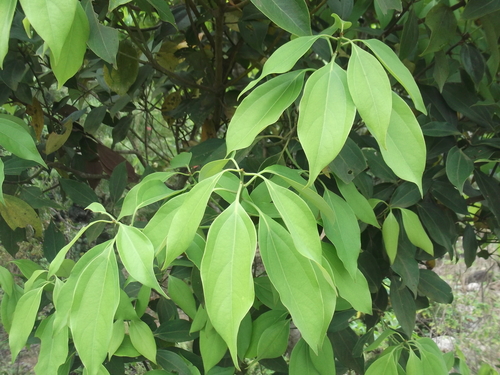
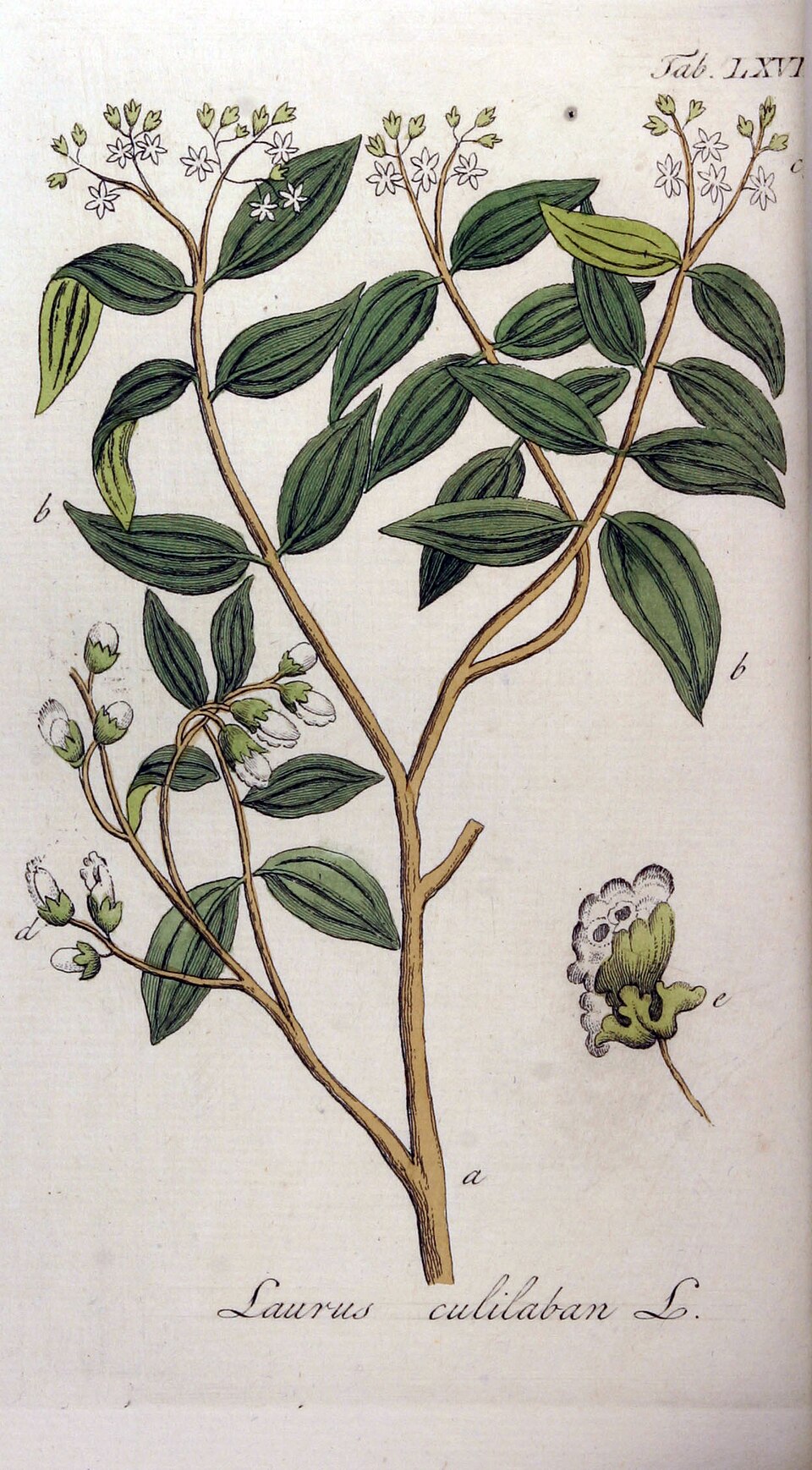
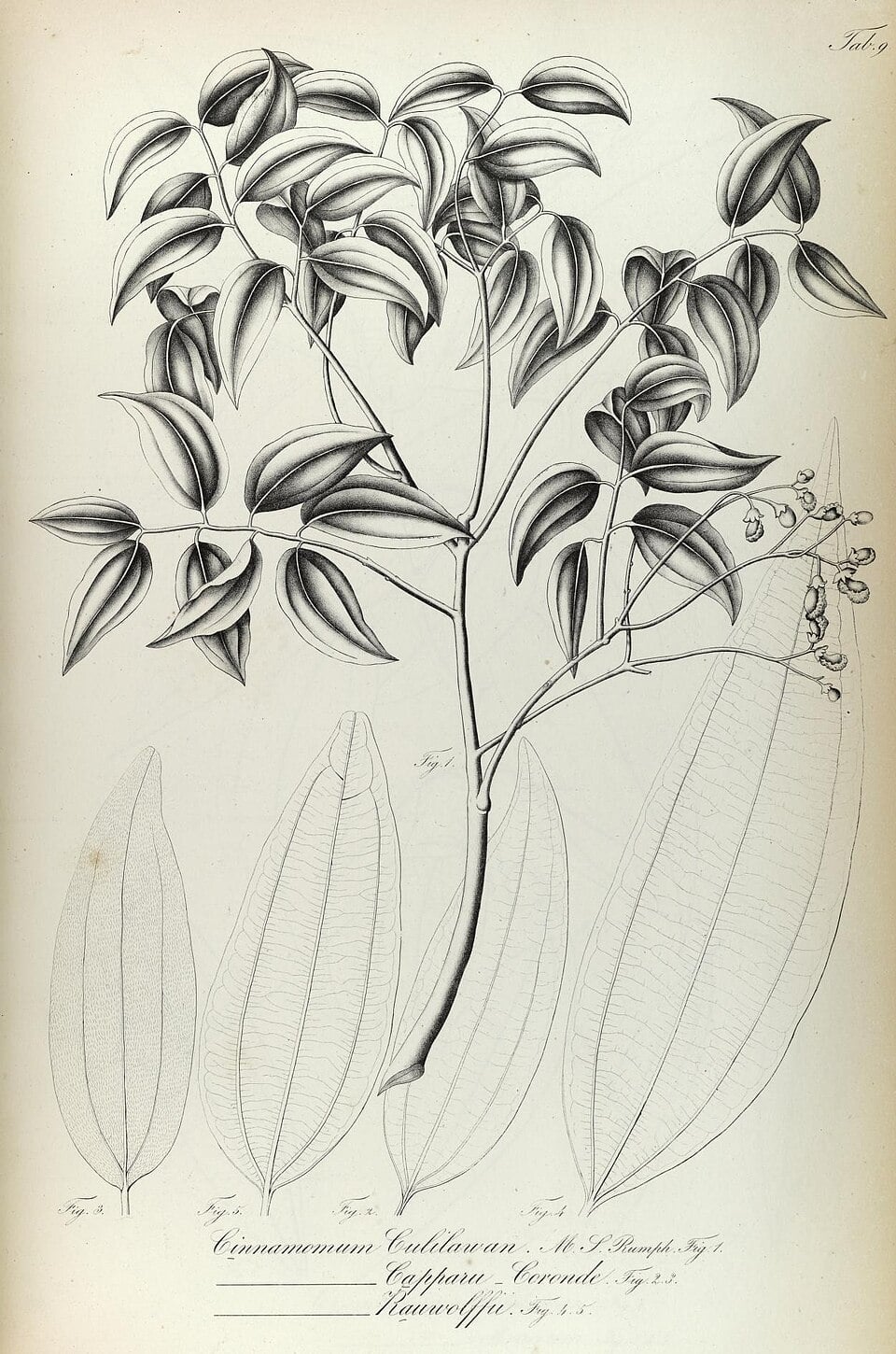
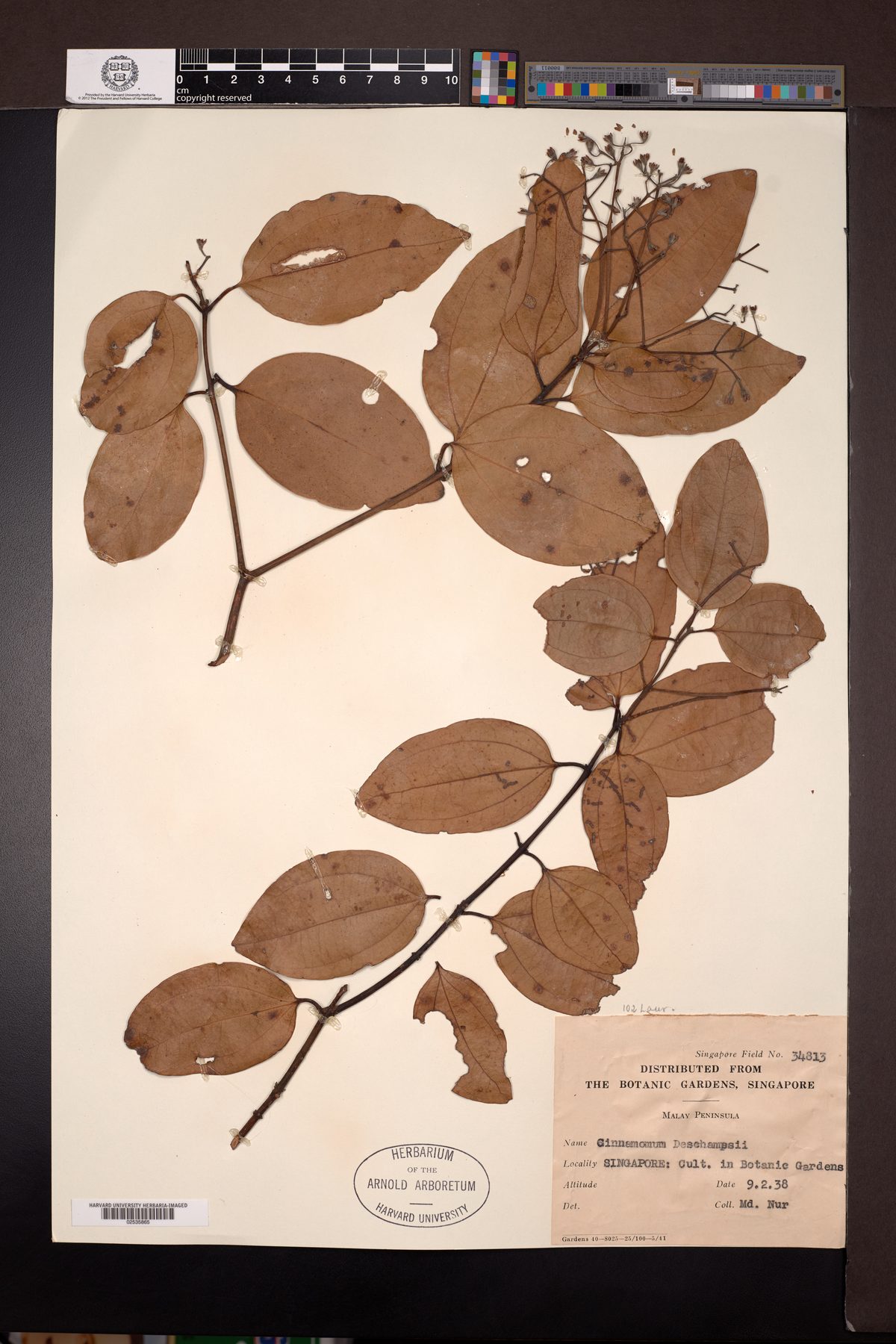
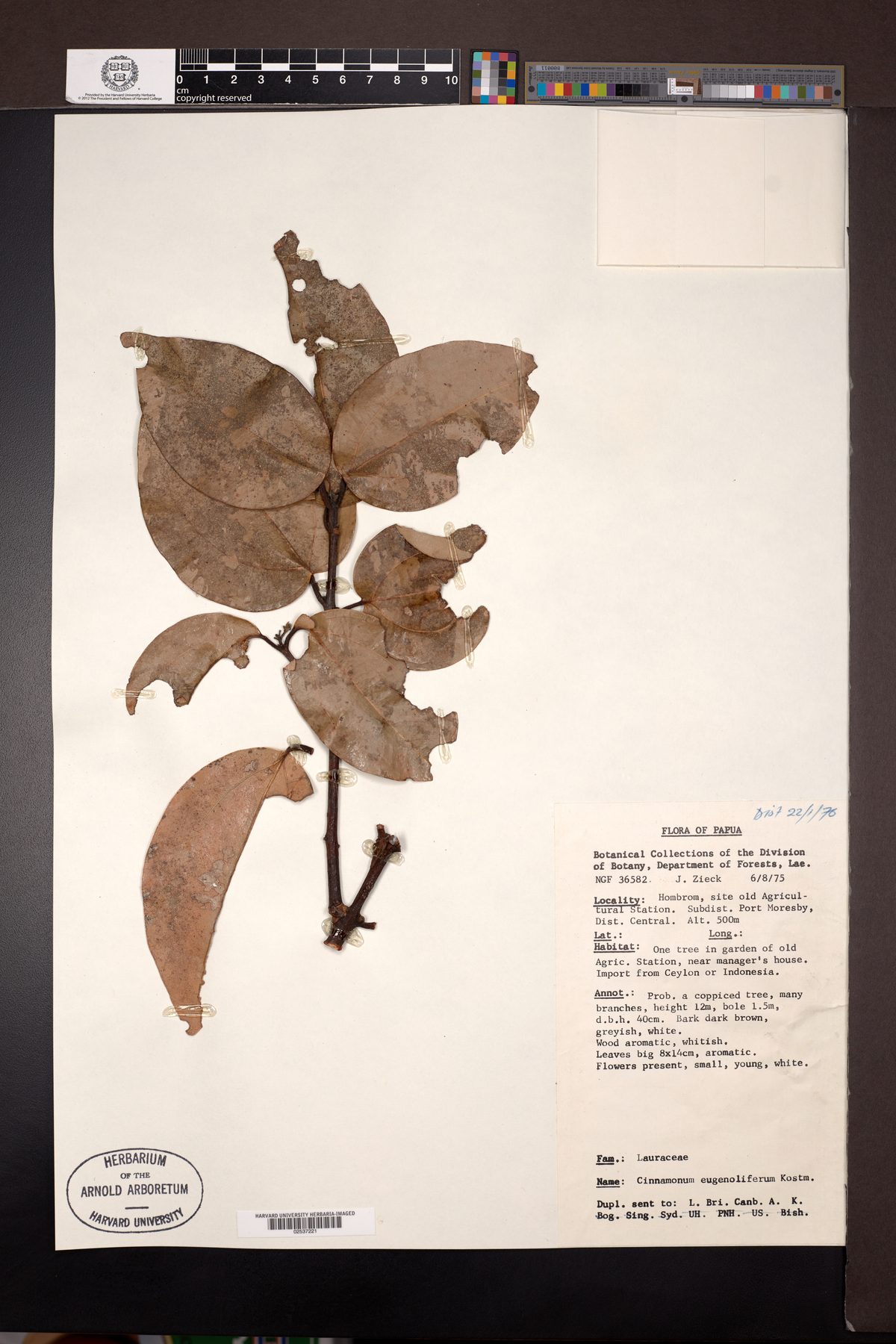
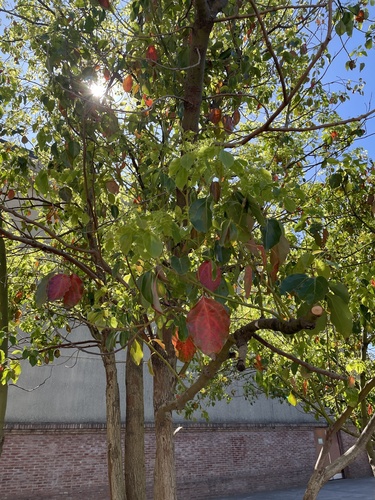
A tree. It grows to 36 m high. It keeps its leaves throughout the year. It has a rounded crown 15 m wide. The trunk is short with scaly, grey bark. The trunk can be 3 m across. The whole plant has a strong camphor smell. The bark is yellow brown with cracks along it. The leaves are alternate. The leaves are pink when young. They turn green with age. The leaf stalk is slender. The leaf blade is 6-12 cm long by 2.5-5.5 cm wide. The flower cluster is in the axils of leaves. Flowers are green-white or yellow. The fruit are round. They are greyish-black.
Edible Uses
Young shoots and leaves can be eaten cooked, though some caution is advised as the plant has been reported poisonous in large quantities. The old leaves are dried and used as a spice.
Traditional Uses
Young shoots and leaves are boiled and eaten. Edible crystalline camphor is used in small quantities as flavouring in milk. It yields an essential oil used to flavour baked goods and drinks. The bark, root and leaves are used for tea. Caution: It is poisonous in excess.
Medicinal Uses
Camphor has a long history of herbal use in the Orient across a wide range of applications. It has occasionally been used internally in the treatment of hysteria, but in modern herbalism it is employed mainly as an essential oil, and internal use is not advised. The wood and leaves are analgesic, antispasmodic, odontalgic, rubefacient, and stimulant. An infusion is used as an inhalant in the treatment of colds and lung diseases. The essential oil is obtained by distillation of chipped branches, trunk, and wood, or from leaves and twigs — wood aged 24–40 years is normally used. The oil is anthelmintic, antirheumatic, antispasmodic, cardiotonic, carminative, diaphoretic, sedative, and tonic. It is used externally in liniments for joint and muscle pain, in balms for chilblains, chapped lips, cold sores, and skin diseases, and as an inhalant for bronchial congestion. Excessive use causes vomiting, palpitations, convulsions, and death; the oil may also be absorbed through the skin, causing systemic poisoning. In aromatherapy, its keyword is 'Piercing', and it is used for digestive complaints and depression. The German Commission E Monographs approve Cinnamomum camphora for arrhythmia, cough and bronchitis, hypotension, nervous heart complaints, and rheumatism.
Known Hazards
The plant is poisonous in large quantities. The essential oil and the wood can cause eye and skin irritation, whilst large doses of the essential oil can cause respiratory failure in children. See the report below on medicinal uses for more information.
Distribution
It grows in tropical and subtropical locations. It needs a well drained, fertile, sandy loam. It does best in coller locations but needs a temperature above 9°C. In tropical Queensland it grows from 650-1000 m altitude. It is grown in China in areas without a severe winter. In Melbourne Botanical Gardens. It suits hardiness zones 9-11. In Yunnan.
Where It Grows
Africa, Asia, Australia, Central America, China*, Cuba, Dominican Republic, East Africa, East Timor, Europe, Fiji, Haiti, Hawaii, Himalayas, India, Indochina, Indonesia, Italy, Japan*, Korea, Laos, Madagascar, Malaysia, Marquesas, Mediterranean, Mozambique, Myanmar, Nepal, North America, Pacific, Pakistan, Sao Tome and Principe, SE Asia, South Africa, Southern Africa, Suriname, Taiwan, Thailand, Timor-Leste, Turkey, Türkiye, USA, Vietnam, West Indies, Zimbabwe,
Cultivation
It can be grown from seed. The plant spreads by suckers. It can be grown by softwood cuttings.
Propagation
Seed — viability is short, so sow as soon as ripe in a greenhouse, removing fruit pulp first as it can inhibit germination. Germination takes 1–6 months at 20°C. Stored seed should be sown as soon as possible in a warm greenhouse. Prick seedlings into individual pots when large enough to handle and grow on under glass for at least the first winter. Plant out in late spring or early summer after the last expected frosts, with protection from cold recommended for at least the first two winters outdoors. Alternatively, take semi-ripe side shoot cuttings of 7cm with a heel in June or July, rooted in a frame with bottom heat.
Other Uses
The essential oil camphor is obtained from the leaves and twigs by passing steam through wood chips; 30 kilos of wood yield 1 kilo of camphor. It is used medicinally, in perfumes, as an insecticide, to make celluloid, and as a wood preservative. It can be placed in shoes to counter perspiring feet, likely acting as a deodorant. The wood has been burned as a fumigant during epidemics. The wood itself is beautifully grained, light brownish, and takes a good polish; it is used for furniture, cabinets, and interior building finishes.
Production
Trees can live for several hundred years.
Other Information
It is cultivated.
Notes
The bark and wood is used to make camphor crystals. There are about 250 Cinnamomum species. The leaves are used in medicine. It has anticancer properties. It can become invasive.
Synonyms
Also Known As
Ai-kanfor, Camphor, Chuang, Ho wood, Kamfer, Kamifaoro, Kapoor, Kapur, Karppuram, Karpur, Karpurammu, Kuqmiqsail, Long nao, Mushkapur, Noknamu, Payok, Payuk, Pohon kapur barus, Ravinsara, Re, Zhang, Zhangshu
References (42)
- Ambasta, S.P. (Ed.), 2000, The Useful Plants of India. CSIR India. p 125
- Arora, R. K., 2014, Diversity in Underutilized Plant Species - An Asia-Pacific Perspective. Bioversity International. p 102
- Barwick, M., 2004, Tropical and Subtropical Trees. A Worldwide Encyclopedic Guide. Thames and Hudson p 115
- F. Berchtold & J. S. Presl, Prir. rostlin 2:36, 47-56, t. 8. 1825
- Bodkin, F., 1991, Encyclopedia Botanica. Cornstalk publishing, p 258
Show all 42 references Hide references
- Bremness, L., 1994, Herbs. Collins Eyewitness Handbooks. Harper Collins. p 48
- Brown, D., 2002, The Royal Horticultural Society encyclopedia of Herbs and their uses. DK Books. p 169
- Cooper, W. and Cooper, W., 2004, Fruits of the Australian Tropical Rainforest. Nokomis Editions, Victoria, Australia. p 245
- Cronin, L., 1989, The Concise Australian Flora. Reed. p 145
- Cundall, P., (ed.), 2004, Gardening Australia: flora: the gardener's bible. ABC Books. p 379
- Ekman Herbarium records Haiti
- Etherington, K., & Imwold, D., (Eds), 2001, Botanica's Trees & Shrubs. The illustrated A-Z of over 8500 trees and shrubs. Random House, Australia. p 211
- Facciola, S., 1998, Cornucopia 2: a Source Book of Edible Plants. Kampong Publications, p 138
- Flora of Pakistan. www.eFloras.org
- Hani Medicine of Xishuangbanna, 1999, p 351
- Hibbert, M., 2002, The Aussie Plant Finder 2002, Florilegium. p 67
- Hussey, B.M.J., Keighery, G.J., Cousens, R.D., Dodd, J., Lloyd, S.G., 1997, Western Weeds. A guide to the weeds of Western Australia. Plant Protection Society of Western Australia. p 172
- Kintzios, S. E., 2006, Terrestrial Plant-Derived Anticancer Agents and Plant Species Used in Anticancer research. Critical Reviews in Plant Sciences. 25: pp 79-113
- Krishen P., 2006, Trees of Delhi, A Field Guide. DK Books. p 113
- Little, E.L., 1980, National Audubon Society Field Guide to North American Trees. Alfred A. Knopf. p 448
- Li Xi-wen, Li Jie, Huang Puhua, van der Werff, H., Lauraceae. Flora of China.
- Lord, E.E., & Willis, J.H., 1999, Shrubs and Trees for Australian gardens. Lothian. p 50
- Marinelli, J. (Ed), 2004, Plant. DK. p 449
- Nicholson, N & H., 1996, Australian Rainforest Plants 2, Terania Rainforest Publishing. NSW. p 69
- Paczkowska, G. & Chapman, A.R., 2000, The Western Australian Flora. A Descriptive Catalogue. Western Australian Herbarium. p 278
- Plants for a Future database, The Field, Penpol, Lostwithiel, Cornwall, PL22 0NG, UK. http://www.scs.leeds.ac.uk/pfaf/
- Plants of Haiti Smithsonian Institute http://botany.si.edu/antilles/West Indies
- Recher, P, 2001, Fruit Spirit Botanical Gardens Plant Index. www.nrg.com.au/~recher/ seedlist.html p 5
- Smith, A.C., 1981, Flora Vitiensis Nova, Lawaii, Kuai, Hawaii, Volume 2 p 122
- Song, M., et al, 2013, Traditional knowledge of wild edible plants in Jeju Island, Korea. Indian Journal of Traditional Knowledge. 12(2) pp 177-194
- Staples, G.W. and Herbst, D.R., 2005, A tropical Garden Flora. Bishop Museum Press, Honolulu, Hawaii. p 366
- Sukarya, D. G., (Ed.) 2013, 3,500 Plant Species of the Botanic Gardens of Indonesia. LIPI p 196
- Swaminathan, M.S., and Kochnar, S.L., 2007, An Atlas of major Flowering Trees in India. Macmillan. p 228
- Valder, P., 1999, The Garden Plants of China. Florilegium. p 275
- Van Sam, H. et al, 2004, Trees of Laos and Vietnam: A Field Guide to 100 Economically or Ecologically Important Species. Blumea 29 (2004) 201-349
- van Wyk, B, van Wyk, P, and van Wyk B., 2000, Photographic guide to Trees of Southern Africa. Briza. p 84
- Wiersema, J. H. & Leon, B., 2013, World Economic Plants. A Standard Reference CRC Press. 2nd Ed. p 176
- Williams, J.B., Harden, G.J., and McDonald, W.J.F., 1984, Trees and shrubs in rainforests of New South Wales and Southern Queensland. Univ. of New England, Armidale. p 80
- Wilson, A.J.G., (Ed.), 1994, Flora of Australia Volume 49, Oceanic Islands1, Australian Government Publishing Service, Canberra. p 46
- World Checklist of Useful Plant Species 2020. Royal Botanic Gardens, Kew
- Young, J., (Ed.), 2001, Botanica's Pocket Trees and Shrubs. Random House. p 246
- Zeven, A. C. & de West, J. M. J., 1982, Dictionary of cultivated plants and their regions of diversity. Wageningen. p 40