Cinnamomum cassia
(Nees) Nees ex Blume
Cassia, Chinese cinnamon, Cassia bark
iNaturalist· cc-by-sa
(c) Yercaud-elango, some rights reserved (CC BY-SA)
iNaturalist· cc-by-sa
(c) Anuragl19, some rights reserved (CC BY-SA)
iNaturalist· cc-by
(c) 胡正恆(Jackson Hu), some rights reserved (CC BY)
Summary
Source: WikipediaCinnamomum cassia, called Chinese cassia, cassia cinnamon, or Chinese cinnamon, is an evergreen tree originating in southern China and widely cultivated there and elsewhere in South and Southeast Asia. It is one of several species of Cinnamomum used primarily for its aromatic bark, which is used as a spice. The buds are also used as a spice, especially in India, and were used by the ancient Romans.
Description
A shrub or tree 5-15 m tall. The bark is thicker and darker in colour than cinnamon as the corky outer bark is still attached. The bark is 13 mm thick. The small branches are angular. They have lines along them. The leaves are alternate or almost opposite. They are narrowly oval and 8-16 cm long by 4-5.5 cm wide. They can be larger. The fruit is oval and 10 mm long by 7-8 mm wide. The bark is more coarse than Cinnamomum verum. It has larger leaves than camphor laurel.
Edible Uses
The bark is used as a spice in drinks, sweets, curries, confectionery, baked goods, chewing gum, and condiments, often as a cinnamon substitute. The cassia buds (dried unripe fruit) are used to flavor breads, cakes, chocolate, and pickles. The plant also yields an essential oil for flavoring.
Traditional Uses
The bark is used as a spice. It is used in drinks and sweets. It is used as a substitute for cinnamon. It also yields an essential oil. These are used to flavour curries, confectionary, drinks, baked goods, chewing gum, and condiments. The cassia buds of the unripe fruit are dried and used as a flavouring. The immature fruit or cassia buds are used to flavour breads, cakes, chocolate and pickles.
Medicinal Uses
The part of the bark that is used to make spices is called the Cinnamomi cortex. Chinese cassia (called ròuguì; 肉桂 in Chinese) is produced primarily in the southern provinces of Guangxi, Guangdong, and Yunnan. It is considered one of the 50 fundamental herbs in traditional Chinese medicine. More than 160 phytochemicals have been isolated from Cinnamomum cassia. The blood-thinning component called coumarin found in C. cassia could damage the liver if consumed in larger amounts, therefore European health agencies have warned against consuming high amounts of cassia. Other bioactive compounds found in the bark, powder and essential oils of C. cassia are cinnamaldehyde and styrene. In high doses, these substances can also be toxic to humans.
Distribution
A tropical plant. It grows close to the coast. It grows in tropical regions in southern China. It is best in rich moist soils. It is cultivated in borders areas between China and Vietnam. Yunnan.
Where It Grows
Asia, Australia, Bangladesh, Cambodia, China, Cuba, India, Indochina, Indonesia, Laos, Malaysia, Myanmar, SE Asia, Sri Lanka, Taiwan, Thailand, Timor-Leste, Vietnam, West Indies,
Cultivation
Plants are grown by seeds.
Propagation
Seed - the seed has a short viability and is best sown as soon in containers as it is ripe. Remove the fruit pulp since this can inhibit germination. Soaking the seeds for 24 hours in lukewarm water hastens germination. Germination can take 1 - 6 months at 20°c. The germination rate of fresh seed is about 50%, falling to 25% for seed 6 months old, and zero for those 1 year old. Stored seed should be sown as soon as possible in containers. When they are large enough to handle, prick the seedlings out into individual pots and plant them out into their permanent positions when 10cm or more tall. Cuttings of semi-ripe side shoots, 7cm with a heel, in a frame with bottom heat.
Other Uses
The essential oil obtained from the bark is used as a flavouring in toothpastes, and as a scent in incense. Extracts of the leaves, wood, bak etc are used in commercial cosmetic preparations as perfumes. The dried and powdered bark is used in commercial cosmetic preparations as a skin conditioner, hair conditioner, for oral care etc. The wood is used for making furniture, sawing boards, implements etc.
Other Information
It is a cultivated plant.
Notes
There are about 250 Cinnamomum species.
Synonyms
Also Known As
Cassia, Chheu aem, Chinese cassia, Chinese cinnamon tree, Davulkurundu, False cinnamon, Flesh Cassia, Kayu manis china, Kuda-dawula, Massoia, Pohon kayumanis cina, Que, Que don, Rou gui, Rougui, Sambao lvaeng, Wal-kurudu
References (42)
- Altschul, S.V.R., 1973, Drugs and Foods from Little-known Plants. Notes in Harvard University Herbaria. Harvard Univ. Press. Massachusetts. no. 1089
- Ambasta, S.P. (Ed.), 2000, The Useful Plants of India. CSIR India. p 125
- Arora, R. K., 2014, Diversity in Underutilized Plant Species - An Asia-Pacific Perspective. Bioversity International. p 102
- Barwick, M., 2004, Tropical and Subtropical Trees. A Worldwide Encyclopedic Guide. Thames and Hudson p 115 (As Cinnamomum aromaticum)
- Bodkin, F., 1991, Encyclopedia Botanica. Cornstalk publishing, p 258
Show all 42 references Hide references
- Bremness, L., 1994, Herbs. Collins Eyewitness Handbooks. Harper Collins. p 48 (As Cinnamomum aromaticum)
- Brouk, B., 1975, Plants Consumed by Man. Academic Press, London. p 290, 293
- Brown, D., 2002, The Royal Horticultural Society encyclopedia of Herbs and their uses. DK Books. p 169
- Burkill, I.H., 1966, A Dictionary of the Economic Products of the Malay Peninsula. Ministry of Agriculture and Cooperatives, Kuala Lumpur, Malaysia. Vol 1 (A-H) p 545
- Burkill, I.H., 1966, A Dictionary of the Economic Products of the Malay Peninsula. Ministry of Agriculture and Cooperatives, Kuala Lumpur, Malaysia. Vol 2 (I-Z) p 1451 (? As Massoia aromatica)
- Facciola, S., 1998, Cornucopia 2: a Source Book of Edible Plants. Kampong Publications, p 138 (Also as Cinnamomum aromaticum)
- Hardwick, G., 2001, Economically Useful Plants for Northern Australia: Master Species List. Crusader eBooks.
- Hedrick, U.P., 1919, (Ed.), Sturtevant's edible plants of the world. p 191
- Hemphill, I, 2002, Spice Notes. Macmillan. p 133
- Hutton, W., 1997, Tropical Herbs and Spices of Indonesia. Periplus. p 18
- Hu, Shiu-ying, 2005, Food Plants of China. The Chinese University Press. p 399
- Kiple, K.F. & Ornelas, K.C., (eds), 2000, The Cambridge World History of Food. CUP p 1757, p 432 (As Cinnamomum aromaticum) Li Xi-wen, Li Jie, Huang Puhua, van der Werff, H., Lauraceae. Flora of China.
- Macmillan, H.F. (Revised Barlow, H.S., et al), 1991, Tropical Planting and Gardening. Sixth edition. Malayan Nature Society. Kuala Lumpur. p 374 (As Cassia aromatica)
- Miguel, E., et al, 1989, A checklist of the cultivated plants of Cuba. Kulturpflanze 37. 1989, 211-357 (As Cinnamomum aromaticum)
- Morton, (As Cinnamomum aromaticum)
- Mulherin, J., 1994, Spices and natural flavourings. Tiger Books, London. p 40
- sensu Nees ex Blume, Bijdr. 570. 1825
- Peter, K. V. (Ed.), 2004, Handbook of Herbs and Spices Vol. 2 Woodhead Publishing and CRC Press. (As Cinnamomum aromaticum)
- Pham-Hoang Ho, 1999, An Illustrated Flora of Vietnam. Nha Xuat Ban Tre. p 344
- Phon, P., 2000, Plants used in Cambodia. © Pauline Dy Phon, Phnom Penh, Cambodia. p 155
- Purseglove, J.W., 1968, Tropical Crops Dicotyledons, Longmans. p 187
- Rajapaksha, U., 1998, Traditional Food Plants in Sri Lanka. HARTI, Sri Lanka. p 277 (As Neolitsea cassia)
- Seidemann J., 2005, World Spice Plants. Economic Usage, Botany, Taxonomy. Springer. p 100 (As Cinnamomum aromaticum)
- Small, E., 2009, Top 100 Food Plants. The world's most important culinary crops. NRC Research Press. p 197
- Solomon, C., 2001, Encyclopedia of Asian Food. New Holland. p 69 (Also as Cinnamomum aromaticum)
- Sukarya, D. G., (Ed.) 2013, 3,500 Plant Species of the Botanic Gardens of Indonesia. LIPI p 198
- Tyagi, R. K., et al, 2004, Conservation of Spices Germplasm in India. Indian J. Plant Genet. Resour. 17(3): 163-174 (As Cinnamomum aromaticum Nees)
- Uphof, (As Cinnamomum aromaticum)
- Valder, P., 1999, The Garden Plants of China. Florilegium. p 275 (As Cinnamomum aromaticum)
- Van Sam, H. et al, 2008, Uses and Conservation of Plant Species in a National Park. A case study of Ben En, Vietnam. Economic Botany 62:574-593
- van Wyk, B., 2005, Food Plants of the World. An illustrated guide. Timber press. p 135 (As Cassia aromatica)
- N. Wallich, Pl. asiat. rar. 2:74. 1831 (As Cinnamomum aromaticum)
- Wiersema, J. H. & Leon, B., 2013, World Economic Plants. A Standard Reference CRC Press. 2nd Ed. p 175 (As Cinnamomum aromaticum)
- World Checklist of Useful Plant Species 2020. Royal Botanic Gardens, Kew
- www.efloras.org Flora of China Volume 7
- Young, J., (Ed.), 2001, Botanica's Pocket Trees and Shrubs. Random House. p 246
- Zeven, A. C. & de West, J. M. J., 1982, Dictionary of cultivated plants and their regions of diversity. Wageningen. p 56
More from Lauraceae
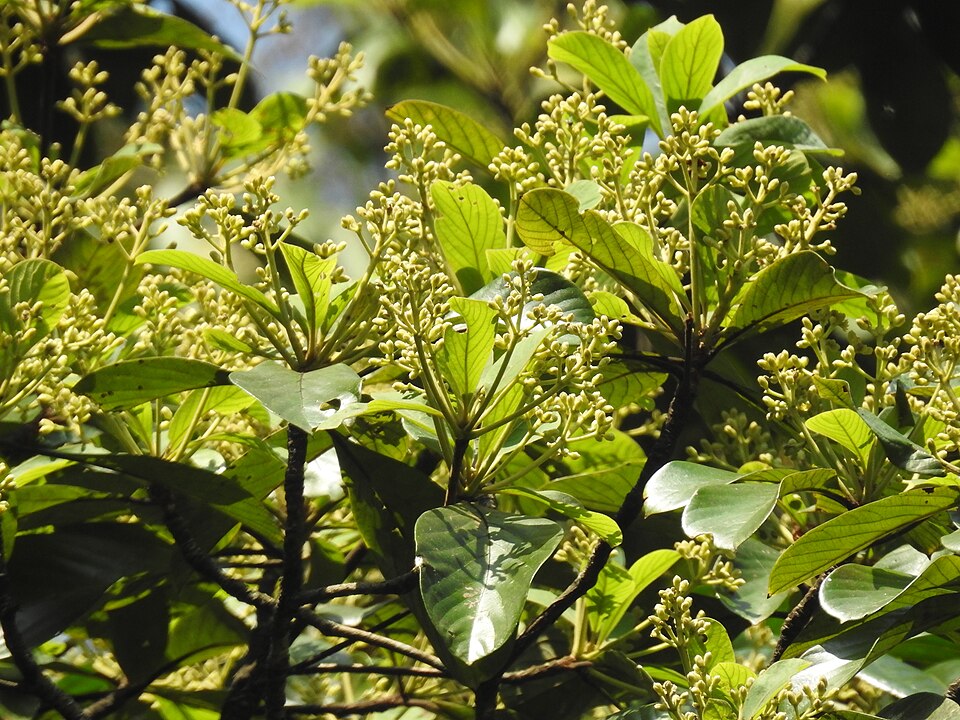
Phoebe cooperiana
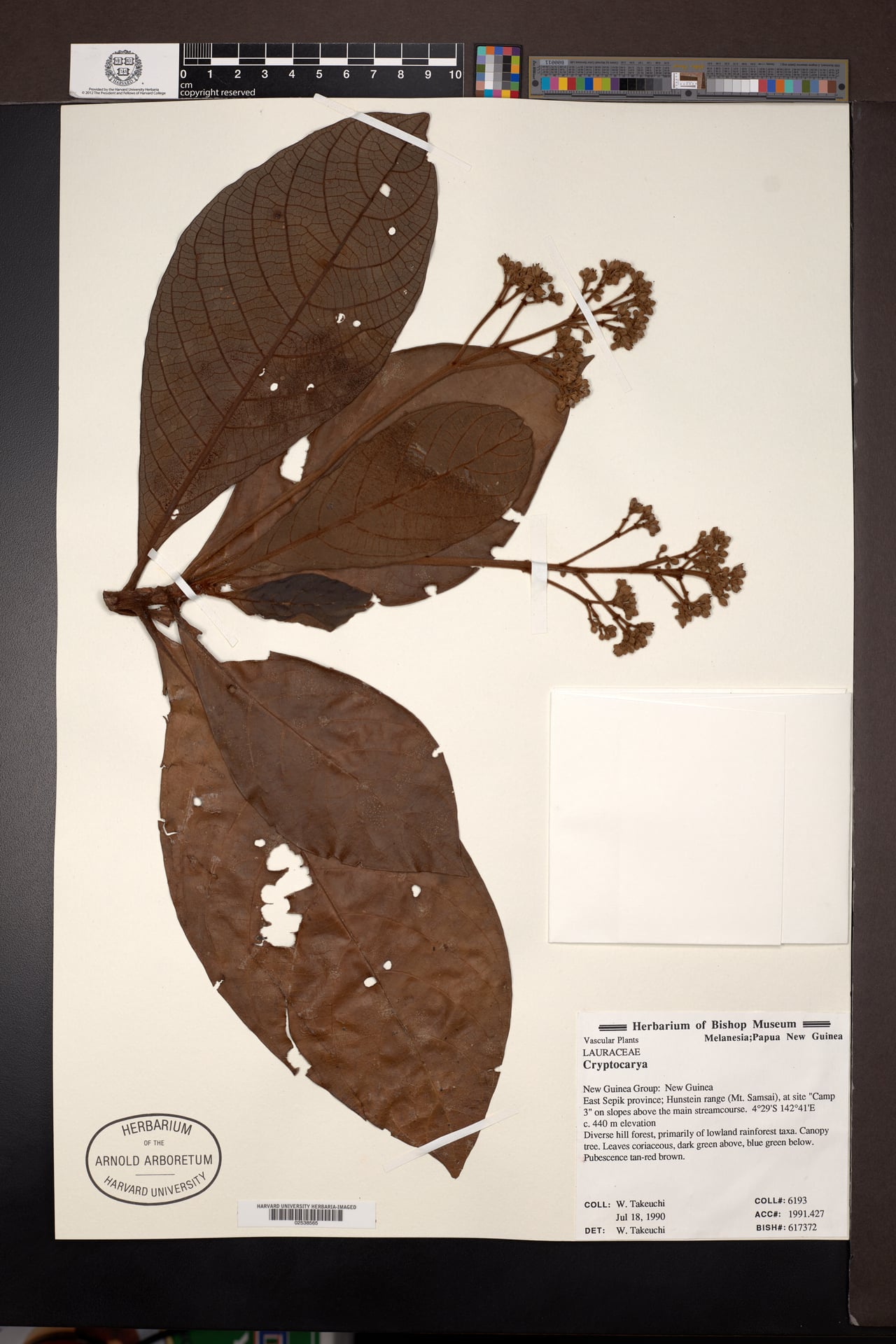
Phoebe forbesii
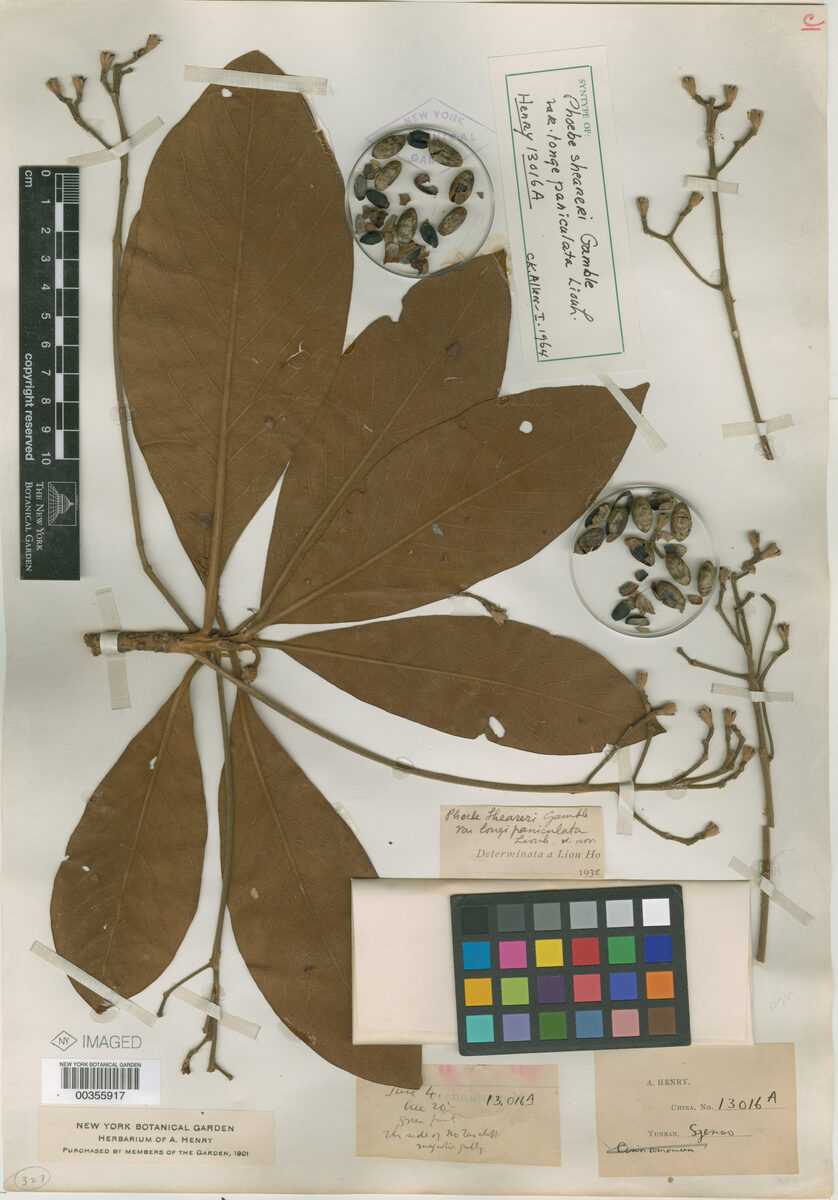
Phoebe puwenensis
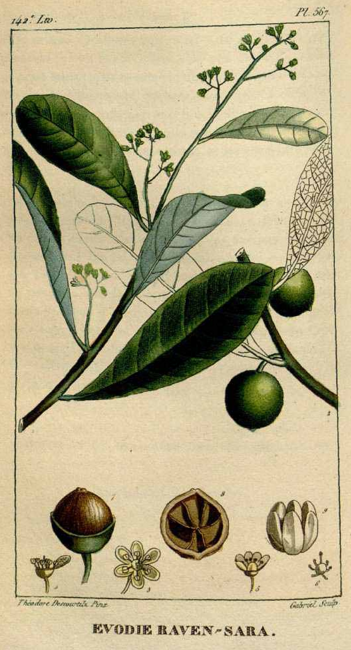
Ravensara aromatica
Madagascar Clove Nutmeg
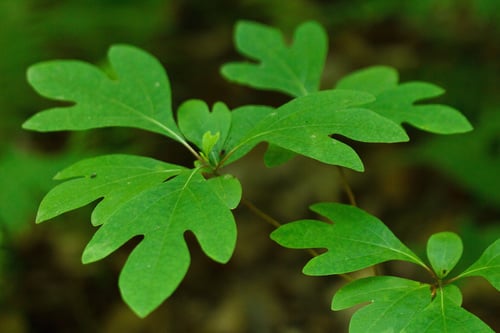
Sassafras albidum
American sassafras, Fennel Wood, Ague tree
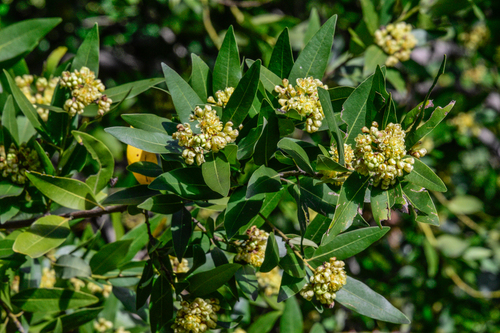
Umbellularia californica
California laurel, Californian Bay Tree, Pepper-nut, Headache Tree, Balm of heaven, Cajeput tree, Californian olive, Mountain laurel, Sassafras laurel, Spice bush, California nutmeg