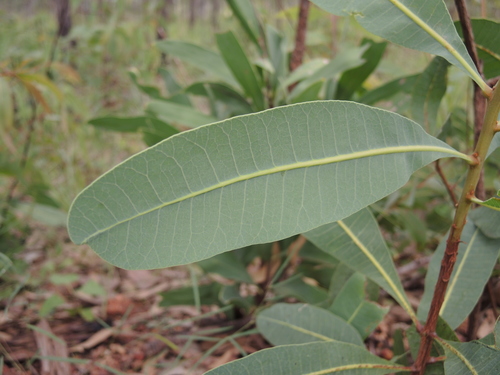
Rhus copallinum
L.
Dwarf sumac, Mountain sumac, Winged sumac
iNaturalist· cc-by-nc-sa
(c) Dendroica cerulea, some rights reserved (CC BY-NC-SA)
iNaturalist· cc-by
(c) Judy Gallagher, some rights reserved (CC BY)
iNaturalist· cc-by-sa
(c) Douglas Goldman, some rights reserved (CC BY-SA), uploaded by Douglas Goldman
Summary
Source: WikipediaRhus copallinum, the winged sumac, shining sumac, dwarf sumac or flameleaf sumac, is a species of flowering plant in the cashew family (Anacardiaceae) that is native to eastern North America. It is a deciduous tree growing to 3.5–5.5 metres (11–18 ft) tall and an equal spread with a rounded crown. A 5-year-old sapling will stand about 2.5 metres (8.2 ft). The name Rhus copallina is also used, but this is not consistent with the rules of the International Association for Plant Taxonomy.
Description
A large shrub. It grows 6 m tall. The leaves turn red and fall in autumn. The fruit are red and in clusters
This description is brief — help expand it
Edible Uses
The fruit are made into jelly and into a drink.
Traditional Uses
The fruit are made into jelly and into a drink.
This uses section is brief — help expand it
Distribution
It is a temperate plant. It can tolerate drought and poor soils. It is cold hardy.
Where It Grows
Canada, Caribbean, Cuba, North America, USA, West Indies,
Cultivation
It can be grown from seeds or spread by underground stems or rhizomes.
Other Information
It is cultivated.
Synonyms
Also Known As
Black sumac, Shining sumac
References (4)
- Brevard County Edible Acres
- Kermath, B. M., et al, 2014, Food Plants in the Americas: A survey of the domesticated, cultivated and wild plants used for Human food in North, Central and South America and the Caribbean. On line draft. p 744
- Wiersema, J. H. & Leon, B., 2013, World Economic Plants. A Standard Reference CRC Press. 2nd Ed. p 590
- World Checklist of Useful Plant Species 2020. Royal Botanic Gardens, Kew