Viburnum lantanoides
Michx.
Hobbleberry
iNaturalist· cc-by-nc
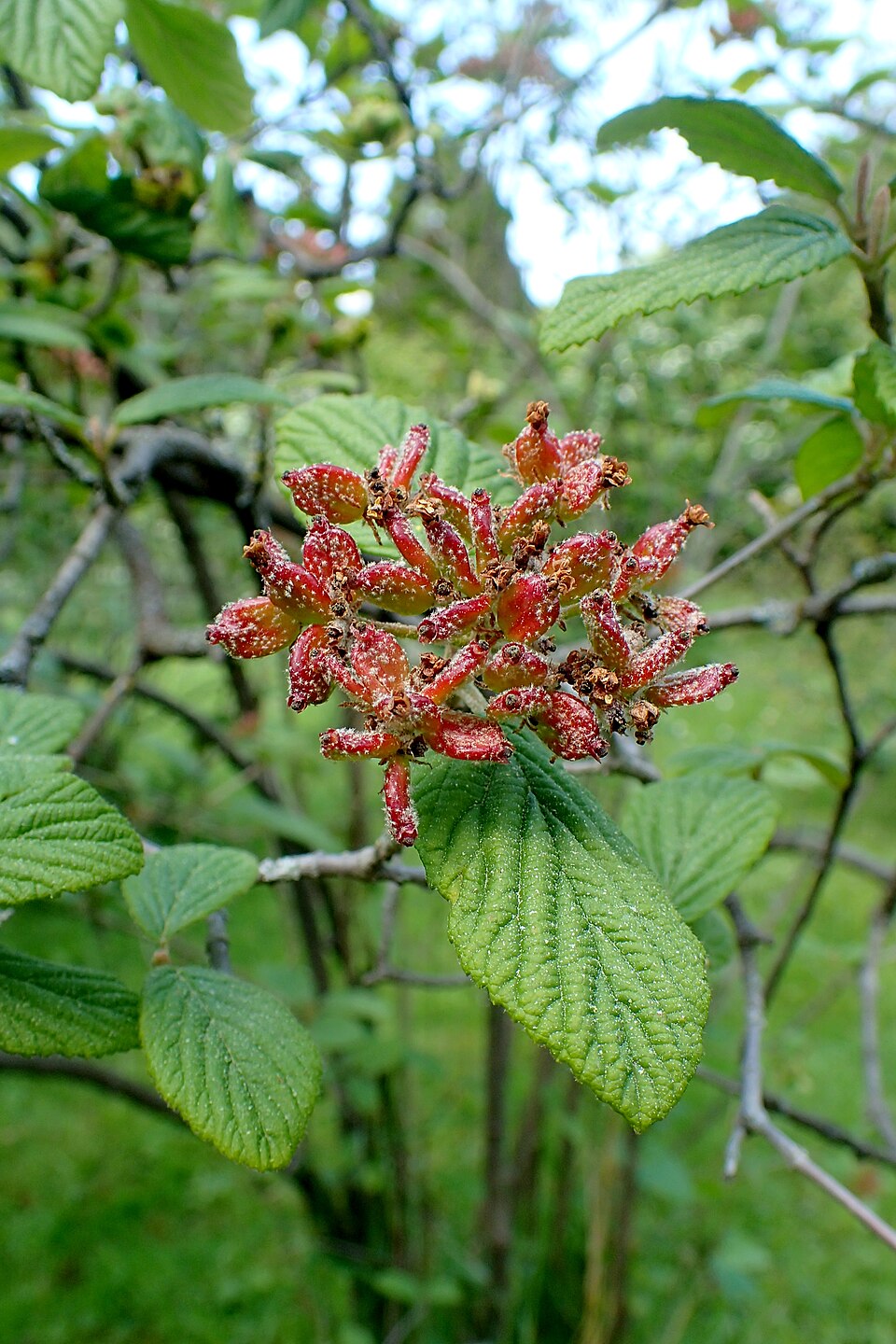
(c) emilycgriff86, some rights reserved (CC BY-NC)
iNaturalist· cc-by-nc-sa
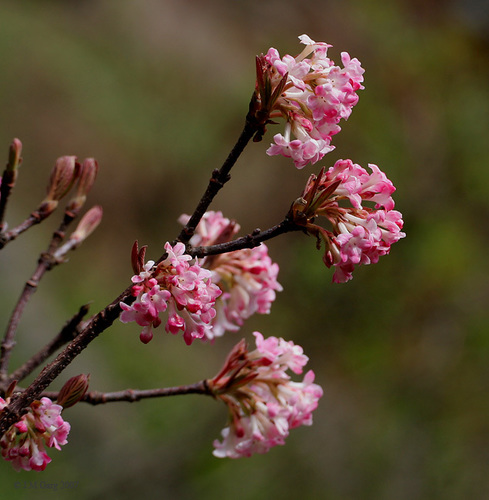
(c) pamdarrow, some rights reserved (CC BY-NC-SA)
Summary
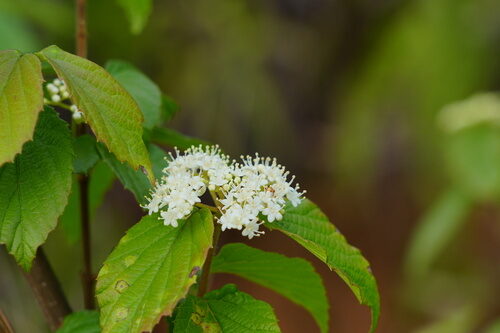
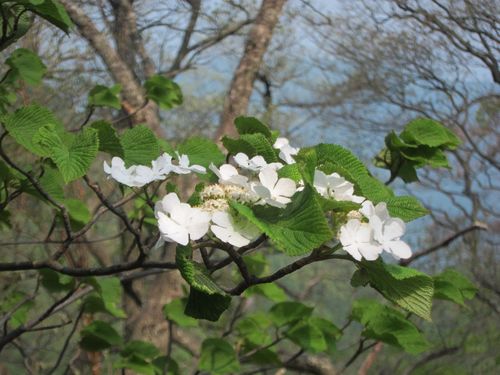
Source: WikipediaViburnum lantanoides (commonly known as hobble-bush, witch-hobble, alder-leaved viburnum, American wayfaring tree, and moosewood) is a perennial shrub of the family Adoxaceae (formerly in the Caprifoliaceae), growing 2–4 meters (6.6–13.1 ft) high with pendulous branches that take root where they touch the ground. These rooted branches form obstacles which easily trip (or hobble) walkers – hence the common name. The shrub forms large clusters of white to pink flowers in May–June. The flowers on the outer edge of the clusters are much larger (3–5 cm across). The whole cluster is typically 10 cm across. It has large, cardioid leaves which are serrate, 10–20 cm long. The bark is gray-brown and warty and the fruit is a red drupe, which turns to black when ripe. The flowers provide nectar for the Celastrina ladon (Spring Azure) butterfly. Mammals and birds feed on its fruit, twigs, and leaves. The large showy flowers along the edge of the cluster are sterile, while the small inner flowers have both male and female parts.
Description
A bushy shrub. It loses its leaves during the year. It grows 4.5 m high and spreads 4.5 m wide. It develops suckers. The branches are downy when young. The leaves are large and have clear veins. The leaves are broadly oval and turn yellow then red in autumn. The flowers are large and white in lace top clusters. The fruit are oblong and purple-black.
Edible Uses
The fruit can be eaten raw or cooked. It is sweet and palatable, tasting somewhat like raisins or dates, with a thin flesh surrounding a single large seed. The flavour is best after a frost. The ovoid fruit is about 15mm long.
Medicinal Uses
The leaves are analgesic and have been mashed and applied to the head as a poultice to ease migraines. A decoction of the roots has been used as a blood medicine and as a fertility aid for women.
Distribution
It is a cool temperate plant. It suits hardiness zones 3-6.
Where It Grows
Australia, Britain, Canada, Europe, France, Germany, Netherlands, North America, USA,
Cultivation
An easily grown plant, it succeeds in most soils but is ill-adapted for poor soils and for dry situations. It prefers a deep rich loamy soil in a shady position. Requires a moist acid soil and woodland conditions but without competition from other plants. Another report says that it requires an exposed position. Dislikes alkaline soils. Best if given shade from the early morning sun in spring. A very hardy plant, tolerating temperatures down to about -30°c. Plants are self-incompatible and need to grow close to a genetically distinct plant in the same species in order to produce fruit and fertile seed. Plants are often self-layering in the wild and form thickets. This species is closely related to V. furcatum.
Propagation
Seed is best sown in a cold frame as soon as it is ripe. Germination can be slow, sometimes taking more than 18 months. Seed harvested green — fully developed but not yet fully ripe — and sown immediately in a cold frame should germinate the following spring. Stored seed needs 2 months of warm stratification followed by 3 months of cold stratification, and may still take 18 months to germinate. Prick seedlings into individual pots when large enough to handle and grow on in a cold frame or greenhouse, planting out in late spring or early summer the following year. Softwood cuttings taken in early summer in a frame should be potted individually once rooting begins and planted out the following late spring or early summer. Half-ripe cuttings, 5–8cm long with a heel if possible, taken in July or August in a frame, should be potted as soon as they root. These can be difficult to overwinter and are best kept under glass until spring before planting out. Mature wood cuttings taken in winter in a frame should root in early spring; pot when large enough and plant out in summer if sufficient new growth has formed, otherwise overwinter in a frame and plant out the following spring. Layering of the current season's growth in July or August takes 15 months.
Other Uses
None known Special Uses
Notes
There are about 150 Viburnum species. Also put in the family Caprifoliaceae.
Synonyms
References (4)
- Cundall, P., (ed.), 2004, Gardening Australia: flora: the gardener's bible. ABC Books. p 1467
- Fl. bor.-amer. 1:179. 1803
- Kermath, B. M., et al, 2014, Food Plants in the Americas: A survey of the domesticated, cultivated and wild plants used for Human food in North, Central and South America and the Caribbean. On line draft. p 906
- Plants for a Future database, The Field, Penpol, Lostwithiel, Cornwall, PL22 0NG, UK. http://www.scs.leeds.ac.uk/pfaf/