Viburnum grandiflorum
Wall. ex DC.
Cranberry bush
iNaturalist· cc-by
(c) J.M.Garg, some rights reserved (CC BY)
iNaturalist· cc-by-nc
(c) Phuentsho, some rights reserved (CC BY-NC)
iNaturalist· cc-by-nc
(c) fofito, some rights reserved (CC BY-NC)
Summary
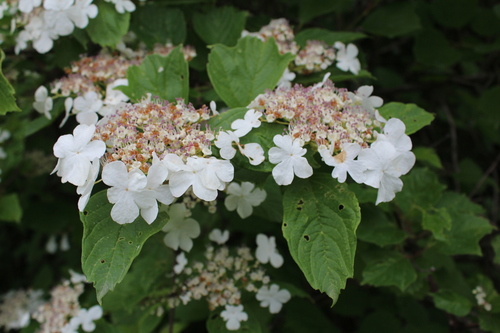
Source: WikipediaViburnum grandiflorum, variously called the cranberry bush, flowering viburnum, grand viburnum, and Himalayan viburnum, is a species of flowering plant in the family Viburnaceae, native to the Himalayan region. It grows in open forests. A sparse shrub or gnarled tree reaching 2–3 m (7–10 ft), it has showy pink flowers larger than the typical viburnum, and red to black fruit, which are edible. It is hardy to USDA zone 6a. The unimproved species is available from commercial suppliers, as is a putative form, Viburnum grandiflorum f. foetens, the stinking Himalayan viburnum, and a number of cultivars, including 'De Oirsprong', 'Desmond Clarke', and 'Snow White'.
Description
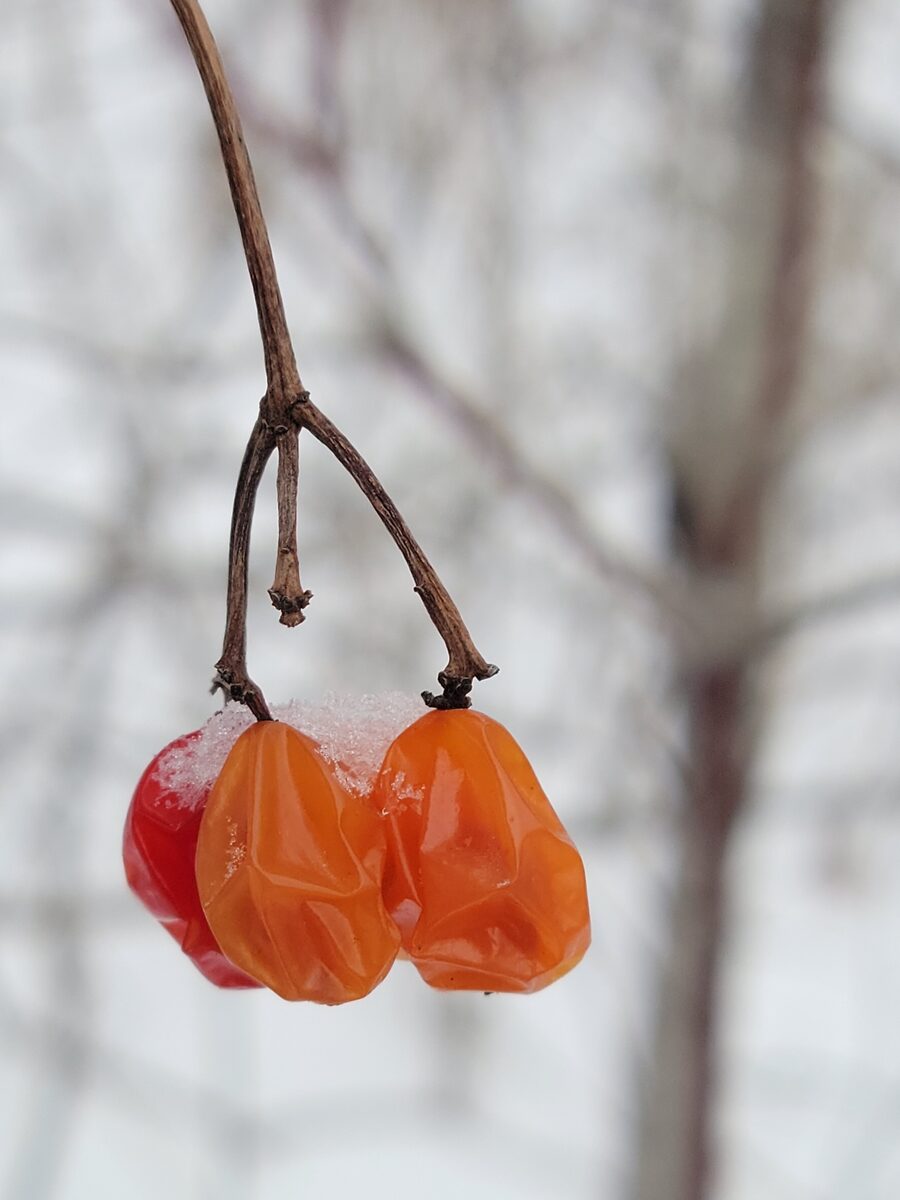
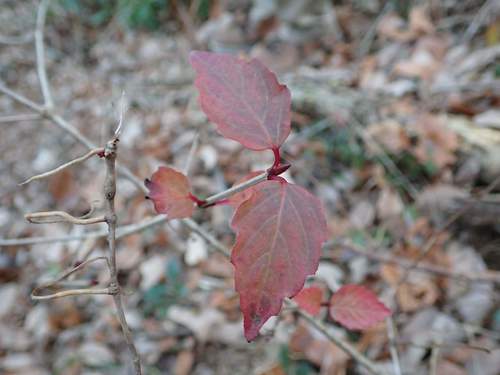
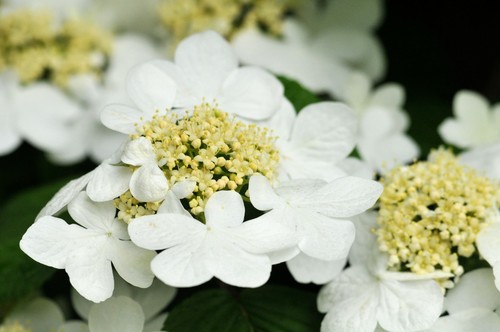
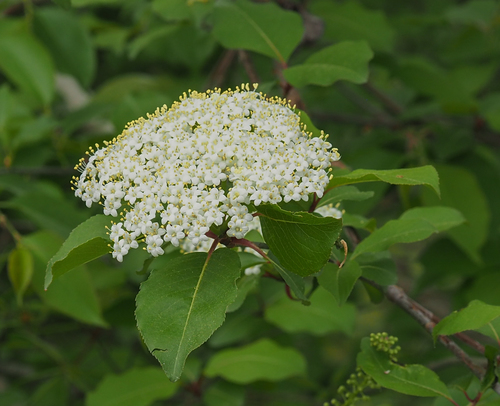
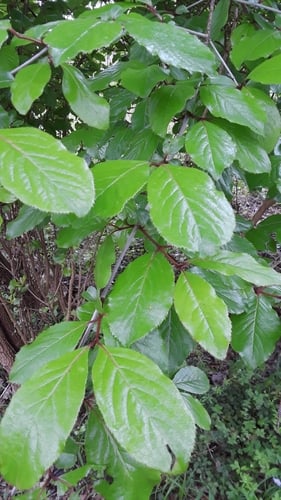
A shrub. It grows to about 3 m high. It spreads 2 m wide. The leaves have stalks. The leaves are 8-10 cm long. They are oval and have teeth around the edge. They are hairy on the veins underneath. The flowers are pinkish and have a scent. The fruit are red, then black. They are oval. They are 2 cm long.
Edible Uses
The fruit can be eaten raw or cooked and has a sweet flavour. The ovoid fruit is about 20mm long and contains a single large seed.
Traditional Uses
The ripe fruit are eaten fresh.
This uses section is brief — help expand it
Medicinal Uses
None known
Distribution
It is a temperate plant. In Nepal plants grow between 3000-3700 m altitude. In Tibet it grows between 2,800-4,300 m above sea level. It suits hardiness zones 7-9.
Where It Grows
Asia, Australia, Bhutan, China, Himalayas, India, Nepal, Northeastern India, NW India, Pakistan, Sikkim, Tibet,
Cultivation
An easily grown plant, it succeeds in most soils but is ill-adapted for poor soils and for dry situations. It prefers a deep rich loamy soil in sun or semi-shade. Best if given shade from the early morning sun in spring. Requires shelter from north and east winds. A very ornamental plant, the deliciously scented flowers are produced in the winter and the flowers are said to withstand temperatures down to -12°c without damage. However fruit is not often produced in this country. This may be due to the plant being self-incompatible and so growing 2 or more different cultivars together may improve fruit set. Hand pollination may also be beneficial as well as siting the plants so that they get the maximum of protection from severe winter weather. A position against an east-facing wall, or on the edge of a woodland, would be ideal for this. Closely allied to V. farreri. The very closely related species V. foetens, which is often included as part of this genus, has a more westerly range, shorter stems and white flowers.
Propagation
Seed is best sown in a cold frame as soon as it is ripe. Germination can be slow, sometimes taking more than 18 months. Seed harvested green — fully developed but not yet fully ripe — and sown immediately in a cold frame should germinate the following spring. Stored seed needs 2 months of warm stratification followed by 3 months of cold stratification, and may still take 18 months to germinate. Prick seedlings into individual pots when large enough to handle and grow on in a cold frame or greenhouse, planting out in late spring or early summer the following year. Softwood cuttings taken in early summer in a frame should be potted individually once rooting begins and planted out the following late spring or early summer. Half-ripe cuttings, 5–8cm long with a heel if possible, taken in July or August in a frame, should be potted as soon as they root. These can be difficult to overwinter and are best kept under glass until spring before planting out. Mature wood cuttings taken in winter in a frame should root in early spring; pot when large enough and plant out in summer if sufficient new growth has formed, otherwise overwinter in a frame and plant out the following spring. Layering of the current season's growth in July or August takes 15 months.
Other Uses
None known Special Uses Scented Plants
Notes
There are about 150 Viburnum species. Also put in the family Caprifoliaceae.
Synonyms
Also Known As
Anrola, Ganhaune, Ghaz, Ghinurya, Goli, Guch, Guchh, Guya, Kalmach, Kilmich, Kuch Gauch, Kunch, Na li mo, Taildi, Talhang, Telam, Telana, Telnu, Thaline, Thelain, Thelka, Timoi, Uklu
References (29)
- Ali, H., et al, 2011, Ethnobotanical profile of some plant resources in Malam Jabba valley of Swat, Pakistan. Journal of Medicinal Plants Research Vol. 5(18), pp 4676-4687
- Ambasta, S.P. (Ed.), 2000, The Useful Plants of India. CSIR India. p 674 (Also as Viburnum foetens)
- Amjad, M. S., et al, 2015, Ethnobotanical inventory and folk uses of indigenous plants from Pir Nasoora National Park, Azad Jammu and Kashmir. Asian Pac J Trop Biomed 2015; 5(3): 234-241
- Bhatia, H., et al, 2018, Traditionally used wild edible plants of district Udhampur, J&K, India. Journal of Ethnobiology and Ethnomedicine (2018) 14:73
- Cundall, P., (ed.), 2004, Gardening Australia: flora: the gardener's bible. ABC Books. p 1467
Show all 29 references Hide references
- Dobriyal, M. J. R. & Dobriyal, R., 2014, Non Wood Forest Produce an Option for Ethnic Food and Nutritional Security in India. Int. J. of Usuf. Mngt. 15(1):17-37 (As Viburnum foetens)
- Flora of Pakistan. www.eFlora.org
- Guo, C., et al, 2022, An Ethnobotany Survey of Wild Plants Used by the Tibetan People of the Yadong River Valley, Tibet, China. Journal of Ethnobiology and Ethnomedicine
- Haj, F., et al, 2012, Species Diversity and Ethno Botanical Classes of the Flora of Allai Valley District Battagram Pakistan. International Journal of Plant Research 2012, 2(4): 111-123
- Hamayun, M., Ethnobotanical Studies of some Useful Shrubs and Trees of District Buner, NWFP, Pakistan (As Viburnum foetens)
- Hedrick, U.P., 1919, (Ed.), Sturtevant's edible plants of the world. p 673 (As Viburnum foetens)
- Jabeen, A., et al, 2009, Indigenous uses of economically important flora of Margallah Hills National Park, Islamabad, Pakistan. African Journal of Biotechnology Vol. 8 (5), pp. 763-784
- V. Jacquemont, Voy. Inde 4(Bot.):75, t. 84. 1835-1844 (As Viburnum foetens)
- Khan, M. A. et al, 2010, An Ethnobotanical Inventory of Himalayan Region Poonch Valley Azad Kashmir (Pakistan). Ethnobotanical Research & Applications 8:107-123 (As Viburnum foetens)
- Khan, M. & Hussain, S., 2014, Diversity of wild edible plants and flowering phenology of district Poonch (J & K) in the northwest Himalaya. Indian Journal of Sci, Res. 9(1): 032-038
- Khan, W., et al, 2013, Ethnomedicinal plants of Kakul Hills, District Abbottabad, KPK, Pakistan.
- Manandhar, N.P., 2002, Plants and People of Nepal. Timber Press. Portland, Oregon. p 474
- Masoodi, H. U. R. & Sundriyal, R. C., 2020, Richness of non-timber forest products in Himalayan communities—diversity, distribution, use pattern and conservation status. Journal of Ethnobiology and Ethnomedicine 16:56
- Mir, M. Y., 2014, Documentation and ethnobotanical survey of wild edible plants used by the tribals of Kupwara, J & K, India. International Journal of Herbal Medicine. 2(4): 11-18
- Morley, B. & Everard, B., 1970, Wild Flowers of the World. Ebury press. Plate 94 (As Viburnum foetens)
- Plants for a Future database, The Field, Penpol, Lostwithiel, Cornwall, PL22 0NG, UK. http://www.scs.leeds.ac.uk/pfaf/ and (As Viburnum foetens)
- Polunin, O., & Stainton, A., 2006, Flowers of the Himalaya, Oxford India Paperbacks. p 170
- Prodr. 4:329. 1830
- Radha, B., et al, 2013, Wild Edible Plant Resources of the Lohba Range of Kedarnath Forest Division (KFD), Garhwal Himalaya, India. Int. Res J. Biological Sci. Vol. 2 (11), 65-73
- Rashid, A., Anand, V.K. & Serwar, J., 2008, Less Known Wild Plants Used by the Gujjar Tribe of District Rajouri, Jammu and Kashmir State. International Journal of Botany 4(2):219-244
- Sawian, J. T., et al, 2007, Wild edible plants of Meghalaya, North-east India. Natural Product Radiance Vol. 6(5): p 423 (As Viburnum foetens)
- Singh, H.B., Arora R.K.,1978, Wild edible Plants of India. Indian Council of Agricultural Research, New Delhi. p 73
- Singh, V. B., et al, (Ed.) Horticulture for Sustainable Income and Environmental Protection. Vol. 1 p 220 (As Viburnum foetens)
- Upreti, K., et al, 2010, Diversity and Distribution of Wild Edible Fruit Plants of Uttarakhand. Bioversity Potentials of the Himalaya. p 193