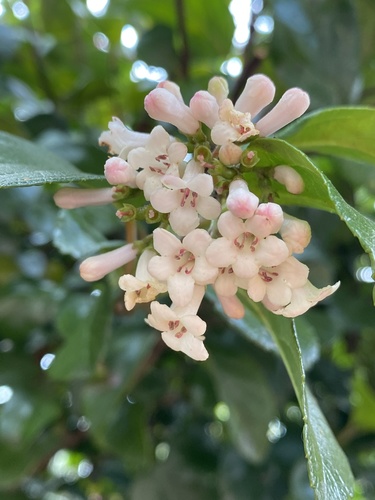
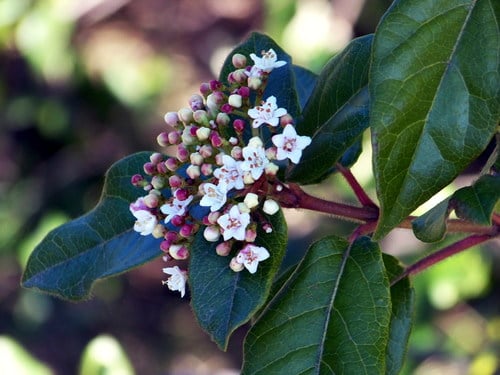
Viburnum lantana
L.
Wayfaring tree, Lantana, Wayfaring Viburnum
iNaturalist· cc-by-nc
(c) mauro_fioretto, some rights reserved (CC BY-NC)
iNaturalist· cc-by-nc
(c) cabraliega, some rights reserved (CC BY-NC)
Summary
Source: WikipediaViburnum lantana, the wayfarer or wayfaring tree, is a species of Viburnum, native to central, southern and western Europe (north to Yorkshire in England), northwest Africa, and southwestern Asia. The vigorous deciduous European treelike shrub is common along waysides.
Description
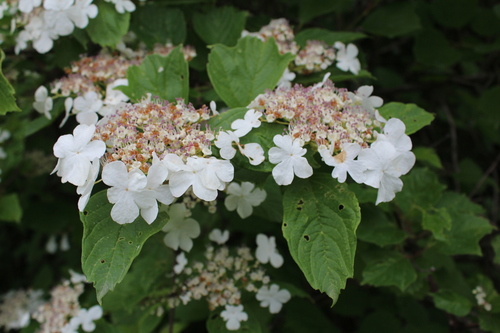
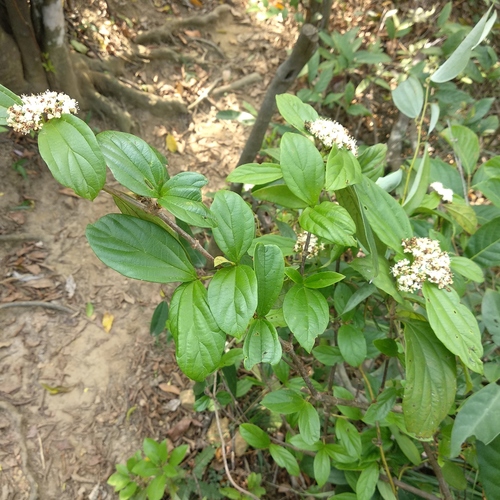
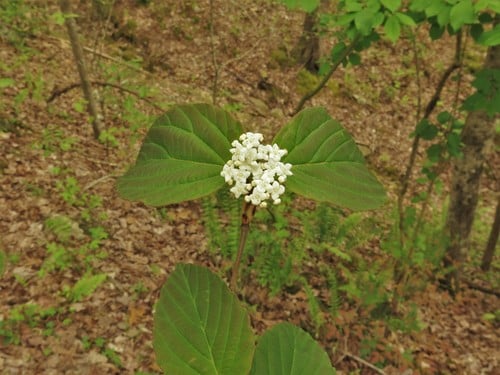
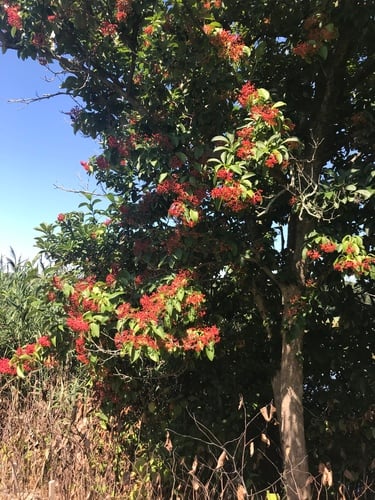
A shrub or very small tree. It grows to 6 m high. The twigs are yellowish grey and mealy. They are very flexible. The leaves are opposite. The leaves are 5-12 cm long. They are oval and have white, silky, branched hairs underneath. The edges of the leaf have teeth. The flowers are white. They are all the same size. The fruit are red but turn black as they ripen. They occur in flat topped clusters.
Edible Uses
The fruit can be eaten raw or cooked, though it is regarded as a famine food and only used when all else fails. The oblong fruit is about 8mm long and contains a single large seed.
Traditional Uses
CAUTION: The fruit are astringent. They are eaten very ripe and raw and also pressed for juice.
This uses section is brief — help expand it
Medicinal Uses
None known
Known Hazards
Large quantities of the fruit can cause vomiting and diarrhoea. The fruit is of very low or zero toxicity, it only causes mild upsets when eaten unripe or in large quantities.
Distribution
It is a temperate plant. It is hardy. It grows on chalk and limestone soils. It suits hardiness zones 3-6. At Anvers Chocolate factory. Arboretum Tasmania.
Where It Grows
Andorra, Armenia, Australia, Britain, Canada, Caucasus, Central Asia, Europe, Georgia, Greece, Hungary, Italy, Luxembourg, Mediterranean, North America, Slovakia, Slovenia, Spain, Tajikistan, Tasmania, Turkey, Türkiye, USA,
Cultivation
An easily grown plant, it succeeds in most soils but is ill-adapted for poor soils and for dry situations. Unlike most members of the genus, this species succeeds on dry soils. It prefers a deep rich moist loamy soil in sun or semi-shade, growing well on chalk and on chalky clays. Intolerant of water-logged soils. Best if given shade from the early morning sun in spring. Dislikes atmospheric pollution. Plants regenerate well after cutting. This plant is a good indicator of limy soils. Tolerates light shade in a woodland. One report says the plant is self-sterile, another that it is self-fertile. It would be wise to grow at least two genetically distinct plants of the same species in order to make sure that fruit and seed is produced.
Propagation
Seed is best sown in a cold frame as soon as it is ripe. Germination can be slow, sometimes taking more than 18 months. Seed harvested green — fully developed but not yet fully ripe — and sown immediately in a cold frame should germinate the following spring. Stored seed needs 2 months of warm stratification followed by 3 months of cold stratification, and may still take 18 months to germinate. Prick seedlings into individual pots when large enough to handle and grow on in a cold frame or greenhouse, planting out in late spring or early summer the following year. Softwood cuttings taken in early summer in a frame should be potted individually once rooting begins and planted out the following late spring or early summer. Half-ripe cuttings, 5–8cm long with a heel if possible, taken in July or August in a frame, should be potted as soon as they root. These can be difficult to overwinter and are best kept under glass until spring before planting out. Mature wood cuttings taken in winter in a frame should root in early spring; pot when large enough and plant out in summer if sufficient new growth has formed, otherwise overwinter in a frame and plant out the following spring. Layering of the current season's growth in July or August takes 15 months.
Other Uses
The young stems can be used as twine. This species is also used as a rootstock for grafting all forms of viburnums that require it.
Other Information
The fruit are eaten raw by children.
Notes
There are about 150 Viburnum species. Also put in the family Caprifoliaceae.
Also Known As
Baratsza, Chornaya kalina, Dobrovita, Matacano, Nyomitto, Nyomtato, Ostormenfa, Uzani
References (20)
- Bussman, R. W., et al, 2016, A comparative ethnobotany of Khevsureti, Samtskhe-Javakheti, Tusheti, Svaneti, and Racha-Lechkhumi, Republic of Georgia (Sakartvelo), Caucasus. Journal of Ethnobiology and Ethnomedicine (2016) 12:43
- Bussman, R. W., et al, 2021, Unity in diversity—food plants and fungi of Sakartvelo (Republic of Georgia), Caucasus. Journal of Ethnobiology and Ethnomedicine (2021) 17:72 p 4
- Cakir, E. A., 2017, Traditional knowledge of wild edible plants of Iğdır Province (East Anatolia, Turkey). Acta Soc Bot Pol. 2017;86(4):3568
- Cundall, P., (ed.), 2004, Gardening Australia: flora: the gardener's bible. ABC Books. p 1467
- Denes, A., et al, 2012, Wild plants used for food by Hungarian ethnic groups living in the Carpathian Basin. Acta Societatis Botanicorum Poloniae 81 (4): 381-396
Show all 20 references Hide references
- Ertug, F, Yenen Bitkiler. Resimli Türkiye Florası -I- Flora of Turkey - Ethnobotany supplement
- Farrar, J.L., 1995, Trees of the Northern United States and Canada. Iowa State University press/Ames p 178
- Harris, E & J., 1983, Field Guide to the Trees and Shrubs of Britain. Reader's Digest. p 88
- Hibbert, M., 2002, The Aussie Plant Finder 2002, Florilegium. p 306
- http://www.botanic-gardens-ljubljana.com/en/plants
- Kremer, B.P., 1995, Shrubs in the Wild and in Gardens. Barrons. p 137. (Fruit listed as poisonous)
- Lord, E.E., & Willis, J.H., 1999, Shrubs and Trees for Australian gardens. Lothian. p 269
- Luczaj, L., 2012, Ethnobotanical review of wild edible plants of Slovakia. Acta Societatis Botanicorum Poloniae 81(4):245-255
- Pardo-de-Santayana, M., et al, 2005, The gathering and consumption of wild edible plants in the Campoo (Cantabria, Spain). International Journal of Food Sciences and Nutrition. 56(7): 529-542
- Pardo-de-Santayana, M., et al, 2007, Traditional knowledge of wild edible plants used in the northwest of the Iberian Peninsula (Spain and Portugal): a comparative study. Journal of Ethnobiology and Ethnomedicine 2007, 3:27
- Pieroni, A., et al, 2020, Wild food plants traditionally gathered in central Armenia: archaic ingredients or future sustainable foods? Environment, Development and Sustainability. Springer p 12
- Plants for a Future database, The Field, Penpol, Lostwithiel, Cornwall, PL22 0NG, UK. http://www.scs.leeds.ac.uk/pfaf/
- Sfikas, G., 1984, Trees and shrubs of Greece. Efstathiadis Group. Athens. p 188
- Sp. pl. 1:268. 1753
- Tardio, J., et al, Ethnobotanical review of wild edible plants in Spain. Botanical J. Linnean Soc. 152 (2006), 27-71