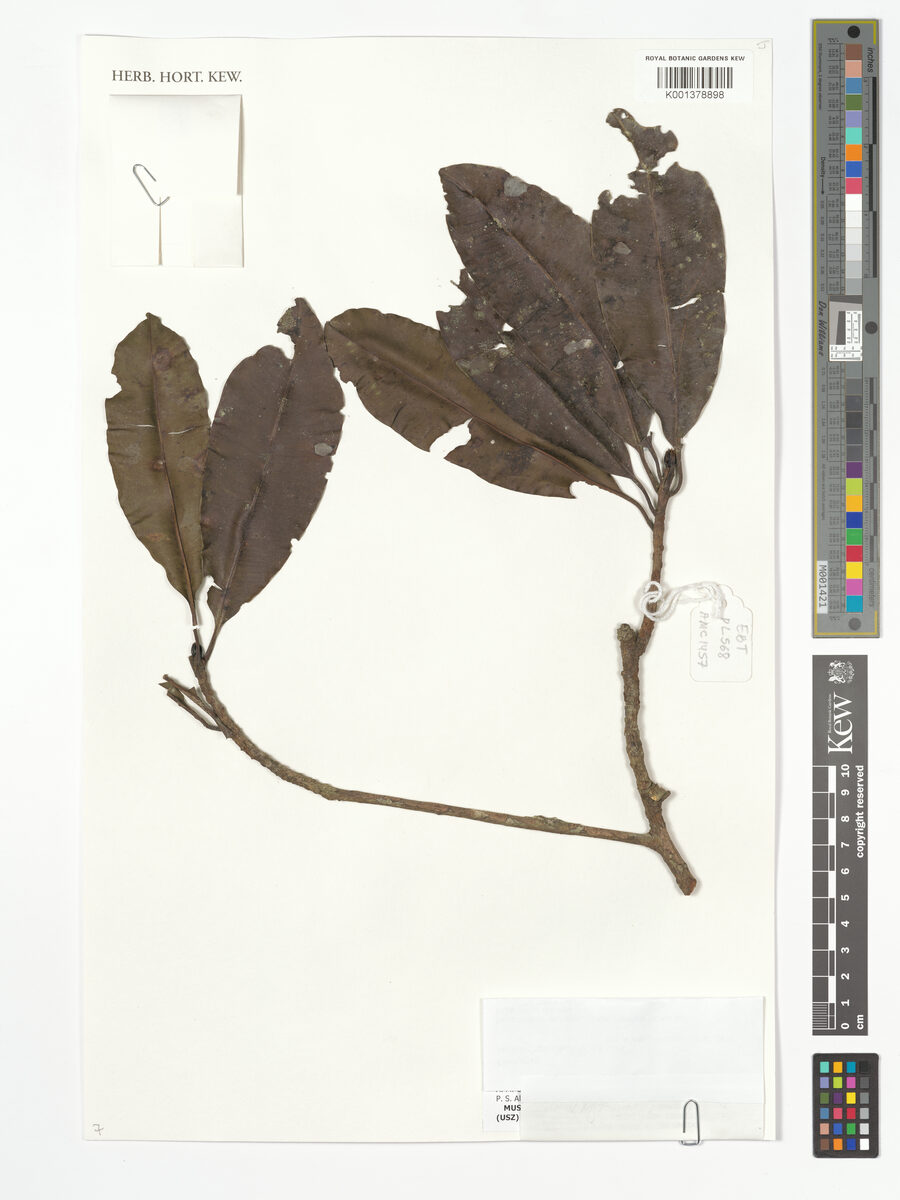
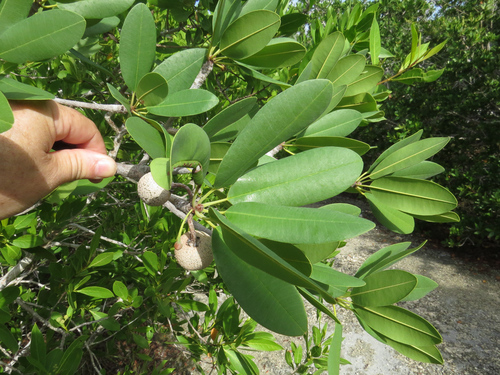
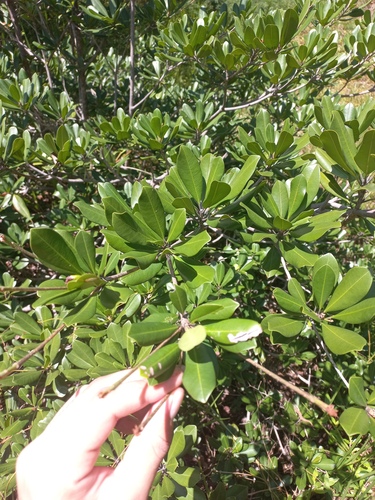
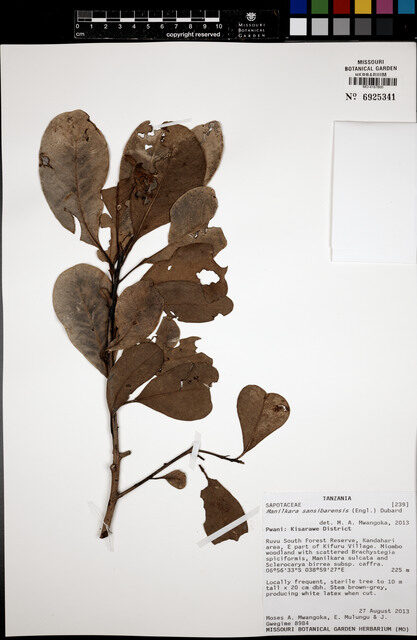
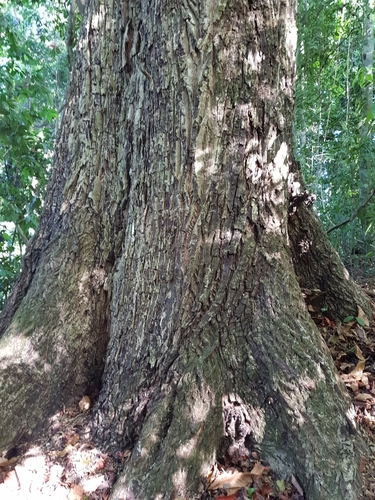
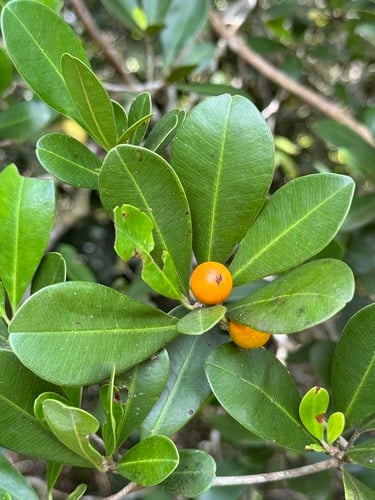
Chrysophyllum argenteum
Jacq.
Lechecillo
iNaturalist· cc-by-nc
(c) Nils Servientis - Bivouac Naturaliste, some rights reserved (CC BY-NC)
iNaturalist· cc-by-nc
(c) Nils Servientis - Bivouac Naturaliste, some rights reserved (CC BY-NC)
iNaturalist· cc-by-nc
(c) Nils Servientis - Bivouac Naturaliste, some rights reserved (CC BY-NC)
Summary
Source: WikipediaChrysophyllum argenteum is a tree in the family Sapotaceae, native to the tropical Americas.
Description
A tree. It grows 5-8 m tall. The trunk is 10-20 cm across. The leaves vary in shape. They are oblong and are silvery grey underneath. They are alternate and 8-12 cm long by 3-6 cm wide. The flowers are bell shaped and greenish-yellow. They are in clusters at the base of the leaves. The fruit is the size of a plum. The pulp is bluish.
Edible Uses
The fruit is milky and edible, eaten especially by children.
Traditional Uses
The fruit are milky and edible.
This uses section is brief — help expand it
Medicinal Uses
The heated bark is used as a medication on sores.
Distribution
A tropical plant. It grows in semi-evergreen seasonal forest. It is often by rivers. It grows on moist limestone soils.
Where It Grows
Amazon, Antigua, Barbados, Bolivia, Brazil, Caribbean, Central America, Colombia, Cuba, Dominica, Dominican Republic, Ecuador, Grenada, Guadeloupe, Guiana, Guianas, Guyana, Haiti, Hispaniola, Honduras, Martinique, Montserrat, Panama, Peru, Puerto Rico, South America, St Lucia, St. Vincent and Grenadines, Suriname, Trinidad & Tobago, Venezuela, West Indies,
Cultivation
Plants can flower and fruit all year round.
Other Uses
The wood with light brown sapwood is reported to be hard, heavy, strong, tough, and durable. It is used chiefly for making posts and is utilized in construction and carpentry. The wood is used for making charcoal.
Other Information
The fruit are eaten especially by children.
Notes
There are about 80-150 Chrysophyllum species. They are mostly in tropical America. There are 44 species in tropical America.
Synonyms
Also Known As
Ayu wanpula, Bwi, Bwi kayamit, Caimito blanco, Caimito de mono, Ko piwa du chi, Kucha aviyu, Milky iron, Turu aviyu, Urku aviyu, Wild kaimit
References (17)
- Barfod, A. S. & Kvist, L. P., 1996, Comparative Ethnobotanical Studies of the Amerindian Groups in Coastal Ecuador. The Danish Academy of Sciences and Letters. p 79
- Condit, R., et al, 2011, Trees of Panama and Costa Rica. Princeton Field Guides. p 434
- Ekman Herbarium records Haiti
- Enum. syst. pl. 15. 1760 (Select. stirp. amer. hist. 53, t. 38, fig. 1. 1763)
- Ferns, Useful Tropical Plants
Show all 17 references Hide references
- Fouqué, A., 1972, Espèces fruitières d'Amérique tropicale. Institut français de recherches fruitierès outre-mer (ifac)
- Grandtner, M. M., 2008, World Dictionary of Trees. Wood and Forest Science Department. Laval University, Quebec, Qc Canada. (Internet database http://www.WDT.QC.ca)
- Grandtner, M. M. & Chevrette, J., 2013, Dictionary of Trees, Volume 2: South America: Nomenclature, Taxonomy and Ecology. Academic Press p 129
- Hedrick, U.P., 1919, (Ed.), Sturtevant's edible plants of the world. p 188
- Hedrick, U.P., 1919, (Ed.), Sturtevant's edible plants of the world. p 188 (As Chrysophyllum glabrum)
- Kermath, B. M., et al, 2014, Food Plants in the Americas: A survey of the domesticated, cultivated and wild plants used for Human food in North, Central and South America and the Caribbean. On line draft. p 222
- Little, E. L. & Wadsworth, F. H., 1964, Common Trees of Puerto Rico and the Virgin Islands. USDA Agriculture Handbook No. 249
- Miguel, E., et al, 1989, A checklist of the cultivated plants of Cuba. Kulturpflanze 37. 1989, 211-357
- Penafield Anchundia, D. D., 2017, Traditional food consumption and its nutritional contribution in Guasaganda, Central Ecuador. PhD Ghent University p 72
- Plants of Haiti Smithsonian Institute http://botany.si.edu/antilles/West Indies
- Roa, J. A. G. & Boada, D. S. G., 2018, Fundación para el Fortalecimiento de la Fruticultura y Plantas Alimenticias no Convencionales en Colombia.
- Torre, de la, L., et al, 2008, Enciclopedia de las Plantas Útiles del Ecuador. Herbario QCA. Pontificia Universidad Católica del Ecuador. p 569