Chrysophyllum albidum
G. Don
White star-apple, African star apple
iNaturalist· cc-by-nc
(c) Babajide Agboola, some rights reserved (CC BY-NC)
iNaturalist· cc-by-nc
(c) Babajide Agboola, some rights reserved (CC BY-NC)
iNaturalist· cc-by-nc
(c) Babajide Agboola, some rights reserved (CC BY-NC)
Description
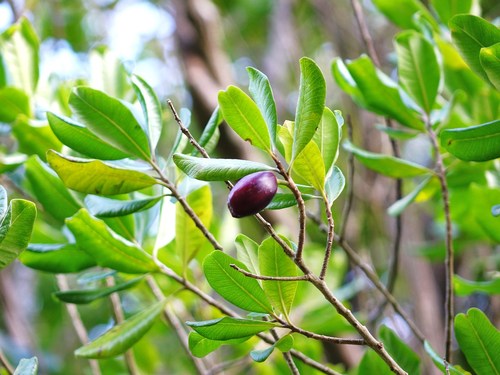
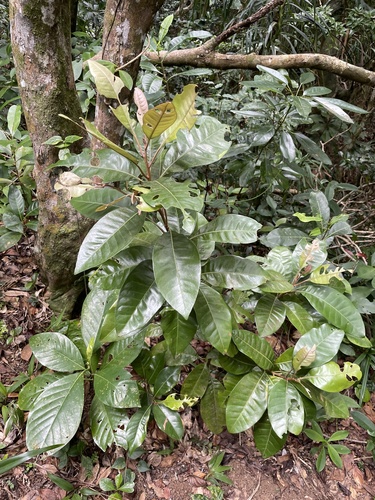
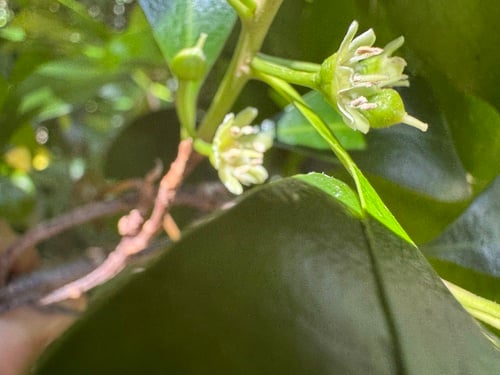
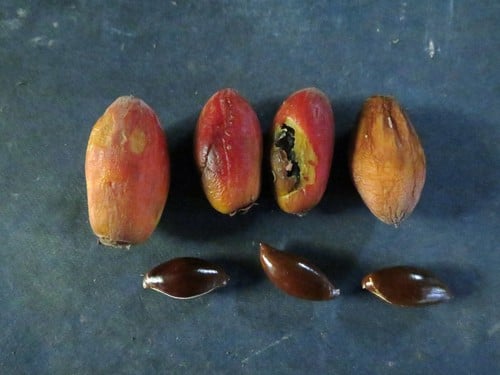
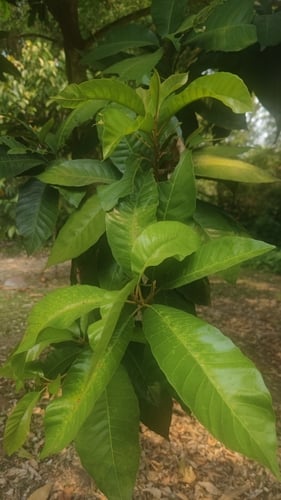
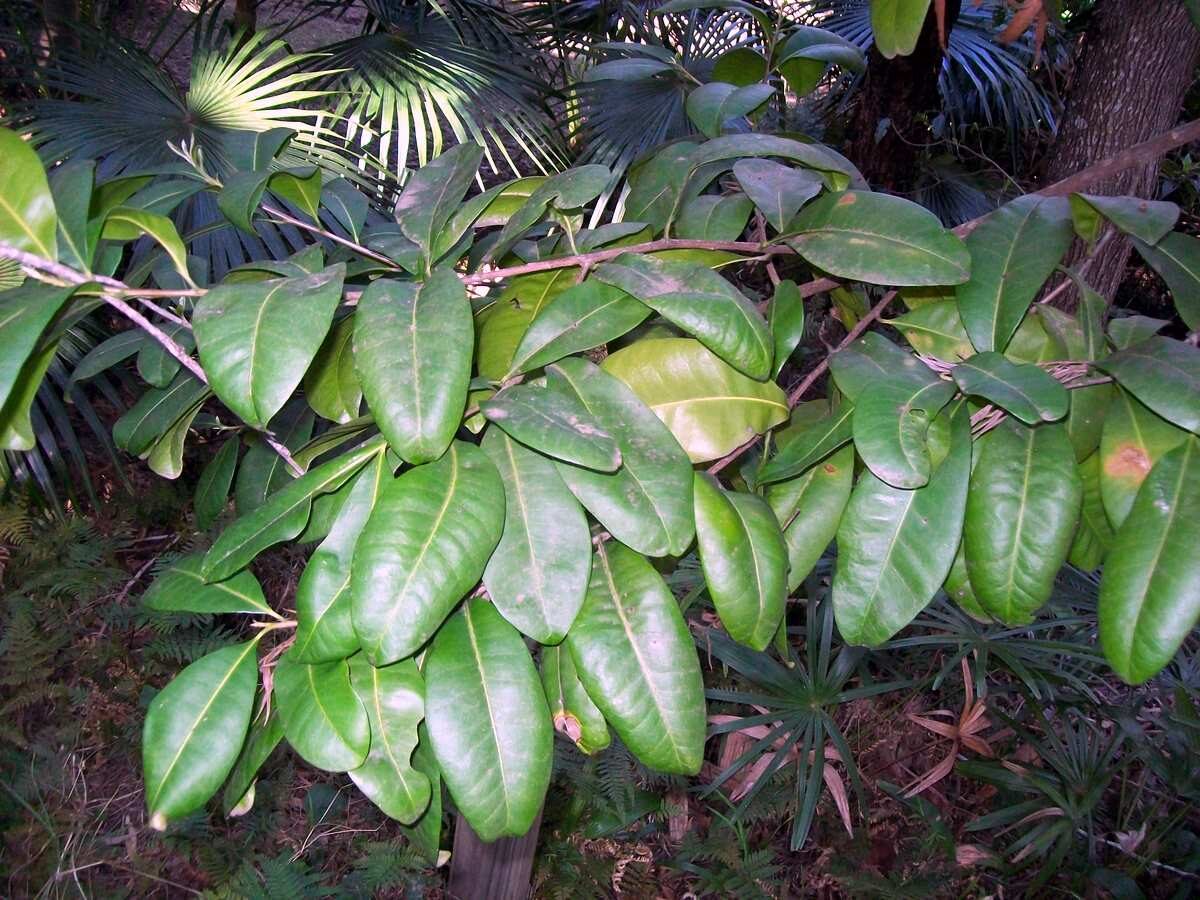
A straight tree. It grows 30-60 m tall. It has a fluted trunk and small buttresses. The crown is dense. The tree has white milky sap. The bark is thin and pale grey-brown. It has a network of zigzag cracks. The leaves are oval and 12-2 cm long. The tip is usually pointed. The under surface of the leaves is white or silvery grey. The under surface of young leaves is golden brown due to soft hairs. The midrib is sunken on the upper surface and prominent below. It has clear side veins. The leaf stalk is 3 cm long. The flowers are cream yellow. They are very small and in dense stalked clusters. They are usually in the axils of the leaves. The fruit are yellow-orange when ripe. They are rounded and 3-7 cm across. They have a sharp tip. The seeds are 2.5 cm long and brown and shiny. They are in a sweet acid edible pulp. The seeds are bean like with one sharp edge. When the fruit is cut crossways the seeds are arranged in a star shape.
Edible Uses
The ripe fruit are eaten raw, and the sweet acid pulp is used to make jams, jellies, and drinks. The seeds yield oil.
Traditional Uses
The ripe fruit are eaten raw. They are also used for jam and jellies. They are also used for drinks.
This uses section is brief — help expand it
Medicinal Uses
The fruit has antioxidant benefits.
Distribution
A tropical plant. It grows in tropical Africa. It grows in lowland rainforest. It suits humid locations. In Nigeria it grows to 1,800 m above sea level.
Where It Grows
Africa, Benin, Cameroon, Central Africa, Central African Republic, CAR, Chad, Congo, Congo R, Côte d'Ivoire, East Africa, Gabon, Ghana, Ivory Coast, Kenya, Liberia, Malawi, Niger, Nigeria, Sahel, Sao Tome and Principe, Sierra Leone, Sudan, Tanzania, Uganda, West Africa,
Cultivation
Plants can be grown from seed. The fruit are collected from the ground after falling and squashed and the pulp removed to get the seeds. Seeds can be stored in a cool dry place. Young plants need shade. Plants can be budded.
Propagation
Seed - takes up to six weeks to germinate. Lightly cracking the seed prior to sowing can reduce the germination time. Greenwood cuttings. Air layering. Grafting.
Other Uses
The juice of the leaves is used instead of lime juice for coagulating flake rubber. The brownish-white wood is soft, coarse and open in grain; very perishable in contact with the ground; easy to saw and plane; nails well; takes a fine polish. It is suitable for construction work, tool handles and similar purposes.
Other Information
The fruit are sold in local markets. It is an important fruit tree in Nigeria.
Notes
There are about 80 Chrysophyllum species. They are mostly in tropical America. There are 44 species in tropical America. The fruit has antioxidant benefits. The correct name may be Gambeya albida
Synonyms
Also Known As
Agbalumo, Agwaliba, An-lonko, Ehia, Fira-minike, Tegelei, Teke-kone, Tekene, Teyei, Udala nkiti, Udara
References (37)
- Aboagye, L. M., et al, 2007, Underutilized species Policies and Strategies. Report. CSIR Ghana. p 11
- Aniama, S. O., et al, 2016, Ethnobotanical documentaton of some plants among Igala people of Kogi State (Nigeria). The International Journal Of Engineering And Science (IJES). 5(4) pp 33-42
- Assogbadjo, A. E. et al, 2013, Specific Richness and Cultural Importance of Wild Edible Trees in Benin. Acta Hort. 979, ISHS 2013
- Awodoyin, R.O., Olubode, O.S., Ogbu, J.U., Balogun, R.B., Nwawuisi, J.U. and Orji, K.O., 2015, Indigenous Fruit Trees of Tropical Africa: Status, Opportunity for Development and Biodiversity Management. Agricultural Sciences, 6, 31-41
- Burkill, H. M., 1985, The useful plants of west tropical Africa, Vol. 5. Kew.
Show all 37 references Hide references
- Chapman, J. D. & Chapman, H. M., 2001, The Forest Flora of Taraba and Andamawa States, Nigeria. WWF & University of Canterbury. p 201
- Codjia, J. T. C., et al, 2003, Diversity and local valorisation of vegetal edible products in Benin. Cahiers Agricultures 12:1-12
- Dale, I. R. and Greenway, P. J., 1961, Kenya Trees and Shrubs. Nairobi. p 524
- Dalziel, J. M., 1937, The Useful plants of west tropical Africa. Crown Agents for the Colonies London.
- Dandare, S. U., et al, 2017, In vitro Antioxidant Activity of Chrysophyllum albidum Fruit. Nigerian Journal of Basic and Applied Science (June, 2017), 25(1): 17-22
- Facciola, S., 1998, Cornucopia 2: a Source Book of Edible Plants. Kampong Publications, p 226
- Ferns, Useful Tropical Plants
- Food Composition Tables for use in Africa FAO http://www.fao.org/infoods/directory No. 1039
- Gen. hist. 4:32. 1837
- INFOODS:FAO/INFOODS Databases
- Jardin, C., 1970, List of Foods Used In Africa, FAO Nutrition Information Document Series No 2.p 127
- Katende, A.B., Birnie, A & Tengnas B., 1995, Useful Trees and Shrubs for Uganda. Identification, Propagation and Management for Agricultural and Pastoral Communities. Technical handbook No 10. Regional Soil Conservation Unit, Nairobi, Kenya. p 178
- Keay, R.W.J., 1989, Trees of Nigeria. Clarendon Press, Oxford. p 397
- Kuhnlein, H. V., et al, 2009, Indigenous Peoples' food systems. FAO Rome p 261
- Larinde, S. L., 2014, Edible Fruit Trees Diversity in a Peri-Urban centre: Implications for Food Security and Urban Greening. Journal of Environment and Ecology. Vol. 5 No. 2
- Leakey, R. R. B., 1999, Potential for novel food products from agroforestry trees: A review. Food Chemistry. 66:1-14
- liberianfaunaflora.org Plant Atlas
- Meregini, O. A., 2005, Some endangered plants producing edible fruits and seeds in Southeastern Nigeria. Fruits, Vol. 60 pp 211-220
- Mutie, F. M., et al, 2023, Important Medicinal and Food Taxa (Orders and Families) in Kenya, Based on Three Quantitative Approaches. Plants 2023, 12, 1145 (As Gambeya albida)
- Nkeoua, G. & Boundzanga, G. C., 1999, Donnees sur les produits forestieres non ligneux en Republique du Congo. FAO. p 27 (As Gambeya albida)
- Nyadanu, D., et al, 2015, Agro-biodiversity and challenges of on-farm conservation: the case of plant genetic resources of neglected and underutilized crop species in Ghana. Genet. Resourc. Crop Evol. 62(7):
- Okafor, J. C., 1978, Development of Forest Tree crops for Food Supplies in Nigeria. Forest Ecology and Management 1:235-247
- Osamudiamen, P. M. & Afolabi, L. O., 2014, Fatty acid composition of the seed oil of Chrysophyllum albidum (G.Don). African Journal of Plant Science. Vol. 8(7), pp. 364-365, July 2014
- Peters, C. R., O'Brien, E. M., and Drummond, R.B., 1992, Edible Wild plants of Sub-saharan Africa. Kew. p 182
- Salvi, J. et al, 2016, A review: Underutilized wild edible plants as a potential source of alternative nutrition. International Journal of Botany Studies. Volume 1; Issue 4; May 2016; Page No. 32-36
- Umara, M., et al, 2015, Extraction of Chrysophyllum albidum Seed Oil: Optimization and Characterization. Chemical and Process Engineering Research. Vol.30, 2015
- Savill, P. S. & Fox, J. E. D., Trees of Sierra Leone. p 238
- USDA, ARS, National Genetic Resources Program. Germplasm Resources Information Network - (GRIN). [Online Database] National Germplasm Resources Laboratory, Beltsville, Maryland. Available: www.ars-grin.gov/cgi-bin/npgs/html/econ.pl (10 April 2000)
- von Katja Rembold, 2011, Conservation status of the vascular plants in East African rain forests. Dissertation Universitat Koblenz-Landau p 160
- Wiersema, J. H. & Leon, B., 2013, World Economic Plants. A Standard Reference CRC Press. 2nd Ed. p 173
- World Checklist of Useful Plant Species 2020. Royal Botanic Gardens, Kew
- www.worldagroforestrycentre.org/treedb/