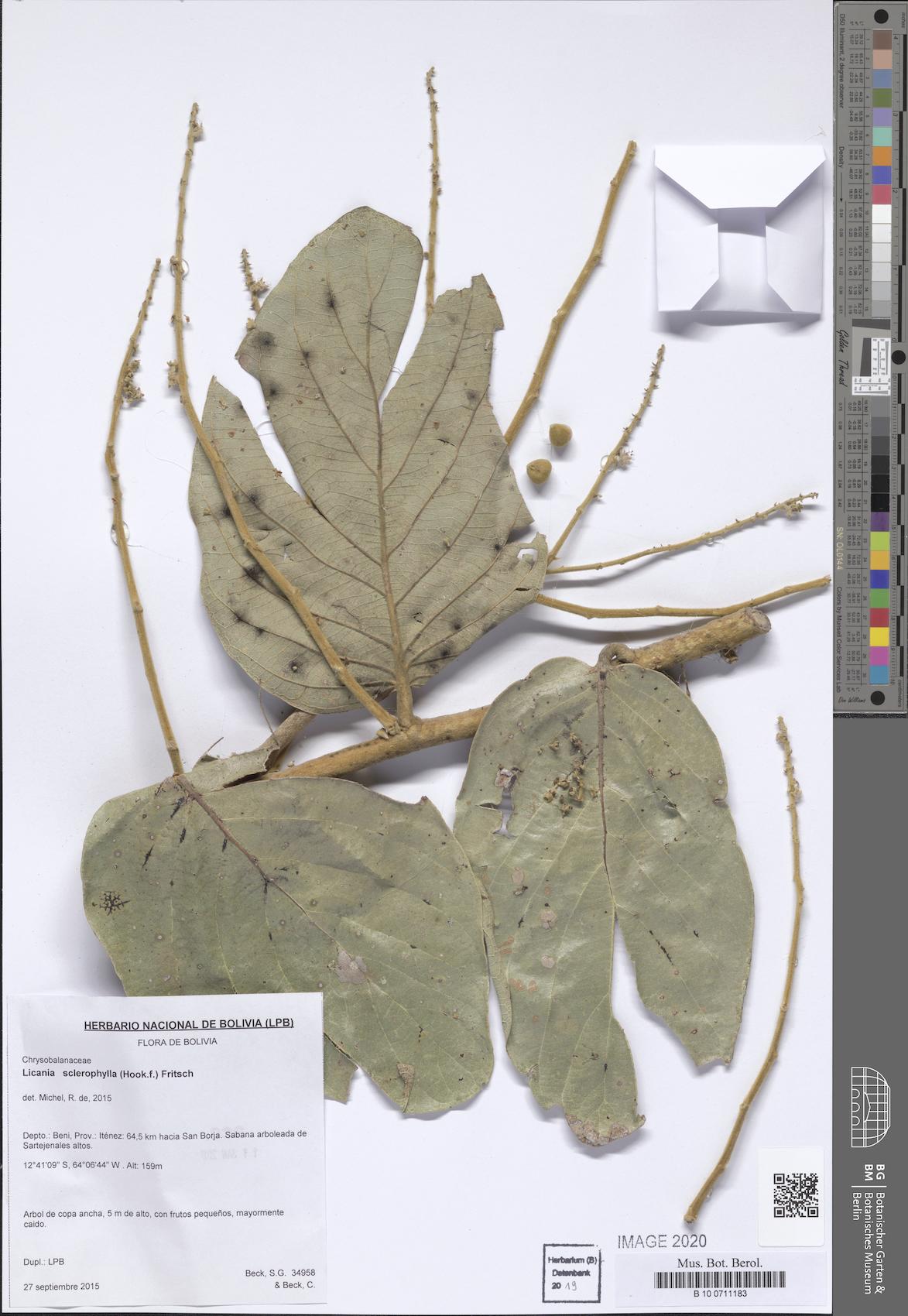
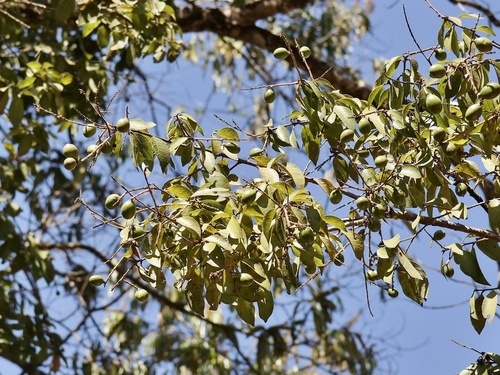
Chrysobalanus icaco
L.
Cocoplum, Icaco
iNaturalist· cc-by
(c) Eridan Xharahi, some rights reserved (CC BY), uploaded by Eridan Xharahi
iNaturalist· cc-by-nc
(c) gladesgal, some rights reserved (CC BY-NC)
iNaturalist· cc-by
(c) Jean-Lou Justine, some rights reserved (CC BY), uploaded by Jean-Lou Justine
Summary
Source: WikipediaChrysobalanus icaco, the cocoplum, paradise plum, abajeru or icaco, also called fat pork in Trinidad and Tobago, is a low shrub or bushy tree found near sea beaches and inland throughout tropical Africa, tropical Americas and the Caribbean, and in southern Florida and the Bahamas. An evergreen, it is also found as an exotic species on other tropical islands, where it has become a problematic invasive. Although taxonomists disagree on whether Chrysobalanus icaco has multiple subspecies or varieties, it is recognized as having two ecotypes, described as an inland, much less salt-tolerant, and more upright C. icaco var. pellocarpus and a coastal C. icaco var. icaco. Both the ripe fruit of C. icaco, and the seed inside the ridged shell it contains, are considered edible.
Description
A shrub or small evergreen tree. It grows 1-6 m tall. The branches are long, flexible and whip-like. The leaves are evenly spaced and leathery. They are rounded and stiffly erect. They are simple and rich green. The flowers are small and greenish-white. They are in erect clusters in the axils of the leaves. The fruit is smooth and white, yellow, red, black or purple. It has a cotton like pulp. The fruit contains a large nut-like edible seed with 5 ridges.
Edible Uses
The fruit can be eaten raw or cooked. It has a fairly sweet, white, spongy flesh and can be stewed in sugar, dried like prunes, or made into jams and jellies. The ovoid fruit is 2–5cm long; purple or red-skinned forms are considered superior in flavour to white ones. The seed is also edible raw or cooked and has a delicious flavour — it is typically roasted and eaten. When the fruits are preserved, they are pierced right through the centre including the seed, which allows the fruit juice to penetrate; after separation from the shell, the nut-like kernel is eaten. An edible oil can also be extracted from the seed.
Traditional Uses
The fruit are normally used for preserves. They are also candied. They can be eaten raw. They are used for jams and jellies. For preserves the fruit is pierced through including the kernel to allow the syrup to penetrate. The seed kernel is roasted and eaten. (The shell is removed)
Medicinal Uses
The root, bark, fruit, and leaves all contain tannins and are astringent. They are used internally to treat diarrhoea, dysentery, and dyspepsia, and externally as a wash for skin complaints. The juice of the roots and leaves, mixed with oil, is used to contract the sphincters of the vulva by women wishing to simulate virginity, and the same preparation is used by men to treat flaccid scrotum.
Distribution
It is a tropical plant. It grows in the hot tropical lowlands. It grows in sandy coastal locations. The soil needs to be very well drained. It can be used to stabilise dunes. It can grow in arid places.
Where It Grows
Africa, Amazon, Angola, Antigua, Argentina, Asia, Australia, Bahamas, Barbados, Belize, Benin, Bermuda, Brazil*, Cameroon, Caribbean, Cayman Islands, Central Africa, Central America*, China, Colombia, Congo, Costa Rica, Côte d'Ivoire, Cuba, Dominica, Dominican Republic, East Africa, Ecuador, El Salvador, Fiji, French Guiana, Gabon, Gambia, Ghana, Grenada, Guadeloupe, Guatemala, Guianas, Guinea, Guinée, Guinea-Bissau, Guyana, Haiti, Hawaii, Honduras, India, Indochina, Ivory Coast, Jamaica, Liberia, Marquesas, Martinique, Mexico, Nicaragua, Nigeria, North America, Pacific, Panama, Philippines, Puerto Rico, SE Asia, Senegal, Seychelles, Sierra Leone, Singapore, South America, St. Kitts, St. Lucia, St. Vincent and Grenadines, Suriname, Trinidad and Tobago, USA, Venezuela, Vietnam, West Africa, West Indies,
Cultivation
Plants are grown from seed, cuttings or by layering. Seed can be collected from ripe fruit that are allowed to rot to make it easier to remove the seed. Seed only store for a short time. Fresh seed should be planted. They germinate in 20-25 days. Seedlings can be transplanted into the field in 6-7 days.
Propagation
Seed is best sown as soon as it is ripe in a partially shaded nursery seedbed. A moderate germination rate can be expected, with sprouting occurring within 20–25 days. When seedlings reach 4–5cm tall, pot them up into individual containers; they should be ready to plant out 6–7 months later. Propagation is also possible from soft nodal cuttings, woody stem cuttings, and layering.
Other Uses
Plants can be grown as a hedge and are particularly well suited to coastal conditions. The plant often forms large, rambling, impenetrable thickets and has been used to stabilize sand dunes. An oil can be obtained from the seed. The seeds are so rich in oil that they can be strung on sticks and burned like candles. The bark is rich in tannins. A black dye can be obtained from both the fruit and the leaves.
Other Information
The fruit are eaten by children. The fruit are served in restaurants in Cuba. It is a cultivated food plant. They are also bottled.
Notes
There are 3 Chrysobalanus species.
Nutrition
| Part | Moisture | kJ | kcal | Protein | Vit A | Vit C | Iron | Zinc |
|---|---|---|---|---|---|---|---|---|
| Nuts | 22.8 | 1881 | 450 | 4.2 | — | — | 3.6 | — |
| Fruit | 86.3 | 196 | 47 | 0.4 | 20 | 9 | 17 | — |
Synonyms
Also Known As
Baraska siuli, Bopace, Caco, Caimito, Cocoaplum, Ebenga, Ebenha, Enhapitche, Fat pork, Hicaco, Icaco, Icacopruim, Ikak, Man du'a, Odora pear, Pe-pe, Pigeon plum, Ponm zikak, Siringuela
References (64)
- Altschul, S.V.R., 1973, Drugs and Foods from Little-known Plants. Notes in Harvard University Herbaria. Harvard Univ. Press. Massachusetts. no. 1484
- Ambasta, S. P. (Ed.), 2000, The Useful Plants of India. CSIR India. p 122
- Barwick, M., 2004, Tropical and Subtropical Trees. A Worldwide Encyclopedic Guide. Thames and Hudson p 111
- Blake, S. F., Native Names and Uses of some Plants of Eastern Guatemala and Honduras. Contributions from the National Herbarium. p 91
- Burkill, H. M., 1985, The useful plants of west tropical Africa, Vol. 2. Kew.
Show all 64 references Hide references
- Burkill, I. H., 1966, A Dictionary of the Economic Products of the Malay Peninsula. Ministry of Agriculture and Cooperatives, Kuala Lumpur, Malaysia. Vol 1 (A-H) p 539
- Chizmar Fernandez, C., et al, 2009, Plantas comestibles de Centroamerica. Instituto de Biodiversidad, Costa Rica. p 141
- Coe, F. G., and Anderson, G. J., 1996, Ethnobotany of the Garifuna of Eastern Nicaragua. Economic Botany 50(1) pp 71-107
- Coe, F. G. & Anderson, G. J., 1997, Ethnobotany of the Miskitu of Eastern Nicaragua. Journal of Ethnobiology 17(2): 171-214 (As Chrysobalanus pellocarpus)
- Coe, F. G. and Anderson, G. J., 1999, Ethnobotany of the Sumu (Ulwa) of Southeastern Nicaragua and Comparisons with Miskitu Plant Lore. Economic Botany Vol. 53. No. 4. pp. 363-386
- Coronel, R.E., 1982, Fruit Collections in the Philippines. IBPGR Newsletter p 6
- Dalziel, J. M., 1937, The Useful plants of west tropical Africa. Crown Agents for the Colonies London. (As Chrysobalanus orbicularis)
- Djihounouck, Y., et al, 2018, Diversité Et Importance Socio-Economique Des Espèces Fruitières Sauvages Comestibles En Zone Kasa (Sud-Ouest Du Sénégal). European Scientific Journal December 2018 edition Vol.14, No.36 ISSN: 1857 – 7881 (As Chrysobalanus ellipticus and Chrysobalanus orbicularis)
- Ekman Herbarium records Haiti
- Facciola, S., 1998, Cornucopia 2: a Source Book of Edible Plants. Kampong Publications, p 78
- FAO, 1993, Valor Nutritivo Y Usis en Alimantacion humana de Algunis Cultivos Autoctonos Subexplotados de Mesoamerica. FAO, Santiago, Chile. p 28
- Food Composition Tables for use in East Asia FAO http://www.fao.org/infoods/directory No. 845
- Grandtner, M. M., 2008, World Dictionary of Trees. Wood and Forest Science Department. Laval University, Quebec, Qc Canada. (Internet database http://www.WDT.QC.ca)
- Grandtner, M. M. & Chevrette, J., 2013, Dictionary of Trees, Volume 2: South America: Nomenclature, Taxonomy and Ecology. Academic Press p 128
- Hedrick, U.P., 1919, (Ed.), Sturtevant's edible plants of the world. p 188 (Also as Chrysobalanus ellipticus)
- Hermandez Bermejo, J.E., and Leon, J. (Eds.), 1994, Neglected Crops. 1492 from a different perspective. FAO Plant Production and Protection Series No 26. FAO, Rome. p15
- Heywood, V.H., Brummitt, R.K., Culham, A., and Seberg, O. 2007, Flowering Plant Families of the World. Royal Botanical Gardens, Kew. p 99
- Hu, Shiu-ying, 2005, Food Plants of China. The Chinese University Press. p 429
- Jardin, C., 1970, List of Foods Used In Africa, FAO Nutrition Information Document Series No 2.p 126 (Also as Chrysobalanus orbicularis and Chrysobalanus ellipticus)
- John, L., & Stevenson, V., 1979, The Complete Book of Fruit. Angus & Robertson p 117
- Johnson, M. and Colquhoun, A., 1996, Preliminary Ethnobotanical Survey of Kurupukari: An Amerindian Settlement of Central Guyana. Economic Botany, Vol. 50, No. 2, pp. 182-194
- Kiple, K.F. & Ornelas, K.C., (eds), 2000, The Cambridge World History of Food. CUP p 1834 (As Chrysobalanus ellipticus)
- liberianfaunaflora.org Plant Atlas
- Little, E. L., et al, 1974, Trees of Puerto Rico and the Virgin Islands. USDA Handbook 449. Forestry Service. p 230
- Lopez-Diago, D. & Garcia, N., 2021, Wild edible fruits of Colombia. Biota ColomBiana 22 (2) p 35
- Lorenzi, H., 2002, Brazilian Trees. A Guide to the Identification and Cultivation of Brazilian Native Trees. Vol. 02 Nova Odessa, SP, Instituto Plantarum p 88
- Lorenzi, H., Bacher, L., Lacerda, M. & Sartori, S., 2006, Brazilian Fruits & Cultivated Exotics. Sao Paulo, Instituto Plantarum de Estuados da Flora Ltda. p 118
- Macmillan, H.F. (Revised Barlow, H.S., et al) 1991, Tropical Planting and Gardening. Sixth edition. Malayan Nature Society. Kuala Lumpur. p 296
- Martin, F. W., et al, 1987, Perennial Edible Fruits of the Tropics. USDA Handbook 642 p 23
- McLaughlin, J., Woody and Herbaceus Plants Native to Haiti. University of Florida. p 8
- Menninger, E.A., 1977, Edible Nuts of the World. Horticultural Books. Florida p 59
- Miguel, E., et al, 1989, A checklist of the cultivated plants of Cuba. Kulturpflanze 37. 1989, 211-357
- NYBG herbarium "edible"
- Omawale, 1973, Guyana's edible plants. Guyana University, Georgetown p 16
- Paz, F. S., et al, 2021, Edible Fruit Plant Species in the Amazon Forest Rely Mostly on Bees and Beetles as Pollinators. Journal of Economic Entomology, XX(XX), 2021, 1–13
- Peters, C. R., O'Brien, E. M., and Drummond, R.B., 1992, Edible Wild plants of Sub-saharan Africa. Kew. p 82
- Pham-Hoang Ho, 1999, An Illustrated Flora of Vietnam. Nha Xuat Ban Tre. p 809
- Piedra-Malagón, E. M. et al, 2022, Edible native plants of the Gulf of Mexico Province. Biodiversity Data Journal 10: e80565 p 17
- Prance, G., 1989, Chrysobalanaceae in Flora Malesiana Series 1 Vol 10 p 643
- Prance, G. T., 1972, Chrysobalanaceae in Flora Neotropica Vol. 9 Hafner. p
- PROSEA (Plant Resources of South East Asia) handbook, Volume 2, 1991, Edible fruits and nuts.
- Roa, J. A. G. & Boada, D. S. G., 2018, Fundación para el Fortalecimiento de la Fruticultura y Plantas Alimenticias no Convencionales en Colombia.
- Royal Botanic Gardens, Kew (1999). Survey of Economic Plants for Arid and Semi-Arid Lands (SEPASAL) database. Published on the Internet; http://www.rbgkew.org.uk/ceb/sepasal/internet [Accessed 8th April 2011]
- Segura, S., et al, 2018, The edible fruit species in Mexico. Genet Resour Crop Evol (2018) 65:1767–1793
- Smith, A.C., 1985, Flora Vitiensis Nova, Lawaii, Kuai, Hawaii, Volume 3 p 43
- Smith, N., Mori, S.A., et al, 2004, Flowering Plants of the Neotropics. Princeton. p 100
- Sp. pl. 1:513. 1753
- Staples, G.W. and Herbst, D.R., 2005, A tropical Garden Flora. Bishop Museum Press, Honolulu, Hawaii. p 236
- Tankard, G., 1990, Tropical fruit. An Australian Guide to Growing and using exotic fruit. Viking p 108
- Torre, de la, L., et al, 2008, Enciclopedia de las Plantas Útiles del Ecuador. Herbario QCA. Pontificia Universidad Católica del Ecuador. p 280
- Unwin, A. H., 1920, West African Forests and Forestry. Fisher Unwin Ltd. pdf on Internet p 84 (As Chrysobalanus ellipticus)
- USDA, ARS, National Genetic Resources Program. Germplasm Resources Information Network - (GRIN). [Online Database] National Germplasm Resources Laboratory, Beltsville, Maryland. Available: www.ars-grin.gov/cgi-bin/npgs/html/econ.pl (10 April 2000)
- Verheij, E. W. M. and Coronel, R.E., (Eds.), 1991, Plant Resources of South-East Asia. PROSEA No 2. Edible fruits and nuts. Pudoc Wageningen. p 325
- Vivien, J., & Faure, J. J., 1996, Fruitiers Sauvages d'Afrique. Especes du Cameroun. CTA p 113
- Wickens, G.E., 1995, Edible Nuts. FAO Non-wood forest products. FAO, Rome. p 114
- Wiersema, J. H. & Leon, B., 2013, World Economic Plants. A Standard Reference CRC Press. 2nd Ed. p 173
- World Checklist of Useful Plant Species 2020. Royal Botanic Gardens, Kew
- www.colecionandofrutas.org
- Zuchowski W., 2007, Tropical Plants of Costa Rica. A Zona Tropical Publication, Comstock Publishing. p 347