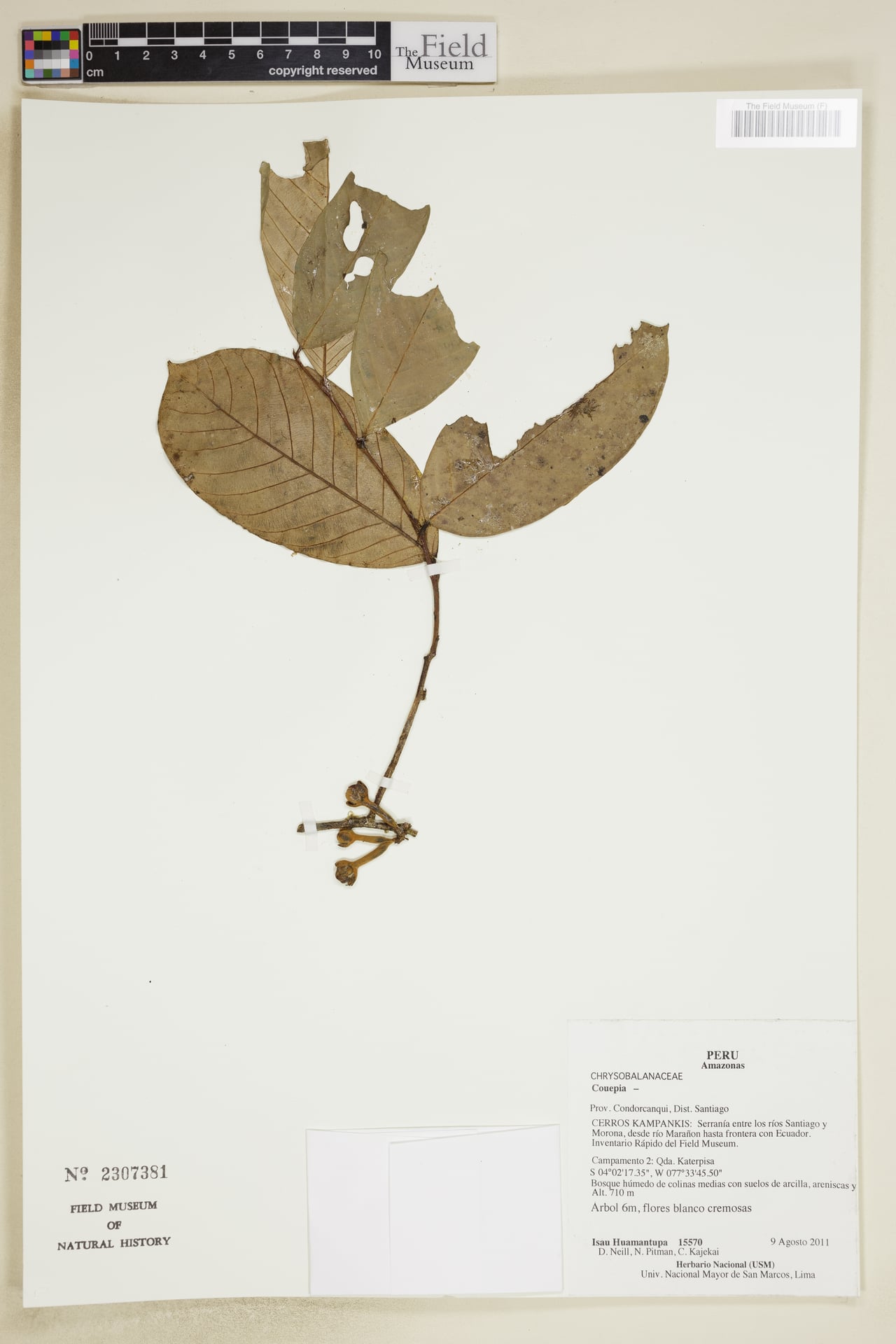
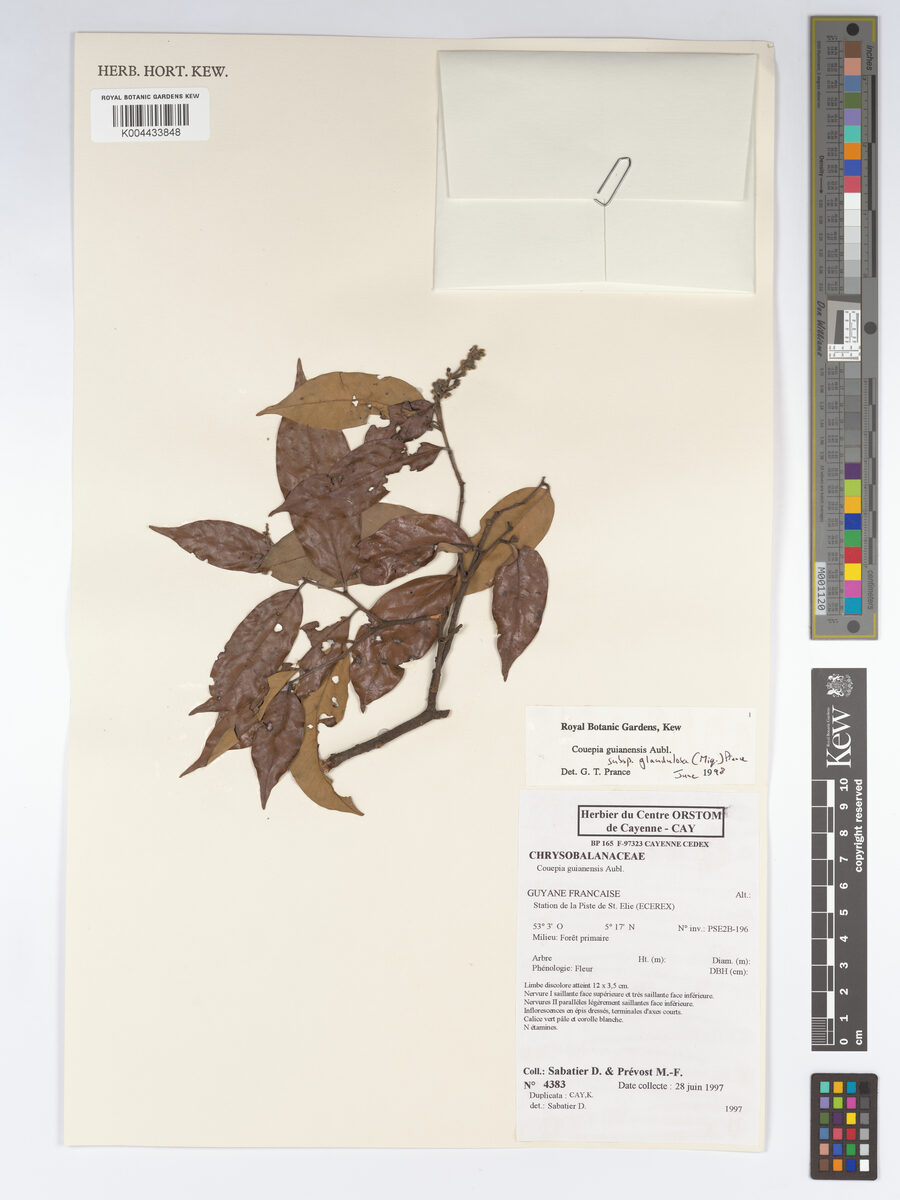
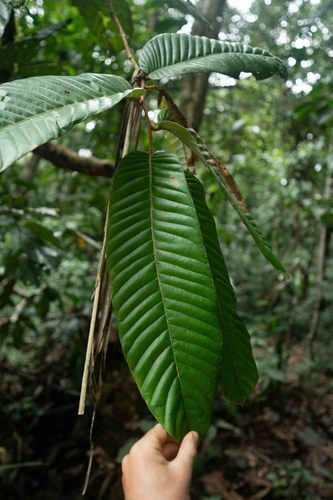
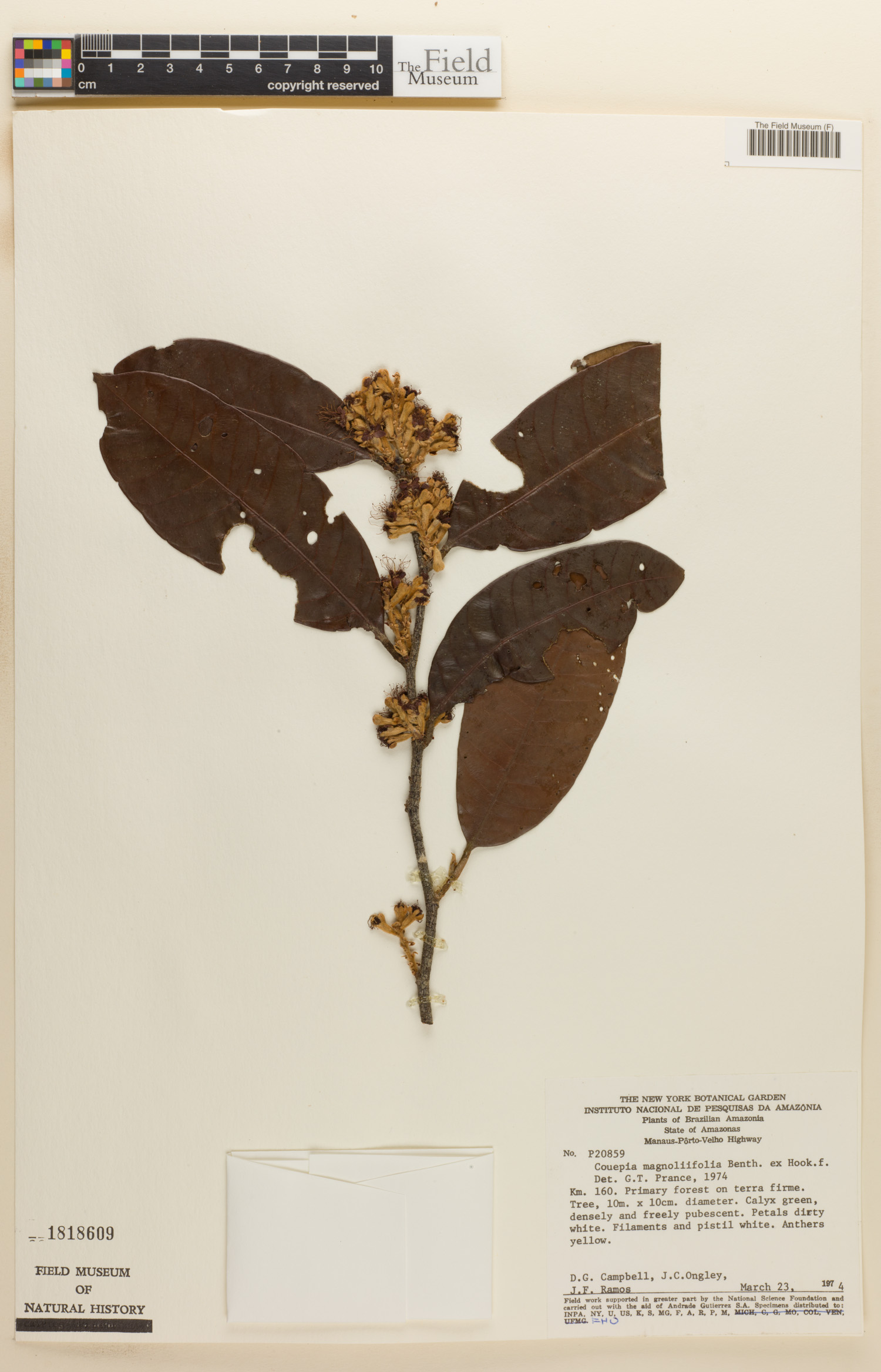
Couepia guianensis
Aubl.
Cannonball tree
iNaturalist· cc-by
(c) Enrique Salazar, some rights reserved (CC BY), uploaded by Enrique Salazar
iNaturalist· cc-by
(c) Enrique Salazar, some rights reserved (CC BY)
Description
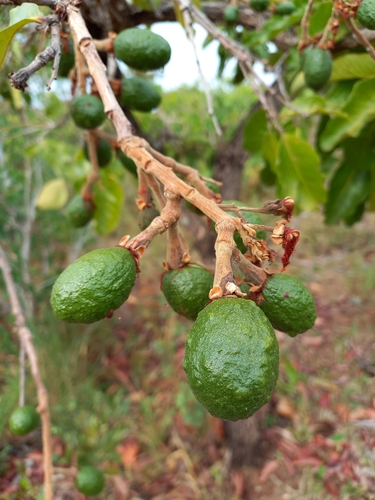
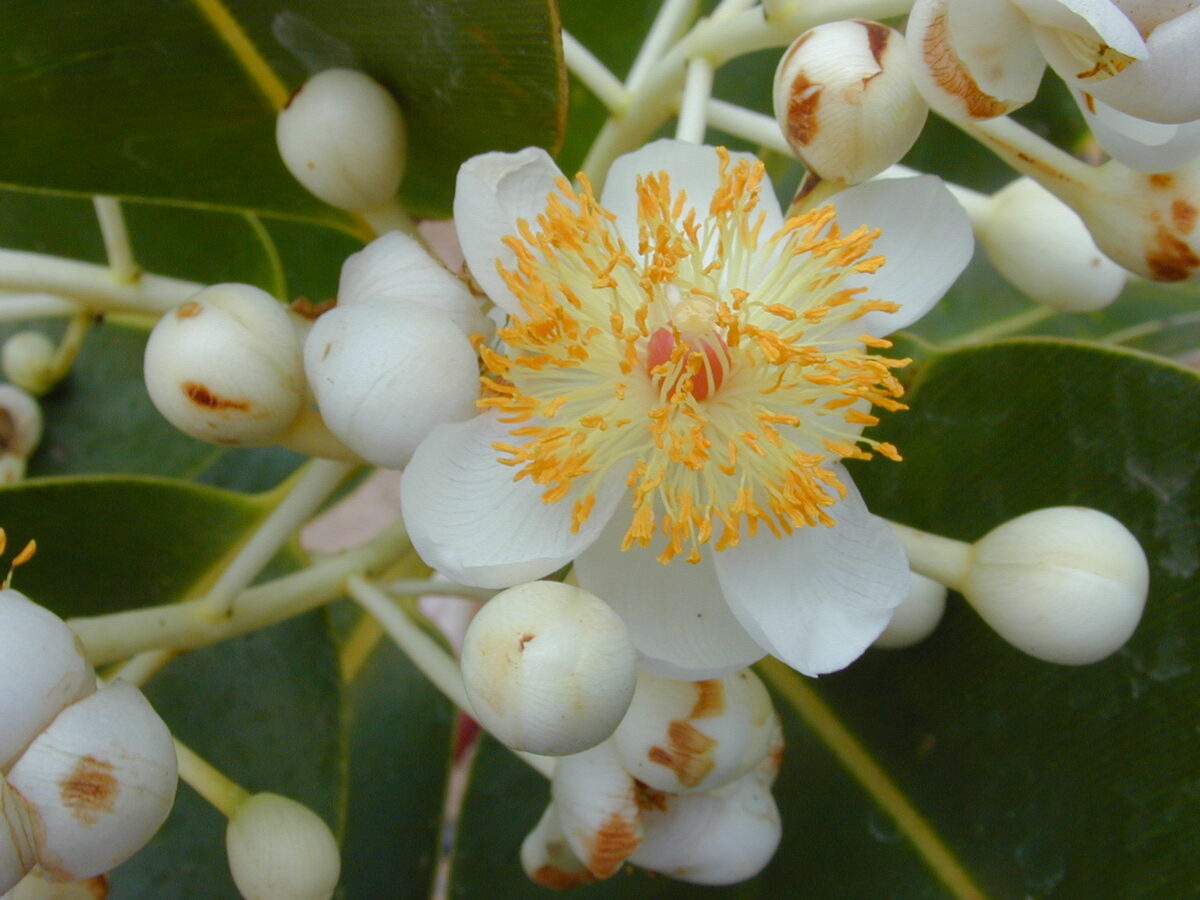
A large tree. It loses its leaves during the year. It grows 25 m tall. The leaves are simple and 15 cm long. They have teeth around the edge. The flowers are on the trunk. They are red, yellow and pink. They have a strong scent. They are 8-12 cm across. The fruit are large and round and woody. They hang in clusters. The fruit have small seeds in a white jelly. The top of the fruit lifts off. The fruit are edible. Plants are pollinated by bats.
Edible Uses
The fruit pulp is eaten fresh. The seeds and fruit oil are also edible.
Traditional Uses
The pulp of the fruit is eaten.
This uses section is brief — help expand it
Medicinal Uses
The fruit is very bitter.
Distribution
A tropical plant.
Where It Grows
Amazon, Brazil, Colombia, Ecuador, Guiana*, Guianas, Guyana, Peru, South America, Suriname, Venezuela,
Also Known As
Merecure
References (5)
- Hedrick, U.P., 1919, (Ed.), Sturtevant's edible plants of the world. p 222
- http://www.ntbg.org/plants/plant details.php
- Kermath, B. M., et al, 2014, Food Plants in the Americas: A survey of the domesticated, cultivated and wild plants used for Human food in North, Central and South America and the Caribbean. On line draft. p 269
- Martin, F. W., et al, 1987, Perennial Edible Fruits of the Tropics. USDA Handbook 642 p 91
- Roa, J. A. G. & Boada, D. S. G., 2018, Fundación para el Fortalecimiento de la Fruticultura y Plantas Alimenticias no Convencionales en Colombia.