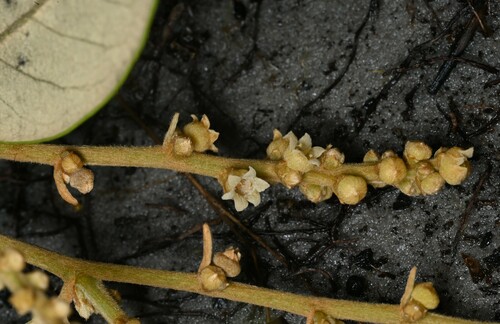
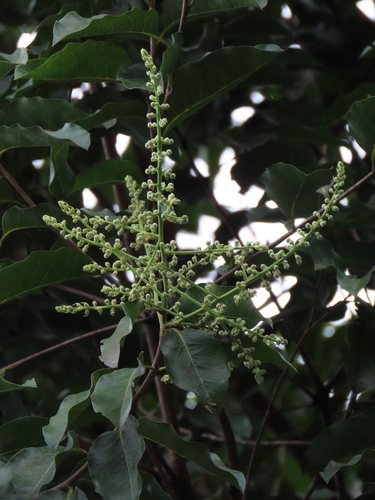
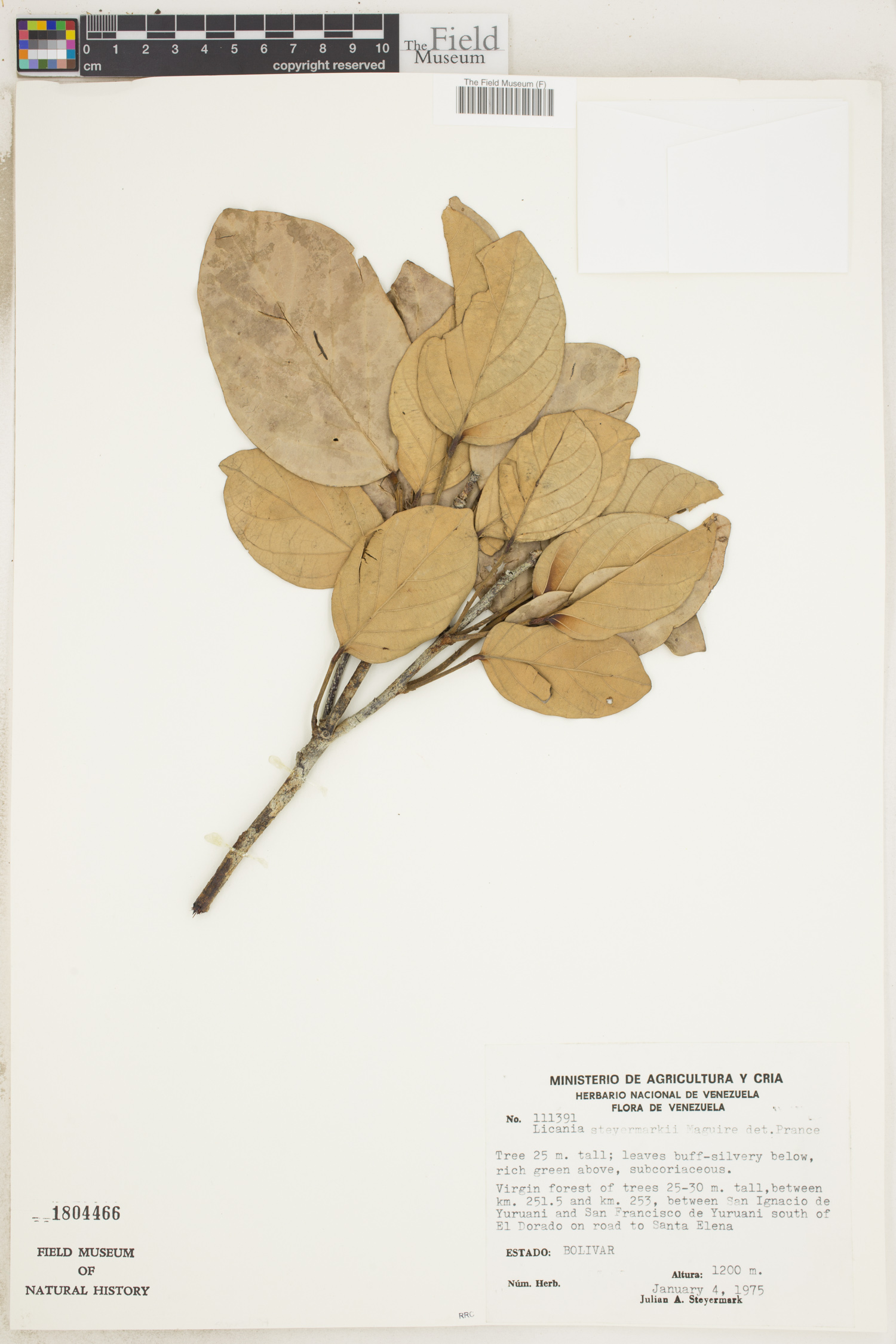
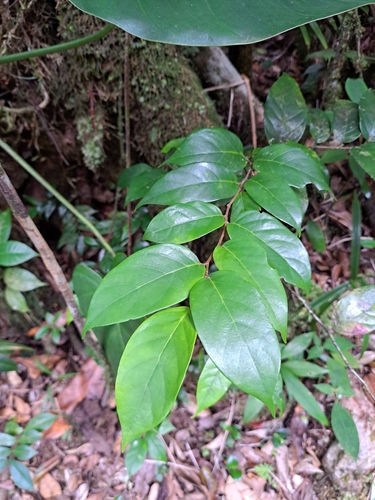
Couepia grandiflora
(Mart. & Zucc.) Benth. ex Hook.f.
Rigir nut couepia
iNaturalist· cc-by-nc
(c) Laurent Quéno, some rights reserved (CC BY-NC), uploaded by Laurent Quéno
iNaturalist· cc-by-nc
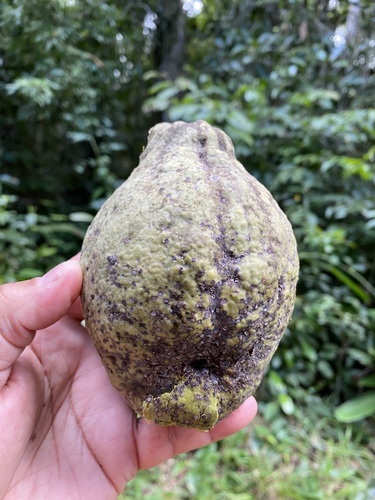
(c) Thiago RBM, some rights reserved (CC BY-NC), uploaded by Thiago RBM
Summary
Source: WikipediaCouepia grandiflora, or sweet angelim, is a Brazilian fruit tree found in the Cerrado.
Description
A tropical shrub in the Chrysobalanaceae family that grows 4-6 m tall, native to tropical regions.
This description is brief — help expand it
Edible Uses
The fruit is a yellow, oblong drupe up to 5cm long and 3cm wide, containing a single, large seed. It has a thick, fleshy pulp. The report says that it is much appreciated by bats and other animals, but does not mention human use. However, many other members of this genus have edible fruits, so this one could also be worth trying.
Distribution
It is a tropical plant.
Where It Grows
Bolivia, Brazil, Paraguay, South America, Suriname, Venezuela,
Cultivation
Prefers a sunny position. Plants succeed in dry terrains, growing well in degraded areas on stony soils. Established plants are drought tolerant. Plants are slow-growing.
Propagation
Seed - best sown as soon as it is ripe in individual containers in a semi-shaded position. Germination rates are usually low, with the seed sprouting within 20 - 40 days. Seedlings grow away quite slowly, but are ready for planting out after 8 months.
Other Uses
The wood is moderately heavy, hard, of good durability even when exposed to the elements. It is used in general construction, ship building, railway ties, fence posts, water troughs and carpentry in general.
Synonyms
Also Known As
Angelim-branco, Angelim-bravo, Fruta-de-ema, Genciana, Oiticica, Pitomba-de-leite, Suquiana, Uiti
References (3)
- Bortolotto, I. M., et al, 2018, Lista preliminar das plantas alimenticias nativas de Mato Grosso do Sul, Brasil. Iheringia, Serie Botanica, Porto Alegre, 73 (supl.):101-116
- Grandtner, M. M. & Chevrette, J., 2013, Dictionary of Trees, Volume 2: South America: Nomenclature, Taxonomy and Ecology. Academic Press p 166
- www.colecionandofrutas.org