Chlorogalum pomeridianum
(DC.) Kunth
Soap lily, Amole, Soapplant, Wild potato
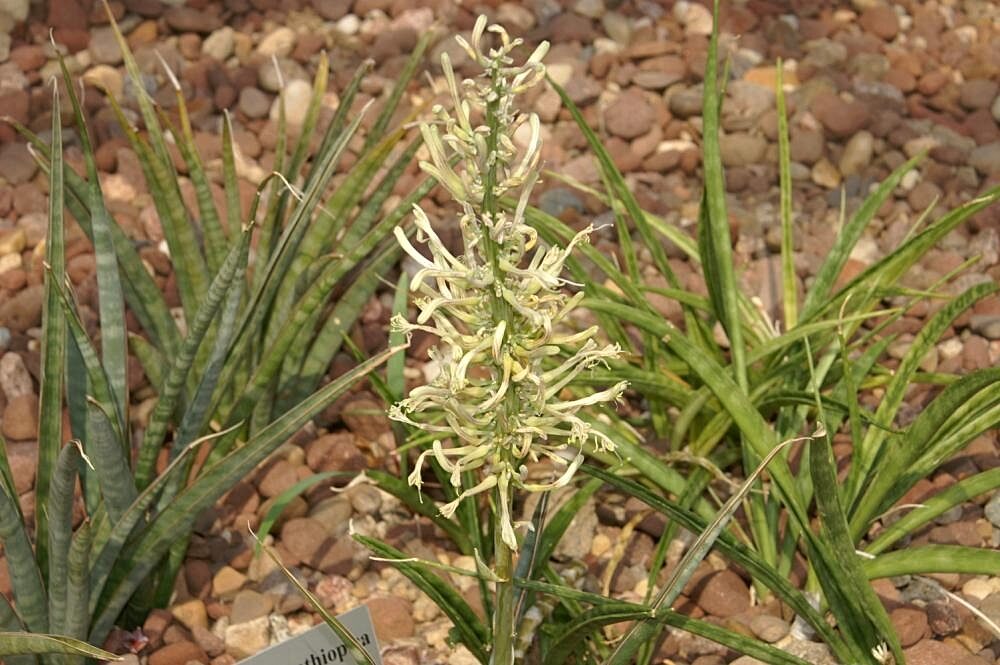
iNaturalist· cc-by-nc
(c) odenwaelder, some rights reserved (CC BY-NC), uploaded by odenwaelder
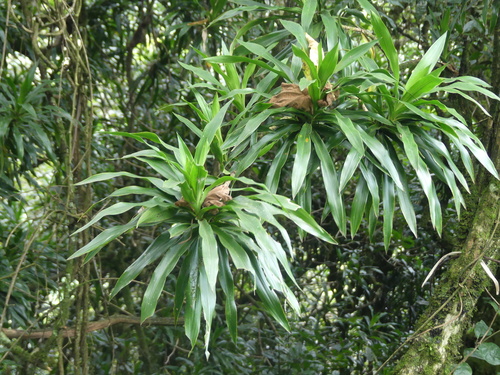
iNaturalist· cc-by
(c) Michael Warner, some rights reserved (CC BY), uploaded by Michael Warner
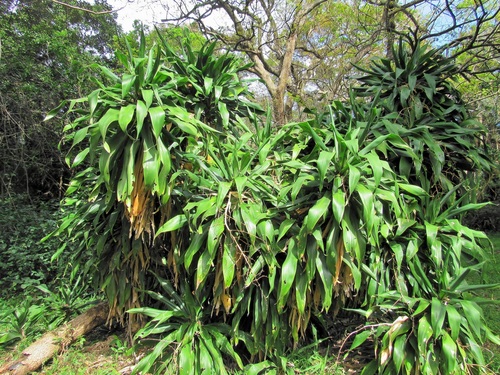
iNaturalist· cc-by-nc-sa
(c) randomtruth, some rights reserved (CC BY-NC-SA)
Summary
Source: WikipediaChlorogalum pomeridianum, the wavy-leafed soap plant, California soaproot, or Amole, is the most common and most widely distributed of the soap plants, soaproots or amoles, which make up the genus Chlorogalum of flowering plants. It is occasionally known as the "wild potato", but given the plant's lack of either resemblance or relationship to the potato, this name is not recommended. It is found in most of California from the coasts to the western foothills of the Sierra Nevada, and in the Klamath Mountains in southwestern Oregon, but not in either state's desert regions. Wavy-leafed soap plant grows on rock bluffs, grasslands, chaparral, and in open woodlands.
Description
Chlorogalum pomeridianum is a bulb growing to 2 m tall and 0.3 m wide, hardy to UK zone 8 and not frost tender. Flowers appear May to June with hermaphroditic blooms. Grows in light sandy, medium loamy, and heavy clay soils with good drainage across mildly acid, neutral, and basic pH levels. Tolerates semi-shade to full sun and prefers moist soil.
Edible Uses
The bulb is edible when thoroughly cooked — slow baking in its skin removes the soapiness. The skin is fibrous and should be peeled before eating. The bulb can also be peeled and boiled, though the cooking water should be discarded. Raw bulbs should not be eaten because they contain saponins, but when properly cooked the bulb is wholesome and nutritious. It can grow very large, up to 15cm in diameter. Young leaves can be eaten raw or cooked — harvested in spring as a potherb, they become very sweet when slowly baked.
Traditional Uses
The root or bulb is eaten after cooking to remove the acrid taste. They are roasted or baked then peeled. They can be peeled first then boiled. The young shoots are slowly baked then eaten. The tender young leaves can be eaten raw.
Medicinal Uses
Soap lily bulbs contain saponins, a medicinally active substance of particular value as an antiseptic wash. Saponins are somewhat toxic, so any internal use should be approached with great care. The bulb is antiseptic, carminative, diuretic, and laxative. A decoction has been used to treat wind in the stomach. Externally, the bulbs have been rubbed on rheumatic joints. Pounded bulbs mixed with water were used as a hair wash to treat dandruff, prevent lice, and address skin irritations including those caused by poison oak. A poultice of baked bulbs has been applied as an antiseptic to skin sores.
Known Hazards
Cuisine The young leaves can be used as food, but the saponins in the bulbs make these poisonous. However saponins are very poorly absorbed by the body and usually pass straight through, and in any case they can be destroyed by thorough cooking. The Miwok people roasted and ate the bulbs as a winter food. In February 1847 Patrick Breen of the ill-fated Donner Party recorded that a Native American gave the starving settler some "roots resembling Onions in shape [that] taste some like a sweet potatoe [sic], all full of little tough fibres." Breen's son later called the roots "California soap-root"—almost certainly C. pomeridianum. Saponins are much more toxic to some other animals than they are to humans. Fish are particularly susceptible, and the bulb juices were used to kill or stun them so they could be caught easily.
Distribution
It is a temperate to Mediterranean climate plant.
Where It Grows
Australia, North America, Tasmania, USA,
Propagation
Seed should be sown in spring or summer, just 2mm deep in a peat and sand mix. Germination usually occurs within 1–6 months at 15°C but can be slow and erratic. Sow thinly so seedlings need no thinning, and grow them on in the pot through their first year with occasional liquid feeds to prevent mineral deficiency. When dormant, pot up three young bulbs per pot and grow on for at least two more years before planting out in spring. Offsets can be divided when the bulb dies down in late summer. Larger offsets can go directly into permanent positions, but smaller ones are best potted and grown on for at least a year under glass first.
Other Uses
A glue can be made from the sap expressed from baking bulbs. Bulbs can be boiled into a liquid starch used to treat twined baskets, closing the interstices so that seeds do not fall through. A soap is obtained from the bulb: strip off the outer fibrous covering and rub the bulb on clothes or hands in water to produce a lather. It is very good for delicate fabrics and has a gentle effect on the skin. The bulb can also be dried for later use, then grated as needed and used as soap flakes. Fibre from the outer covering of the bulb is used to make small brushes or as a filling for mattresses.
Other Information
The shoots are occasionally eaten.
Notes
Also put in the family Hyacinthaceae.
Synonyms
Also Known As
Amole lily, California soaproot, Wavy leaf soap root
References (9)
- Beckstrom-Sternberg, Stephen M., and James A. Duke. "The Foodplant Database." http://probe.nalusda.gov:8300/cgi-bin/browse/foodplantdb.(ACEDB version 4.0 - data version July 1994) (As Laothoe pomeridiana)
- Enum. pl. 4:682. 1843
- Facciola, S., 1998, Cornucopia 2: a Source Book of Edible Plants. Kampong Publications, p 143
- Hedrick, U.P., 1919, (Ed.), Sturtevant's edible plants of the world. p 186
- Hibbert, M., 2002, The Aussie Plant Finder 2002, Florilegium. p 66
Show all 9 references Hide references
- Kermath, B. M., et al, 2014, Food Plants in the Americas: A survey of the domesticated, cultivated and wild plants used for Human food in North, Central and South America and the Caribbean. On line draft. p 220
- Lim, T. K., 2015, Edible Medicinal and Non Medicinal Plants. Volume 9, Modified Stems, Roots, Bulbs. Springer p 24
- Plants for a Future database, The Field, Penpol, Lostwithiel, Cornwall, PL22 0NG, UK. http://www.scs.leeds.ac.uk/pfaf/
- Tozer, F., 2007, The Uses of Wild Plants. Green Man Publishing. p 66