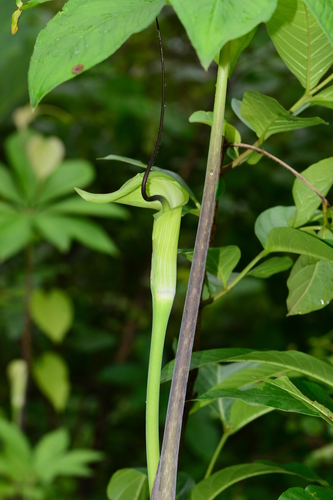
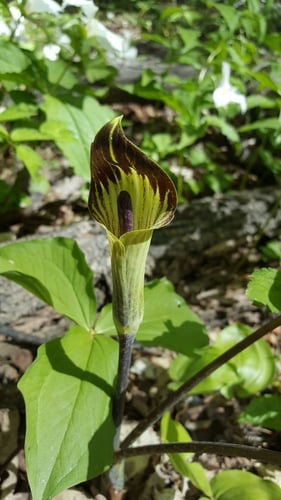
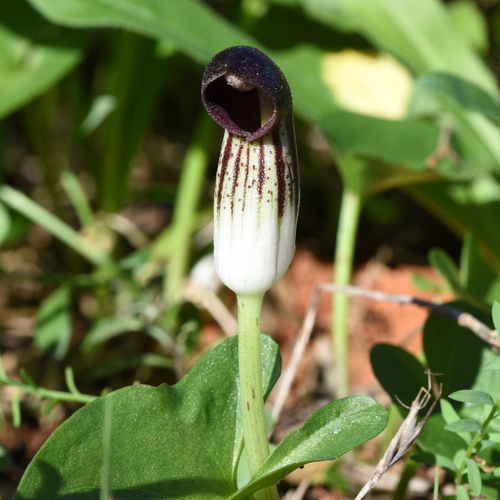
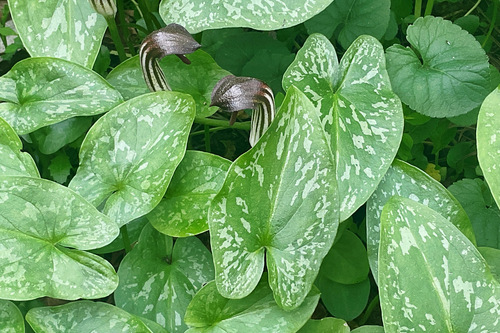
Arum palaestinum
Boiss
Black calla lily, Spotted arum
iNaturalist· cc-by-nc
(c) Yael Orgad, some rights reserved (CC BY-NC), uploaded by Yael Orgad
iNaturalist· cc-by-nc
(c) Yael Orgad, some rights reserved (CC BY-NC), uploaded by Yael Orgad
iNaturalist· cc-by-nc-sa
(c) יאיר אור, some rights reserved (CC BY-NC-SA), uploaded by יאיר אור
Summary
Source: WikipediaArum palaestinum is a species of flowering herbaceous perennial plant in the genus Arum and the family Araceae. It is also known as black calla, Solomon's lily, priest's hood, noo'ah loof and kardi. Native to the Mediterranean Basin, it is employed in the Middle East for culinary and medicinal purposes.
Description
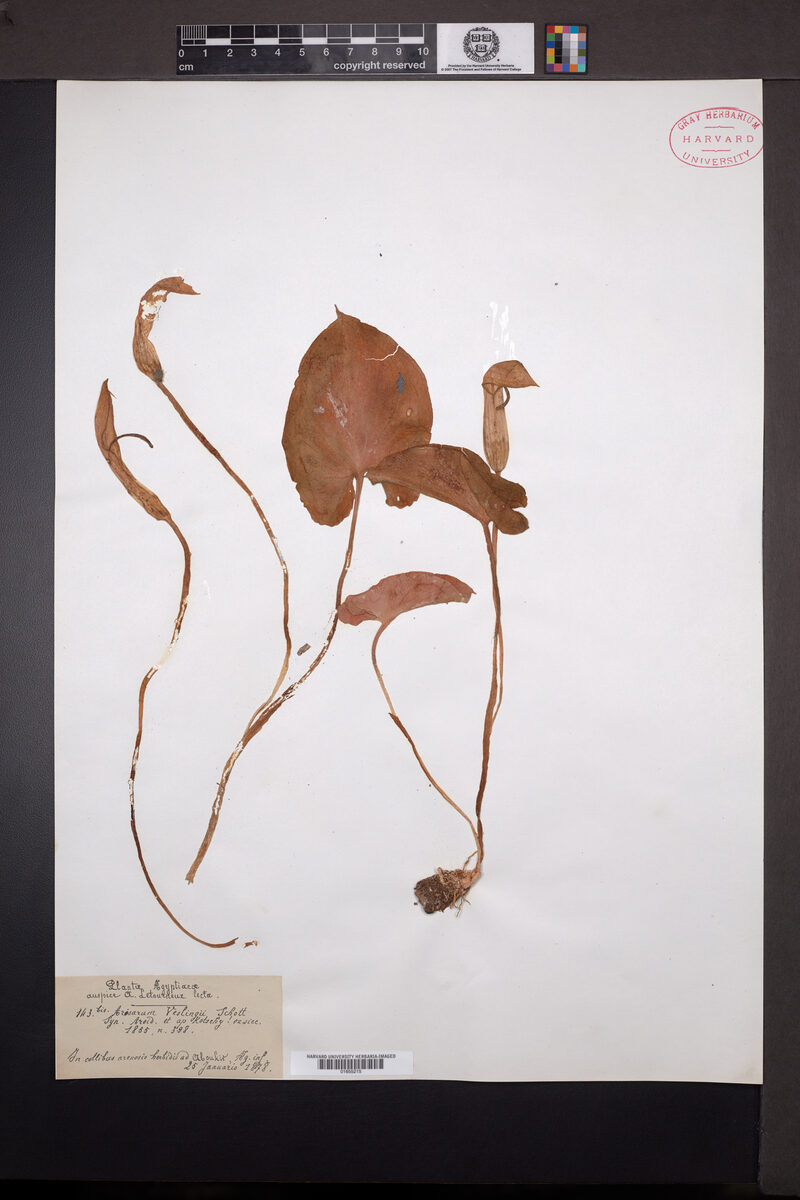
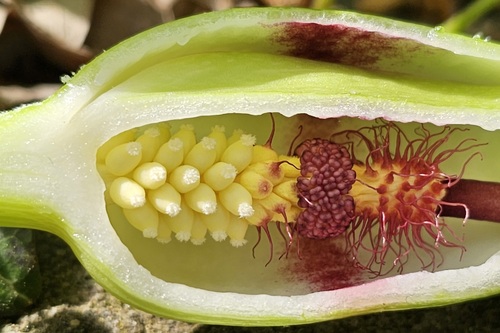
A plant that keeps growing from year to year. It grows 1 m high and spreads 1 m wide. The stem is erect and flowering. The leaves have 3 lobes. They are green and arrow shaped. They have long leaf stalks. These are 15-50 cm long. The spathes are large and purplish black and velvety.
Edible Uses
The leaves are eaten cooked after being soaked in salty water or after drying, and are also used for herbal teas.
Traditional Uses
The leaves are eaten cooked after being soaked in salty water or after drying. They are also used for herbal teas.
This uses section is brief — help expand it
Medicinal Uses
In traditional medicine among Palestinians, A. palaestinum extracts have been used for cancer, intestinal worms, infections in open wounds, urinary tract obstructions, and kidney stones, and are thought to strengthen bones. Jews in Iraq have used it traditionally for worms, skin sores, syphilis, rheumatism, tuberculosis, and diarrhea. It has also been used for cough and constipation. Ethnobotanical data have shown that A. palaestinum was reported as one of the most commonly used plants in the West Bank, used by over half of all respondents. In a recent revision of his book, Killing Cancer – Not People, author Robert G. Wright discusses one dietary supplement company's use of the species in one of its products.
Known Hazards
The species is toxic at low doses, and this has traditionally been considered to be due to oxalate salts, but this is not certain. The leaves of the plant contain calcium oxalate and other toxins that can be removed by leaching. The symptoms caused by exposure to the raw plant include mucous membrane irritation, and burning, and consuming larger doses causes nausea, diarrhea, and cramping. Because exposure to skin can cause irritation it is often handled lightly, or with gloves.
Distribution
It is a Mediterranean climate plant. In Lebanon it grows in forest communities. It needs light shade. It is best in well composted, well-drained moist soils. It is damaged by drought and frost.
Where It Grows
Australia, Israel, Jordan, Lebanon, Mediterranean*, Middle East, Palestine, Syria,
Cultivation
It is grown by division.
Notes
It is also used in medicine. It has anticancer properties.
Also Known As
Luf, 'udn ilfil
References (9)
- Ali-Shtayeh, M. S., et al, 2008, Traditional knowledge of wild edible plants used in Palestine (Northern West Bank): A comparative study. J Ethnobiol Ethnomed. 4: 13
- Al-Qura'n, S. A., 2010, Ethnobotanical and Ecological Studies of Wild Edible Plants in Jordan. Libyan Agriculture Research Center Journal International 1(4):231-243
- Bodkin, F., 1991, Encyclopedia Botanica. Cornstalk publishing, p 106
- Cole, C., et al, 2015, Arum palaestinum with isovanillin, linolenic acid and B-sitosterol inhibits prostrate cancer spheroids and reduces the growth rate of prostrate tumors in mice. Complementary and Alternative Medicine, 15:264
- Hinnawi, N. S. A., 2010, An ethnobotanical study of wild edible plants in the Northern West Bank "Palestine". An-Najah National University. p 91
Show all 9 references Hide references
- Mayer-Chussuck, U & Lev, E., 2014, Wild Edible Plants in Israel Tradition Versus Cultivation. in Z. Yaniv, N. Dudai (eds.), Medicinal and Aromatic Plants of the Middle-East, Springer
- Oran, S. A. S., 2015, Selected wild plant species with exotic flowers from Jordan. International Journal of Bioversity and Conservation. Vol. 7(5), pp 308-320
- Tukan, S. K., et al, 1998, The use of wild edible plants in the Jordanian diet. International Journal of Food Sciences and Nutrition. 49:225-235
- Wild Edible Plants in Lebanon. Promoting dietary diversity in poor communities in Lebanon. http://www.wildedibleplants.org/