Heteropanax fragrans
(Roxb.) Seem.
Fragrant aralia
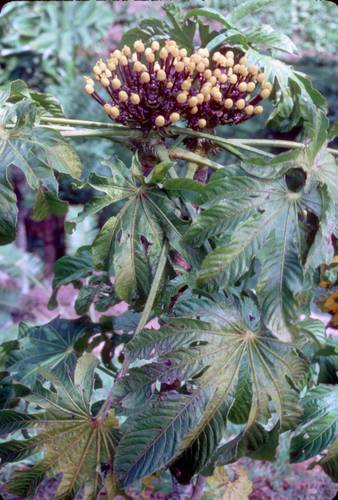
iNaturalist· cc-by
(c) Yj, some rights reserved (CC BY)
iNaturalist· cc-by
(c) Yj, some rights reserved (CC BY)
iNaturalist· cc-by
(c) Yj, some rights reserved (CC BY)
Summary
Source: WikipediaHeteropanax fragrans is an evergreen plant in the Araliaceae family. The leaves of this arboreal plant are fed on by the larvae of the Eri silk moth (Samia ricini). In the Mizo language it is known as Changkhen and in Assamese it is called Keseru. The tree is found in Assam; Bangladesh; Cambodia; South Central China; China Southeast; Eastern Himalayas; Hainan; India; Myanmar; Nepal; Vietnam; Western Himalayas; Thailand.
Description
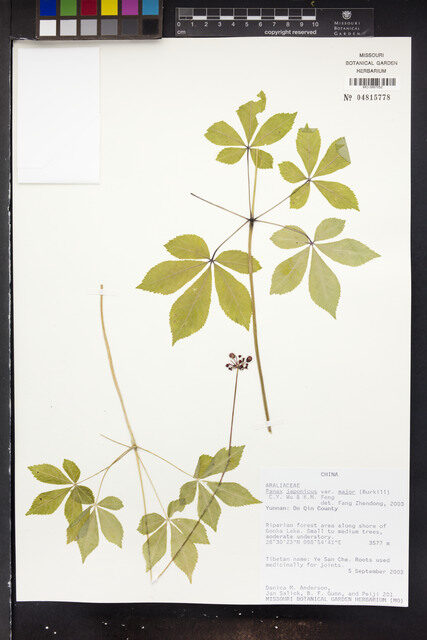
A tree. It grows 30 m tall. The leaves have 3 to 5 leaflets along the stalk. The leaves are 50-100 cm long and the leaflets are opposite. The leaflets are narrowly oval and 6-13 cm long by 4-6 cm wide.
Edible Uses
The young tender leaves are cooked with meat and fish.
Traditional Uses
The young tender leaves are cooked with meat and fish.
This uses section is brief — help expand it
Distribution
It is a tropical plant. It grows near sea level and up to 1,000 m above sea level. In XTBG Yunnan.
Where It Grows
Asia, Bhutan, China, Himalayas, India, Indochina, Indonesia, Myanmar, Nepal, Northeastern India, SE Asia, Thailand, Vietnam,
Synonyms
Also Known As
Chang-khen, Kyaundauk, Kyaung-sha-letto, Mai-aw-sang, Mai-mak-long-ka-hkam, Tachanza
References (1)
- Kar, A., et al, 2013, Wild Edible Plant Resources used by the Mizos of Mizoram, India. Kathmandu University Journal of Science, Engineering and Technology. Vol. 9, No. 1, July, 2013, 106-126