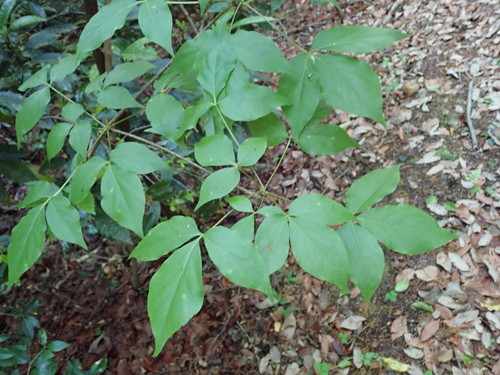
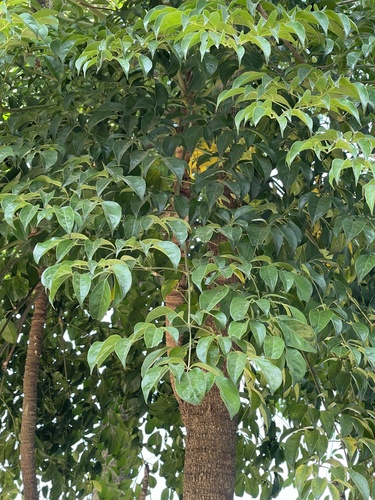
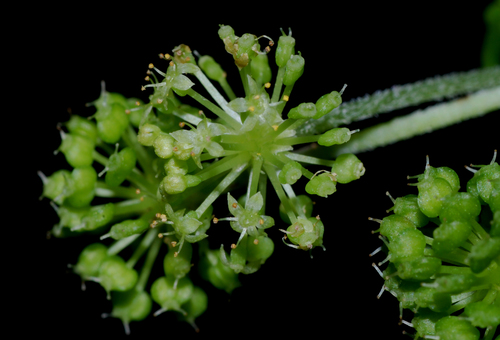
Eleutherococcus seoulensis
(Nakai.)
gbif· cc0
Conveyor Belt
Summary
A deciduous shrub that tolerates light sandy, medium loamy, and heavy clay soils, including poor soil. Adapts to mildly acidic through basic soils and grows in semi-shade or full sun, preferring consistently moist conditions. Hardy and pollution-resistant.
Description
A deciduous shrub that tolerates light sandy, medium loamy, and heavy clay soils, including poor soil. Adapts to mildly acidic through basic soils and grows in semi-shade or full sun, preferring consistently moist conditions. Hardy and pollution-resistant.
Edible Uses
Young leaves are edible when cooked.
Medicinal Uses
None known
Distribution
It is a temperate plant.
Where It Grows
Asia, Korea,
Propagation
Seed is best sown as soon as it is ripe in autumn in a cold frame, though germination can be slow. Stored seed requires 6 months of warm stratification followed by 3 months of cold stratification, and may also be very slow to germinate. Prick seedlings out into individual pots when large enough to handle, then grow on in light shade in a cold frame or greenhouse for at least the first winter before planting out in late spring or early summer. Other options include half-ripe wood cuttings in July/August in a frame, ripe wood cuttings of the current season's growth at 15–30cm long in a cold frame, root cuttings in late winter, or division of suckers during the dormant season.
Other Uses
None known
References (1)
- Plants for a Future database, The Field, Penpol, Lostwithiel, Cornwall, PL22 0NG, UK. http://www.scs.leeds.ac.uk/pfaf/