Eleutherococcus senticosus
(Rupr. & Maxim.) Maximowicz
Siberian ginseng
iNaturalist· cc-by
(c) Repina Tatyana, some rights reserved (CC BY), uploaded by Repina Tatyana
iNaturalist· cc-by-nc
(c) Sokolov Yuriy Ivanovich, some rights reserved (CC BY-NC)
Summary
Source: WikipediaEleutherococcus senticosus is a species of small, woody shrub in the family Araliaceae. It is native to Northeastern Asia. It may be colloquially called devil's bush, Siberian ginseng, taiga root, eleuthero, ciwujia, Devil's shrub, shigoka, touch-me-not, wild pepper, or kan jang. E. senticosus has a history of use in folklore and traditional Chinese medicine. Root extracts of E. senticosus are sold as a dietary supplement or cosmetic, usually under the name Siberian ginseng.
Description
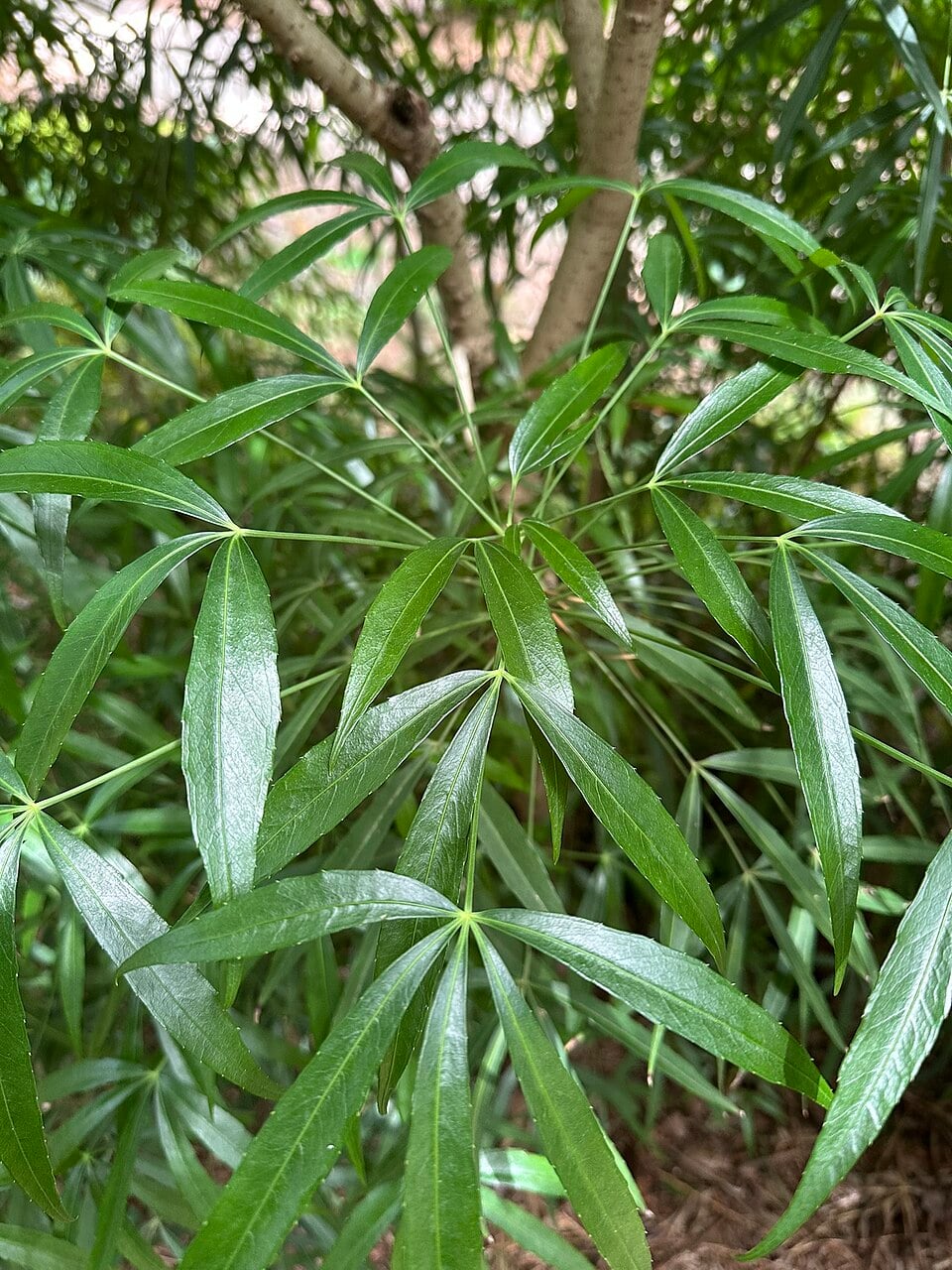
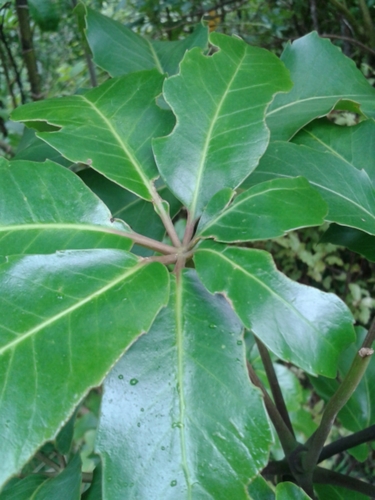
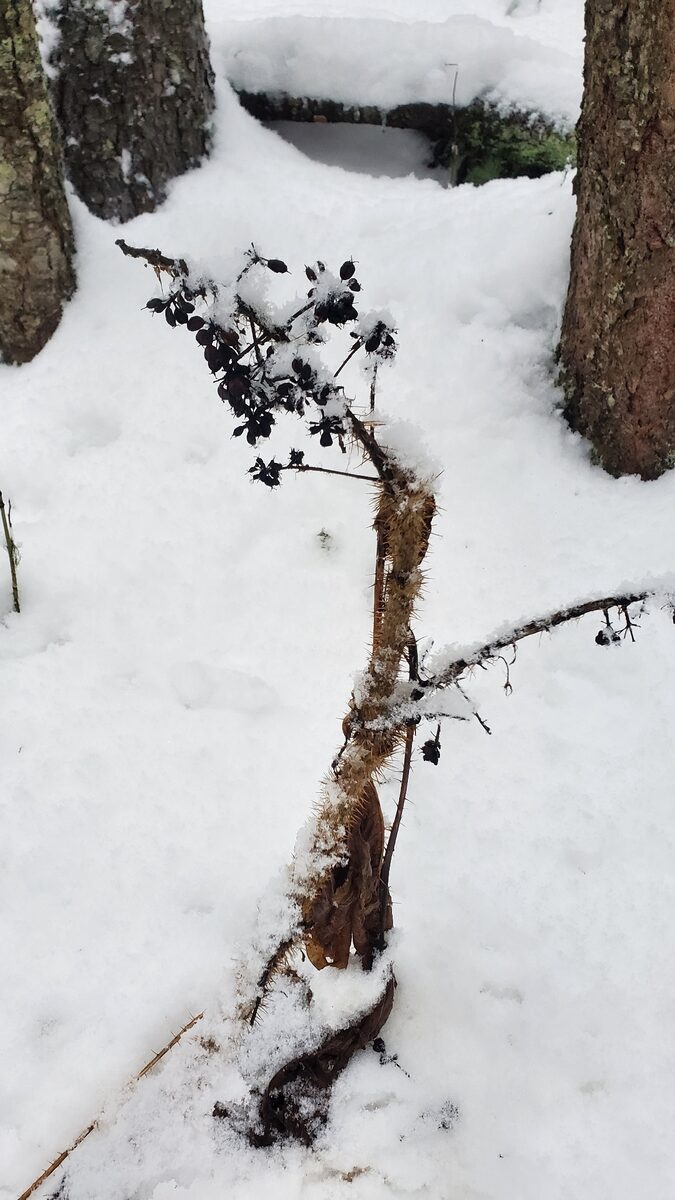
A deciduous shrub. It forms suckers. It has thick roots. It grows 6 m high. It has only a few branches. It has bristles and prickles. The leaves are dark green and divided like fingers on a hand. They are 15 cm across. The female flowers are green and the male flowers are purple. They are small and star shaped and occur in groups. The fruit are black. The fruit are 8 mm across.
Edible Uses
Young leaves and buds are edible when cooked. The dried leaves can also be used as a tea substitute.
Traditional Uses
The young leafy shoots and leaves are eaten as a potherb. The dried leaves are used as a substitute tea. The stems and roots are used for tea. The red pigment is edible and used to colour food.
Medicinal Uses
Siberian ginseng is a powerful tonic herb valued more for maintaining good health than for treating illness. Research has shown it stimulates resistance to stress, making it widely used as a tonic during periods of stress and pressure. In China and Russia it is commonly used as a ginseng substitute — a pungent, bitter-sweet, warming herb said to be stronger in action than ginseng. Regular use is said to restore vigour, improve memory, and increase longevity. The root and root bark are adaptogen, anti-inflammatory, hypoglycaemic, tonic, and vasodilator. Taken internally, it is used during convalescence and for menopausal problems, geriatric debility, and physical or mental stress, acting by strengthening the body's natural immune system. It has also been used to help counter radiation sickness and exposure to toxic chemicals. This herb is not prescribed for children and should not be used for more than 3 weeks at a time. Caffeine should not be taken alongside it. Roots are harvested in autumn and dried for later use. The German Commission E Monographs approve Eleutherococcus senticosus for tendency to infection and lack of stamina.
Known Hazards
People with high blood pressure, sleep apnea, narcolepsy, heart disease, mental illness, a compromised immune system, people in the processes of pregnancy and lactation, and people taking digoxin or hexobarbital may have adverse reactions to E. senticosus. High doses may cause irritability, confusion, insomnia, or anxiety.
Distribution
It is a temperate plant. It needs well drained soil. It can grow in sun or part shade. It grows in Inner Mongolia in China. It suits hardiness zones 3-8. In Sichuan.
Where It Grows
Asia, Australia, China, Japan, Russia, Siberia,
Cultivation
Plants can be grown from seed, stem cuttings, root cuttings or suckers.
Propagation
Seed is best sown as soon as it is ripe in autumn in a cold frame, though it can be slow to germinate. Stored seed requires 6 months of warm stratification followed by 3 months of cold stratification and may be very slow to germinate. Prick seedlings out into individual pots when large enough to handle and grow on in light shade in a cold frame or greenhouse for at least the first winter. Plant out in late spring or early summer. Cuttings of half-ripe wood can be taken in July/August in a frame. Cuttings of ripe wood from the current season's growth, 15–30cm long, can be rooted in a cold frame. Root cuttings can be taken in late winter. Suckers can be divided during the dormant season.
Other Uses
None known.
Notes
The root is used in medicine. It has stimulant properties like other ginsengs.
Synonyms
Also Known As
Ci wu jia, Eleuthero root
References (12)
- Brown, D., 2002, The Royal Horticultural Society encyclopedia of Herbs and their uses. DK Books. p 201
- Etherington, K., & Imwold, D., (Eds), 2001, Botanica's Trees & Shrubs. The illustrated A-Z of over 8500 trees and shrubs. Random House, Australia. p 277
- Facciola, S., 1998, Cornucopia 2: a Source Book of Edible Plants. Kampong Publications, p 25
- Fan, L., et al, The Use of Edible Wild Plants and Fungi in Korean-Chinese Villages. Journal of Environmental Information Science 44-5 p 71-79 (As Acanthopanax senticosus)
- Hibbert, M., 2002, The Aussie Plant Finder 2002, Florilegium. p 92
Show all 12 references Hide references
- Hu, Shiu-ying, 2005, Food Plants of China. The Chinese University Press. p 585
- Hui, Y. H., Handbook of Food Science, Technology, and Engineering. Volume 2. Table 98:6 (As Acanthopanax senticosus)
- Lim, T. K., 2015, Edible Medicinal and Non Medicinal Plants. Volume 9, Modified Stems, Roots, Bulbs. Springer p 40
- Luo, B., et al, 2019, Wild edible plants collected by Hani from terraced rice paddy agroecosystem in Honghe Prefecture, Yunnan, China. Journal of Ethnobiology and Ethnomedicine 15:56
- Mem. Acad. Imp. Sci. St.-Petersbourg Divers Savans 9:132. 1859 (Prim. fl. amur.)
- Plants for a Future database, The Field, Penpol, Lostwithiel, Cornwall, PL22 0NG, UK. http://www.scs.leeds.ac.uk/pfaf/
- Wujisguleng, W., & Khasbagen. K., 2010, An integrated assessment of wild vegetable resources in Inner Mongolian Autonomous Region, China. Journal or Ethnobiology and Ethnomedicine 6:34