Plukenetia polyadenia
Mull.Arg.
Sourie
iNaturalist· cc-by-nc
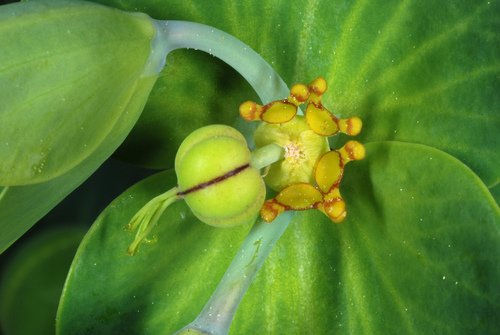
(c) Olivier Fortune - Isabelle Delafosse, some rights reserved (CC BY-NC), uploaded by Olivier Fortune - Isabelle Delafosse
iNaturalist· cc-by-nc
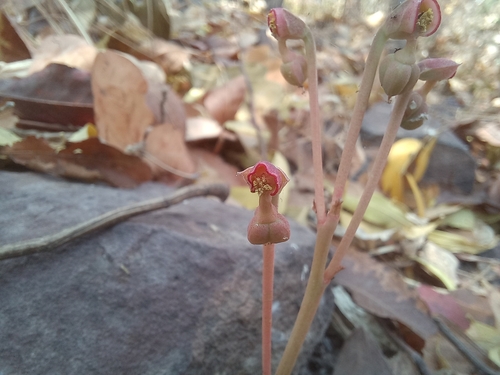
(c) Olivier Fortune - Isabelle Delafosse, some rights reserved (CC BY-NC)
Description
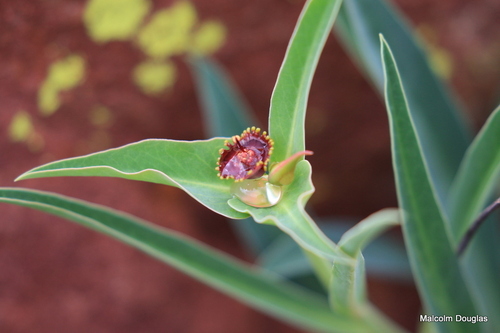
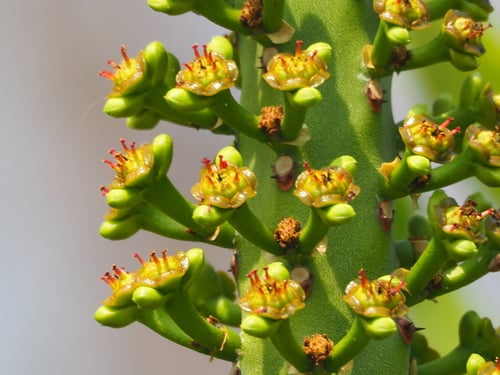
A climbing shrub. It twines around other plants. Plants often have male and female flowers on separate plants. The leaves are alternate and simple. They are rounded at the base and the leaf stalk is long. The flowers are in groups in the axils of leaves. The fruit is a large, green capsule with 4 ribs. The seeds are large and brown. They are split open with a knife to release the kernel.
Edible Uses
The seeds are pressed to extract oil, which is obtained by splitting the seeds open with a knife to release the kernels.
Medicinal Uses
The bark is used in a decoction to treat fevers.
Distribution
It is a tropical plant. It grows to the tree tops in wet lowland forest. It grows from sea level to 1,000 m altitude.
Where It Grows
Brazil, Colombia, Ecuador, Guyana, Peru, South America, Venezuela,
Cultivation
A plant of the moist tropical lowlands, mainly found at elevations below 650 metres. The plant is usually dioecious, though it is sometimes monoecious. If dioecious, both male and female forms need to be grown if seed is required.
Other Uses
An oil is obtained from the seed.
Synonyms
References (3)
- Fern, K., 2012, Tropical Species Database http://theferns.info/tropical/
- Roa, J. A. G. & Boada, D. S. G., 2018, Fundación para el Fortalecimiento de la Fruticultura y Plantas Alimenticias no Convencionales en Colombia.
- van Andel, T., 2000, Useful plants of Guyana. Non-Timber Forest Products of the North-West District of Guyana Part 2. p 363