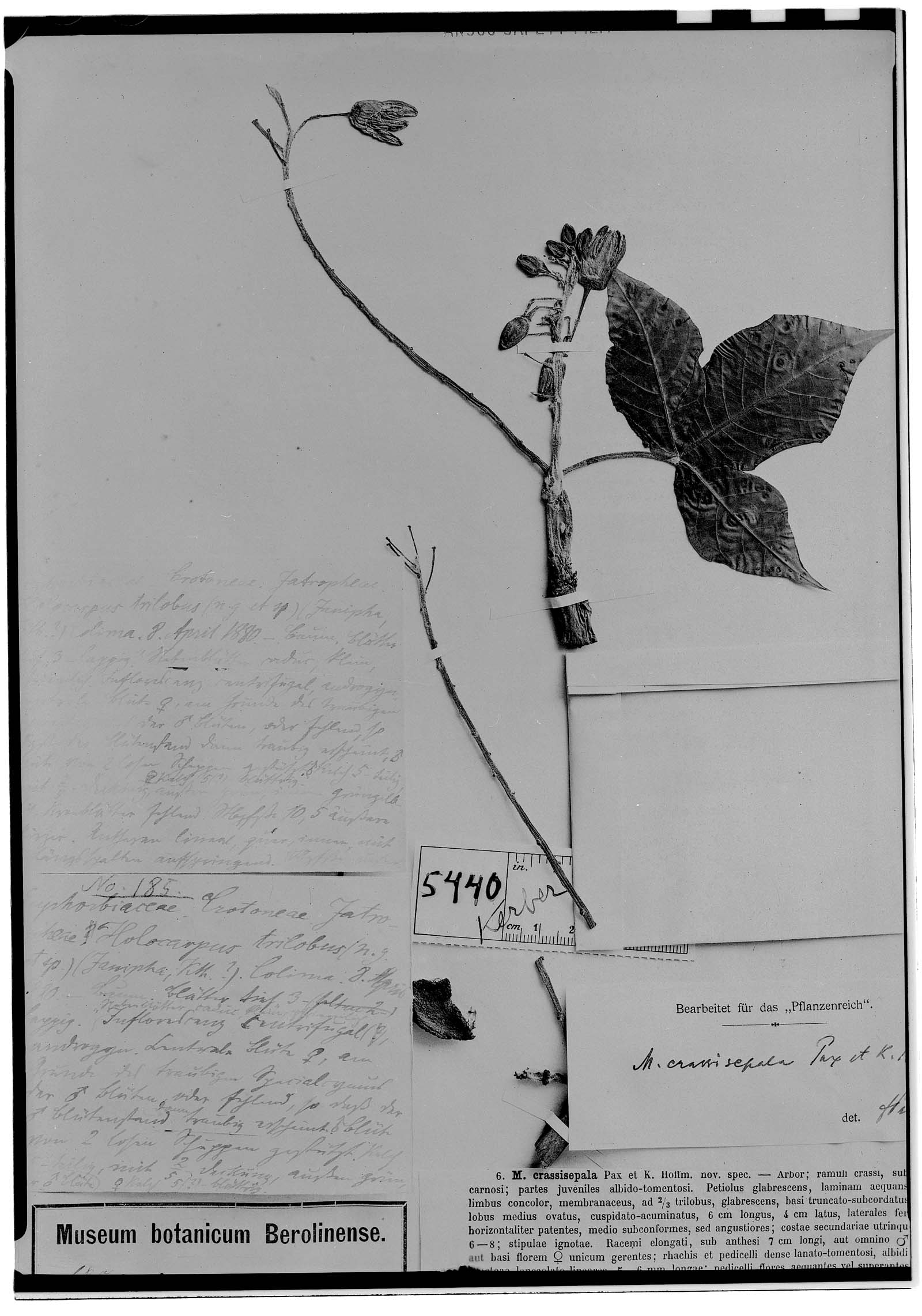
Pycnocoma macrophylla
Benth.
gbif· cc-by-sa
Saint Fédriche NDZAI
gbif· cc-by-sa
Saint Fédriche NDZAI
gbif· cc-by-sa
Saint Fédriche NDZAI
Description
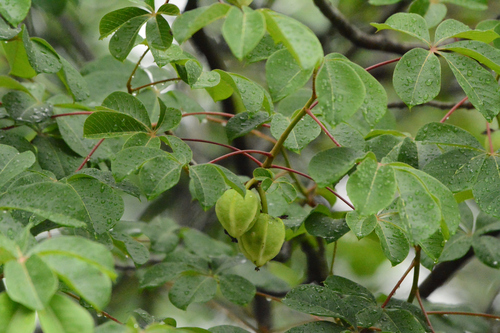
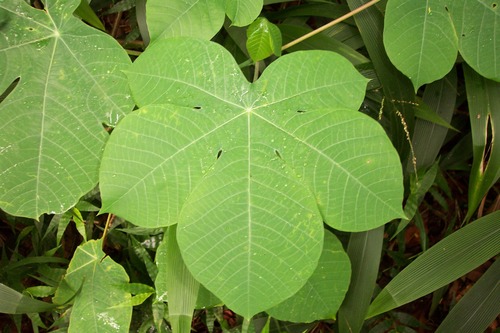
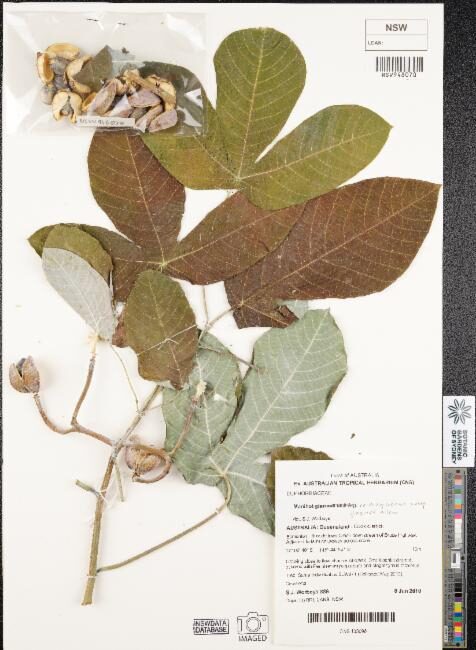
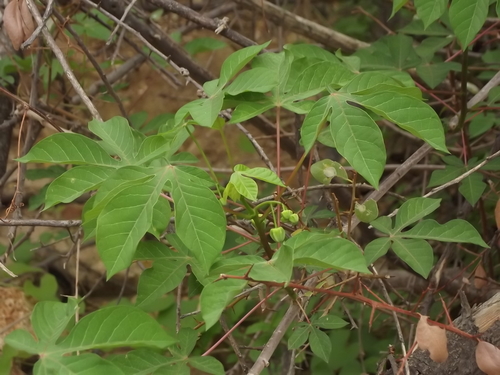
A shrub. It grows 2-3 m tall. There are usually 3 flowers in a group. The fruit is a capsule 1.6-1.9 cm long by 2.7-3.2 cm wide.
This description is brief — help expand it
Medicinal Uses
The root bark is strongly purgative. It is considered to be too strong a medicine to administer to children. To stop the purging, an adult patient to whom the root has been administered is given raw [?oil-]palm nut to eat. The stem bark is ground, mixed with water and lemon juice and drunk as an emetic. Highly active protein kinase C-agonizing compounds were isolated from the leaves and identified as esters of the diterpenoid 11,18-dehydro-phorbol and of 4,12-dideoxy-16-hydroxy-phorbol. These phorbol derivatives stimulated the central nervous system by markedly inhibiting amphetamine-induced locomotor activity in mice. A root extract exhibited antitumor activity in the P388 lymphocytic leukaemia test; scopoletin was found to be partly responsible for this effect.
Known Hazards
The plant is very poisonous and has sometimes been used for criminal poisoning. Ingestion causes immediate and prolonged intestinal shock. Although all parts of the plant are strongly purgative, the plant has local medicinal uses. The plant is used s a fish poison.
Distribution
It is a tropical plant.
Where It Grows
Africa, Cameroon, Central Africa, Congo DR, Ivory Coast, Nigeria, Sierra Leone, West Africa,
Cultivation
The flowers have a strong, repellent smell.
Other Uses
The fruits are used for tanning. The wood is used to make boys' spinning tops. The natural presence of the plant is held to be an indication of poor soil.
Notes
All parts cause diarrhoea.