Reutealis trisperma
(Blanco) Airy Shaw
Soft Lumbang, Banucalag nut, Philippine tung tree
iNaturalist· cc0
no rights reserved, uploaded by 葉子
iNaturalist· cc0
no rights reserved, uploaded by 葉子
iNaturalist· cc0
no rights reserved, uploaded by 葉子
Summary
Source: WikipediaReutealis trisperma is a fast-growing evergreen tree reaching 12 m tall with equal spread. It thrives in light sandy, medium loamy, and heavy clay soils that are well-drained, tolerating mildly acidic to basic pH. The tree requires full sun and prefers moist conditions, making it suitable for UK zone 10 and warmer.
Description
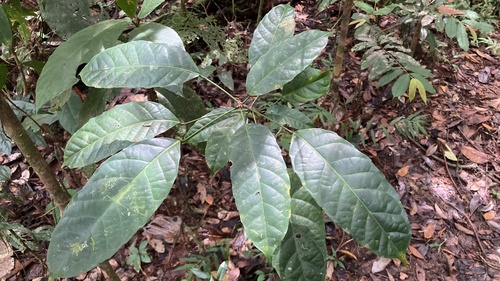
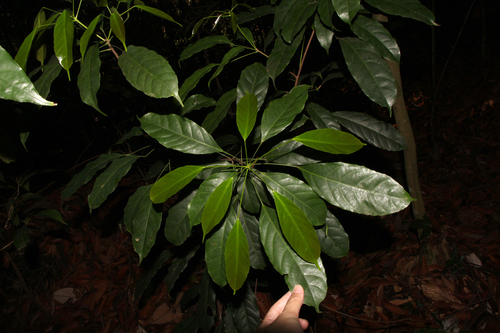
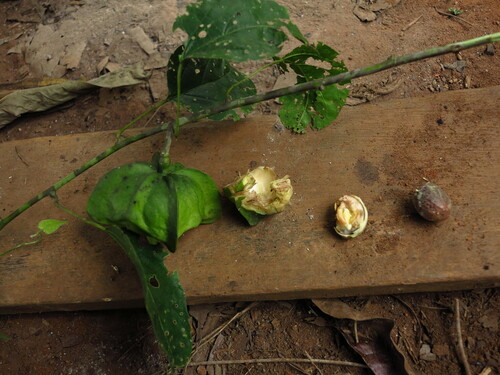
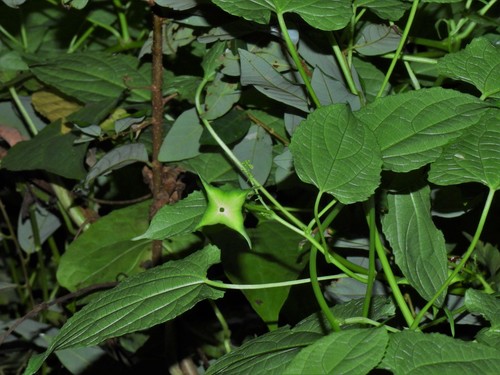
A tree. It grows 15 m tall. The trunk is 35 cm across. The leaves are oval or heart shaped and 12-14 cm long by 12-13 cm wide. There are hairs on the veins underneath. Plants are separately male and female. The fruit is a flattened capsules 4-5 cm long by 5-7 cm wide. It has 3 sides.
Edible Uses
An oil is obtained from the seed and is used medicinally, but no edible uses have been identified.
Traditional Uses
CAUTION: The seed is poisonous. It causes burning of the throat and mouth. It is eaten like Candle nut. It obviously needs processing.
This uses section is brief — help expand it
Medicinal Uses
The oil — similar to tung oil from Aleurites spp. — is used externally to treat parasitic skin diseases, burns, scalds, and wounds. The sap of the bark is used to cure scurf of the head.
Known Hazards
The fruit is poisonous. The kernels, when fresh, have a pleasant nutty flavour, but leave a burning sensation in mouth, throat, oesophagus and stomach ; even a part of one nut may cause either violent vomiting within half an hour or else a terrific diarrhoea, beginning within a few hours after eating and lasting from 12 - 24 hours.
Distribution
A tropical plant. It grows in tropical rainforests at low to medium altitudes.
Where It Grows
Asia, Australia, China, Cuba, India, Indonesia, Pacific, Philippines*, SE Asia, West Indies,
Cultivation
Plants can be grown from seeds.
Propagation
Seed sown fresh can achieve a germination rate of 98% within 19 days. Seedlings can reach 54 cm in height within 12 months.
Other Uses
A high-quality, quick-drying oil is extracted from the seed; the seeds contain 56% oil (bagilumbang oil). It is used in the production of paints, varnishes, soaps, and for coating boats, and also as a fuel oil. The oil was formerly used in the Philippines to produce a weak soap valued by sailors for its ability to lather in sea water. It also acts as an effective insecticide. The oil is of best quality when pressed from fresh seeds and deteriorates unless stored in hermetically sealed containers. Removing the shells before pressing yields a significantly higher quality oil than crushing whole seeds. The seed cake left after oil extraction makes a good fertilizer. Special uses: none listed.
Production
In southern China plants flower in April and fruit in October.
Other Information
It is cultivated.
Notes
There are 2-5 Aleurites species. The seed produces an oil.
Synonyms
Also Known As
Balukanad, Lumpang banucalag, Pohon kemiri sunan
References (10)
- Ambasta S.P. (Ed.), 2000, The Useful Plants of India. CSIR India. p 26 (As Aleurites trisperma)
- Bircher, A. G. & Bircher, W. H., 2000, Encyclopedia of Fruit Trees and Edible Flowering Plants in Egypt and the Subtropics. AUC Press. p 18 (As Aleurites trisperma)
- Burkill, I.H., 1966, A Dictionary of the Economic Products of the Malay Peninsula. Ministry of Agriculture and Cooperatives, Kuala Lumpur, Malaysia. Vol 1 (A-H) p 97 (As Aleurites trisperma)
- Menninger, E.A., 1977, Edible Nuts of the World. Horticultural Books. Florida p 49 (As Aleurites trisperma)
- Miguel, E., et al, 1989, A checklist of the cultivated plants of Cuba. Kulturpflanze 37. 1989, 211-357 (As Aleurites trisperma)
Show all 10 references Hide references
- Recher, P, 2001, Fruit Spirit Botanical Gardens Plant Index. www.nrg.com.au/~recher/ seedlist.html p 1 (As Aleurites trisperma)
- Sukarya, D. G., (Ed.) 2013, 3,500 Plant Species of the Botanic Gardens of Indonesia. LIPI p 489
- Wit, F., 1979, Tung, in Simmonds N.W.,(ed), Crop Plant Evolution. Longmans. London. p 74 (As Aleurites trisperma)
- World Checklist of Useful Plant Species 2020. Royal Botanic Gardens, Kew
- Zeven, A. C. & de West, J. M. J., 1982, Dictionary of cultivated plants and their regions of diversity. Wageningen. p 52 (As Aleurites trisperma)