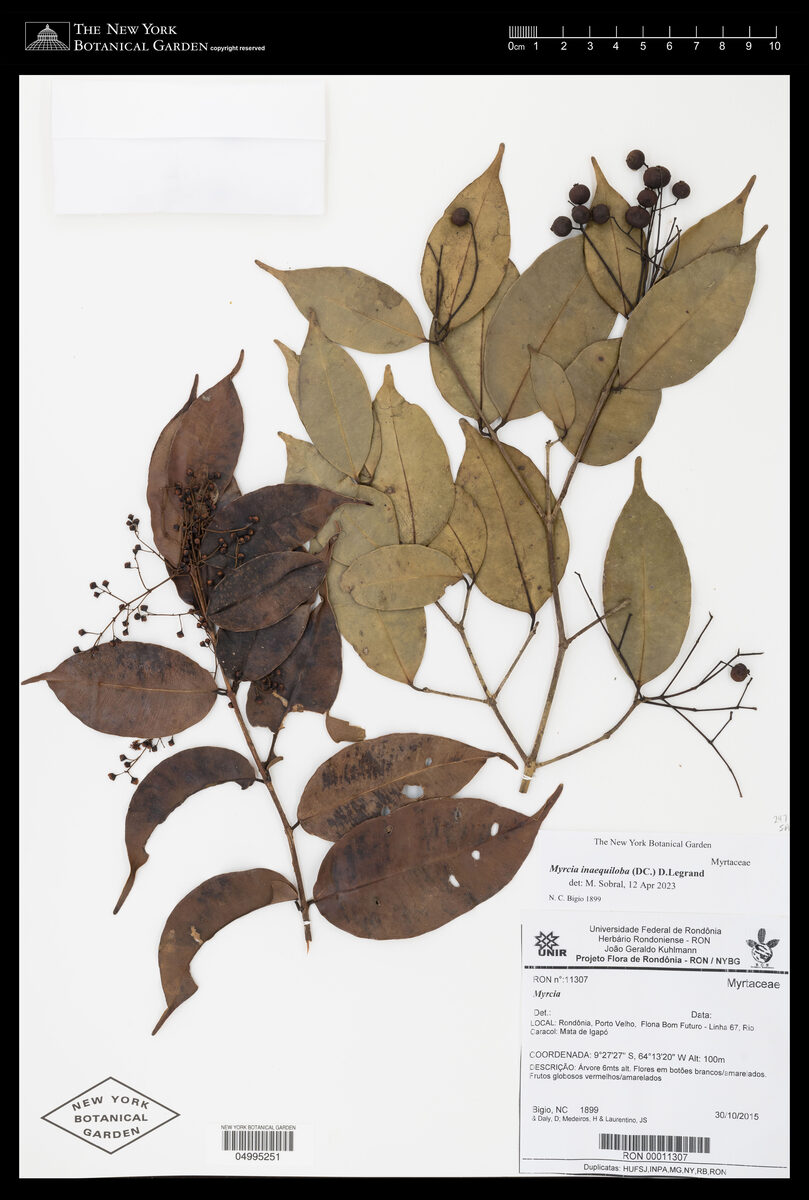
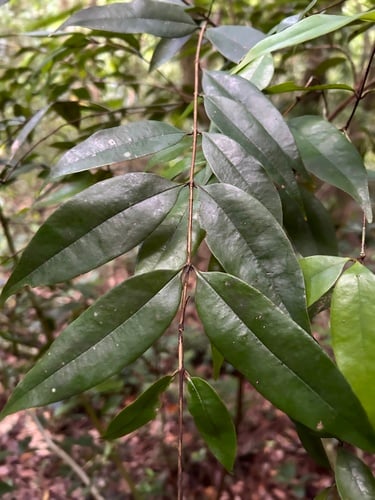
Myrcia hebepetala
DC.
Pubescent petal myrcia
iNaturalist· cc-by
(c) Denis Zabin, some rights reserved (CC BY), uploaded by Denis Zabin
iNaturalist· cc-by
(c) Fabrício Mil Homens Riella, some rights reserved (CC BY)
iNaturalist· cc-by
(c) Fabrício Mil Homens Riella, some rights reserved (CC BY)
Description
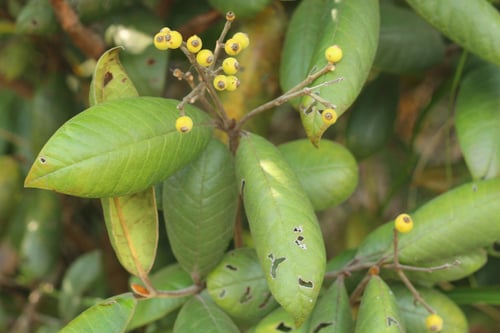
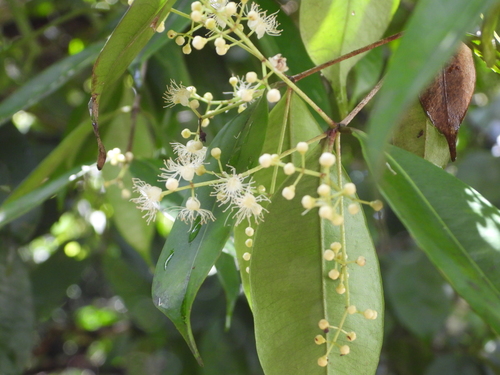
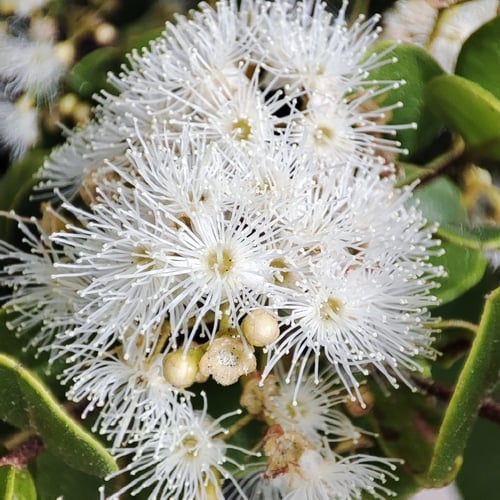
A small tree. It grows 4-8 m high. The crown is long and the branches hang down. The trunk is upright and 20-30 cm across. The bark has shallow cracks. It loses many leaves during the year. The leaves are simple and opposite. They are 5-11 cm long by 2-3 cm wide. The leaf stalks are 3-6 mm long. There are 18 pairs of veins. These are below the upper surface and raised underneath. The flowers are in groups and are white and have a scent. The fruit is a round berry. It is purple or red when ripe. The pulp is fleshy and sweet. They are 2 cm across and there are one or two seeds.
Edible Uses
Fruit - raw. A fleshy pulp with a sweetish flavour, though somewhat astringent because the fruit contains tannins. The red to purple, globose fruit can be 20mm in diameter, containing one or two seeds.
Traditional Uses
The fruit are eaten raw. (They can be rich in tannin.)
This uses section is brief — help expand it
Known Hazards
The fruit can be rich in tannin.
Distribution
It is a tropical plant. It can grow in dense primary forest and in more open positions. It can grow in full sun or shade. It can tolerate wet or dry soils. It grows in Brazil in coastal forest near the Atlantic.
Where It Grows
Brazil, South America,
Cultivation
Plants are grown from fresh seeds. The ripe fruit are harvested and the seeds removed. They are planted fresh and germinate in 30-40 days.
Propagation
Seed - best sown as soon as it is ripe in a partially shaded position in individual containers. A low germination rate can be expected, with the seed sprouting within 30 - 40 days.
Other Uses
The wood is medium-textured, straight-grained, heavy, hard, with poor mechanical properties and not very durable. It is only used locally, for purposes such as general construction, light cabinet making, boxes, crates etc. The wood is used for fuel and to make charcoal.
Synonyms
Also Known As
Aperta-goela, Batinga, Guamirim-rola, Perta-guela, Rapa-guela
References (3)
- Fern, K., 2012, Tropical Species Database http://theferns.info/tropical/
- Grandtner, M. M. & Chevrette, J., 2013, Dictionary of Trees, Volume 2: South America: Nomenclature, Taxonomy and Ecology. Academic Press p 430
- Lorenzi, H., 2002, Brazilian Trees. A Guide to the Identification and Cultivation of Brazilian Native Trees. Vol. 02 Nova Odessa, SP, Instituto Plantarum p 270 (As Gomidesia affinis)