Rhodomyrtus psidioides
(G. Don) Benth.
Native Guava, Hill gooseberry
iNaturalist· cc-by-nc-sa
(c) Nick Lambert, some rights reserved (CC BY-NC-SA), uploaded by Nick Lambert
iNaturalist· cc-by-nc
(c) burkoliscious, some rights reserved (CC BY-NC)
iNaturalist· cc-by-nc
(c) burkoliscious, some rights reserved (CC BY-NC)
Summary
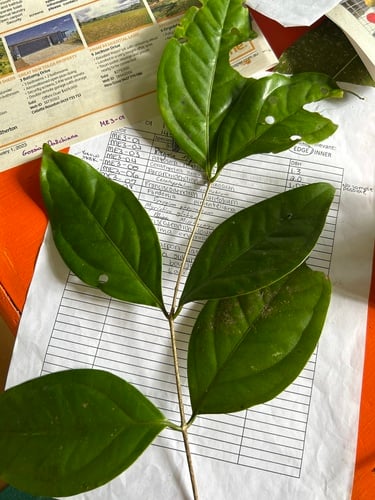
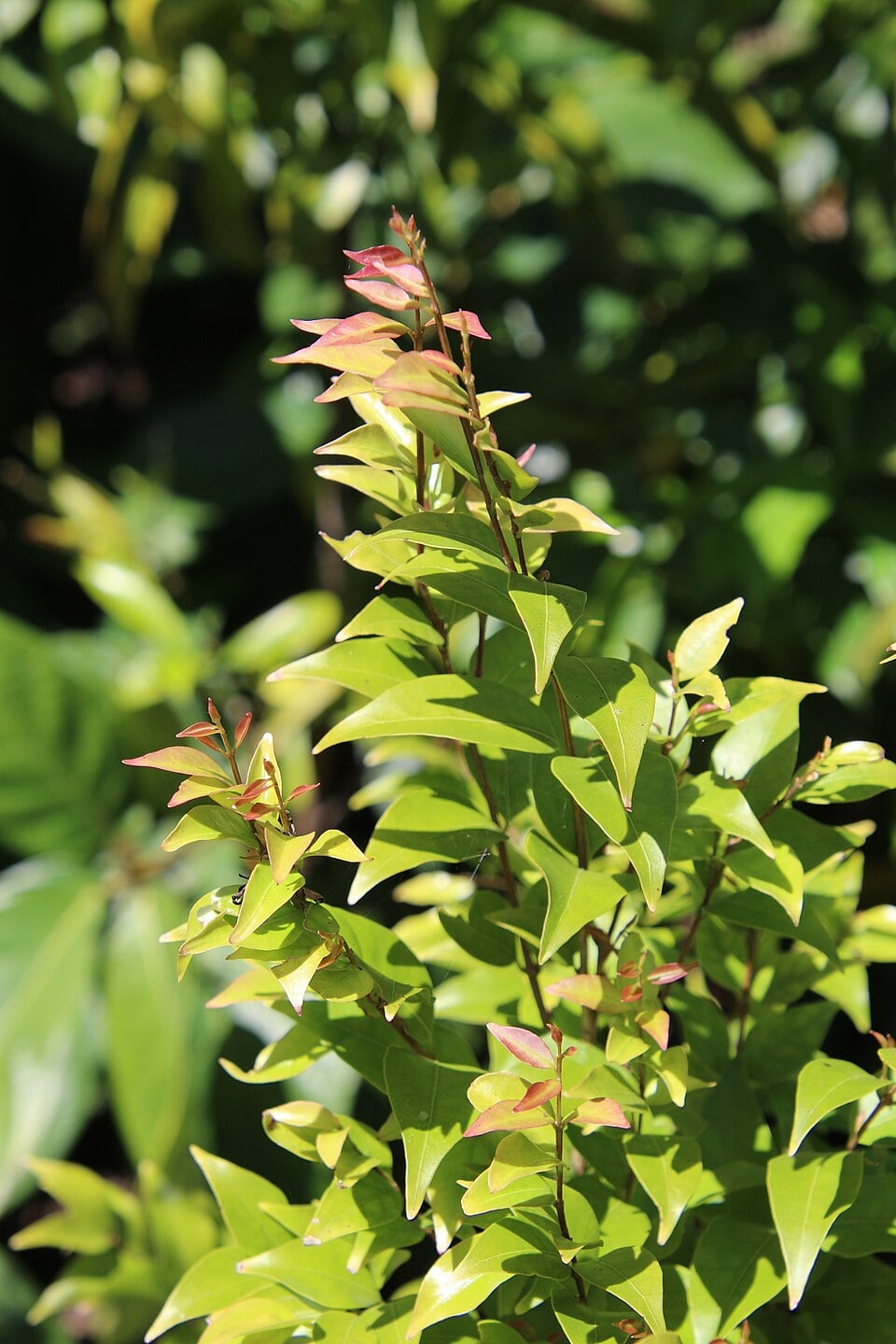
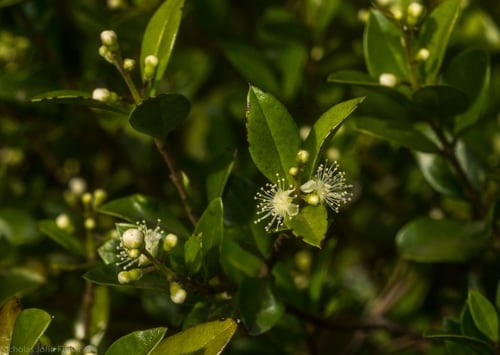
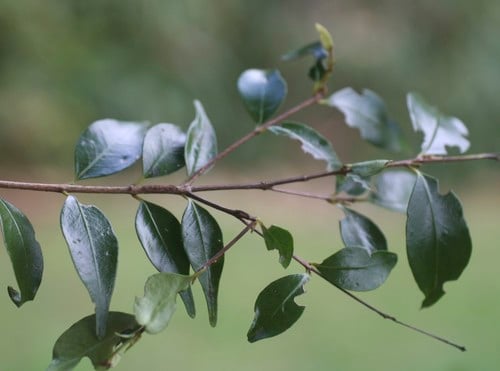
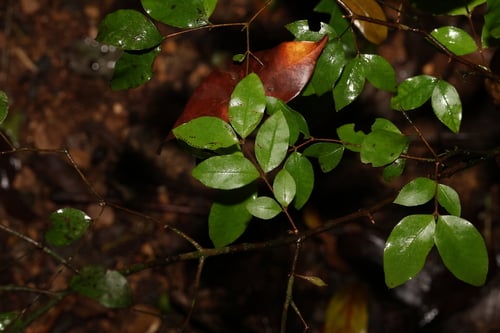
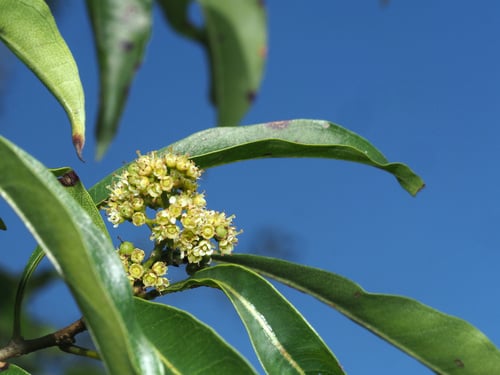
Source: WikipediaRhodomyrtus psidioides, the native guava, is a shrub or small rainforest tree up to 12 m (39 ft) high, member of the botanical family Myrtaceae, native to eastern Australia. Leaves are ovate to elliptic or oblong, 5–25 cm (2–10 in) long and 2.5–6.5 cm (1–3 in) wide, with a glossy upper surface and paler lower surface. Oil glands are numerous, and the leaves have a pineapple-like fragrance and stickiness when crushed. White or pink flowers occur in raceme-like inflorescences; followed by a berry, 15–25 mm (0.59–0.98 in) long, 10–15 mm (0.39–0.59 in) wide, yellow and fleshy.
Description
A shrub or small tree. It grows 12 m tall. The young leaves and flowers are very hairy. The leaves are oval and 5-20 cm long by 3-7 cm wide. There are 7-11 side nerves. There are usually 3-11 flowers in a group. The petals are white or pink and 7-10 mm long. The fruit are round and yellow. They can be 3 cm long. The fruit is edible. (It is also reported as poisonous.)
Edible Uses
The berry of native guava is edible with a pleasant aromatic flavor. The tree is fast growing and has an important successional role in rainforest regeneration.
Traditional Uses
Caution: The fruit are reported as poisonous.
This uses section is brief — help expand it
Distribution
It is a subtropical plant. It grows in rainforest and wet Eucalypt forest.
Where It Grows
Australia*,
Cultivation
Plants can be grown from seed.
Production
Plants flower in spring and summer. Fruit are ripe in March.
Synonyms
References (11)
- Edible and Useful Native Plants (off internet)
- Fl. austral. 3:272. 1867
- Hibbert, M., 2002, The Aussie Plant Finder 2002, Florilegium. p 251
- Jones D, L, 1986, Ornamental Rainforest Plants in Australia, Reed Books, p 73
- Kiple, K.F. & Ornelas, K.C., (eds), 2000, The Cambridge World History of Food. CUP p 1821
Show all 11 references Hide references
- Lazarides, M. & Hince, B., 1993, Handbook of Economic Plants of Australia, CSIRO. p 205
- Nicholson, N & H., 1996, Australian Rainforest Plants 3, Terania Rainforest Publishing. NSW. p 54
- Recher, P, 2001, Fruit Spirit Botanical Gardens Plant Index. www.nrg.com.au/~recher/ seedlist.html p 7
- Stanley, T. D. & Ross, E. M., 1986, Flora of south-eastern Queensland Volume 2. Queensland Government p 205
- Williams, J.B., Harden, G.J., and McDonald, W.J.F., 1984, Trees and shrubs in rainforests of New South Wales and Southern Queensland. Univ. of New England, Armidale. p 114
- Yallakool Reserve Plant List July 1, 2009 Off internet