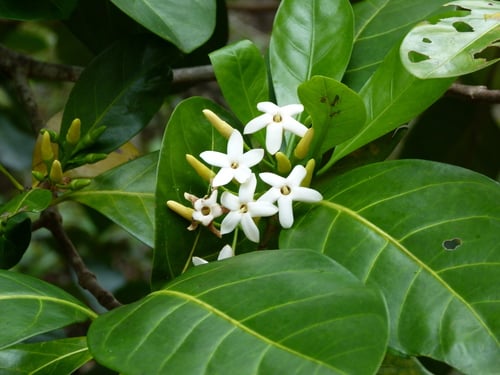
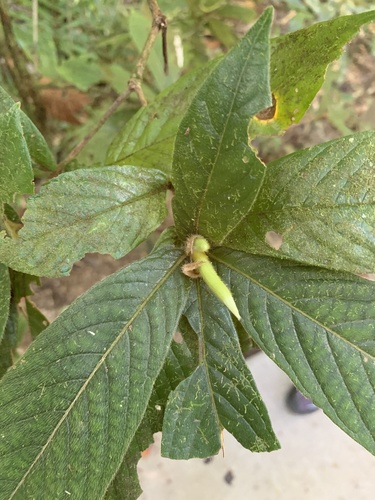
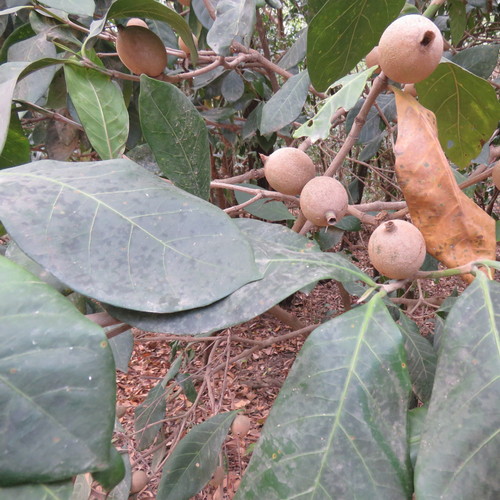
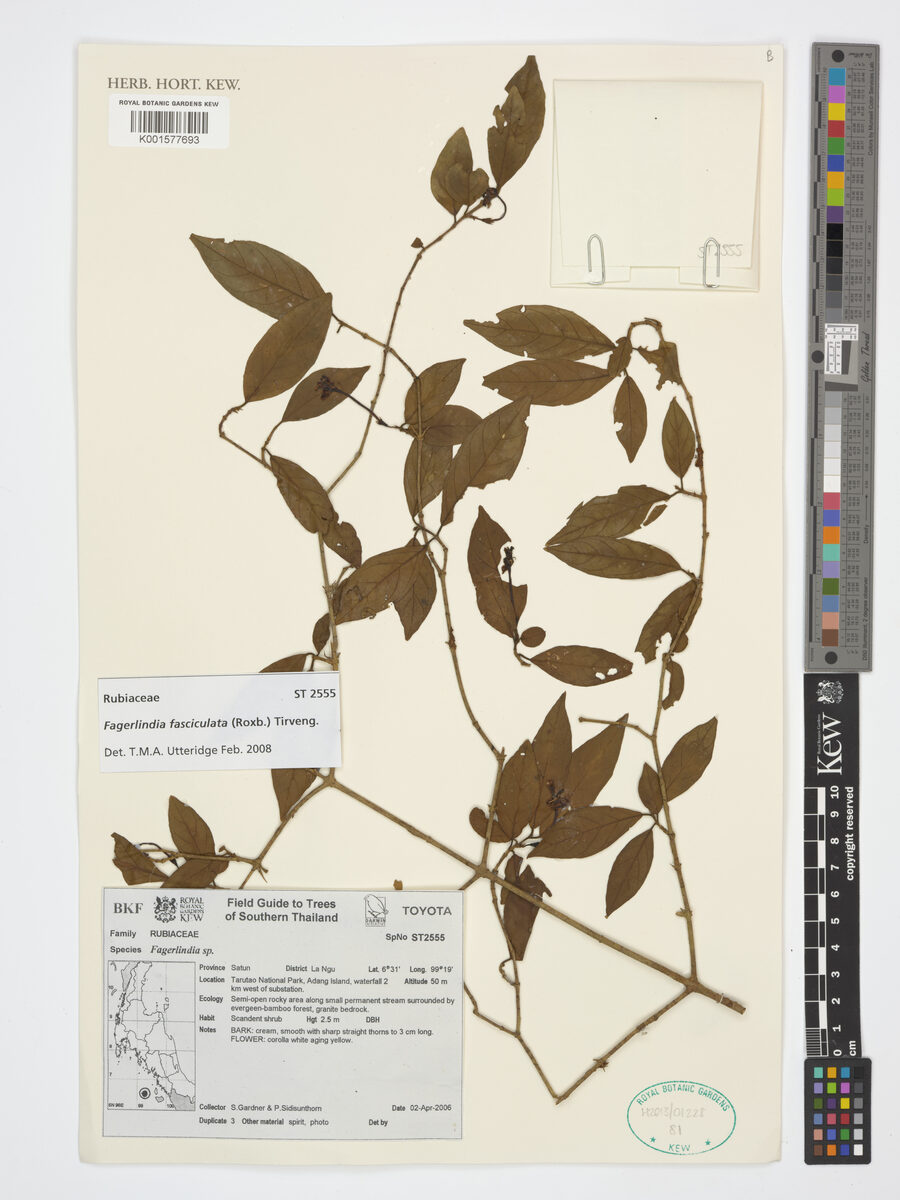
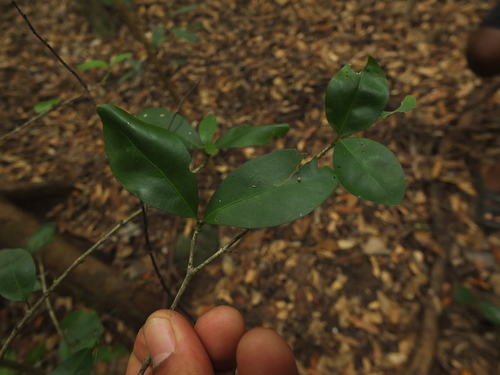
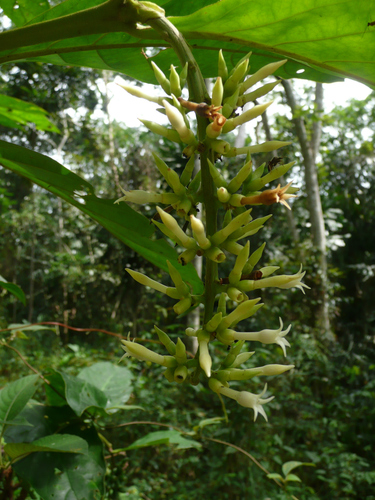
Faramea torquata
Mull.Arg.
Torquate faramea
iNaturalist· cc-by-nc-sa
(c) Rich Hoyer, some rights reserved (CC BY-NC-SA), uploaded by Rich Hoyer
iNaturalist· cc-by-nc-sa
(c) Rich Hoyer, some rights reserved (CC BY-NC-SA)
Description
A tropical shrub or small tree in the Rubiaceae family native to rainforests from sea level to 1,000 m elevation, bearing fruit that ripens from green to dark blue.
Edible Uses
The fruit is eaten.
Distribution
It is a tropical plant. It grows from sea level to 1,000 m above sea level. It grows in the rainforest.
Where It Grows
Amazon, Bolivia, Brazil, Colombia, Ecuador, French Guiana, Guyana, Peru, South America, Venezuela,
Synonyms
Coussarea scalaris Standl.Faramea lehmannii Standl.Faramea pachydictyon Steyerm.Faramea paludicola Steyerm.Faramea rectinervia Standl.
Also Known As
Cafecillo, Carrisillo, Coracao-de-negra, Palo de tema, Pata de grulla
References (5)
- Daly, D. C., An Index of Common Names of Plants in Acre, Brazil. New York Botanical Garden Universidade Federal do Acre. (As Faramea torquata)
- Grandtner, M. M. & Chevrette, J., 2013, Dictionary of Trees, Volume 2: South America: Nomenclature, Taxonomy and Ecology. Academic Press p 249
- Kermath, B. M., et al, 2014, Food Plants in the Americas: A survey of the domesticated, cultivated and wild plants used for Human food in North, Central and South America and the Caribbean. On line draft. p 365 (As Faramea torquata)
- Lopez-Diago, D. & Garcia, N., 2021, Wild edible fruits of Colombia. Biota ColomBiana 22 (2) p 50
- Roa, J. A. G. & Boada, D. S. G., 2018, Fundación para el Fortalecimiento de la Fruticultura y Plantas Alimenticias no Convencionales en Colombia.