Canthium oligocarpum
Hiern
iNaturalist· cc-by-nc
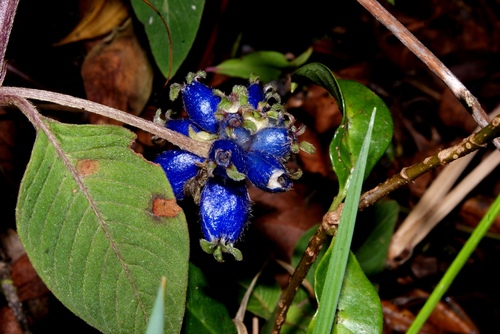
(c) Bart Wursten, some rights reserved (CC BY-NC), uploaded by Bart Wursten
iNaturalist· cc-by-nc
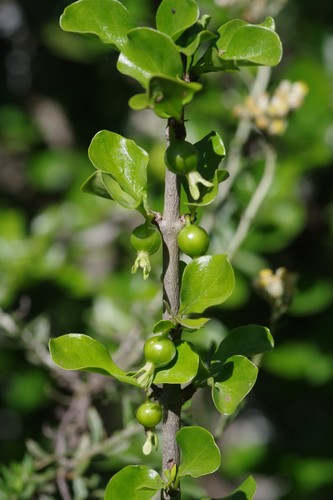
(c) Bart Wursten, some rights reserved (CC BY-NC)
Description
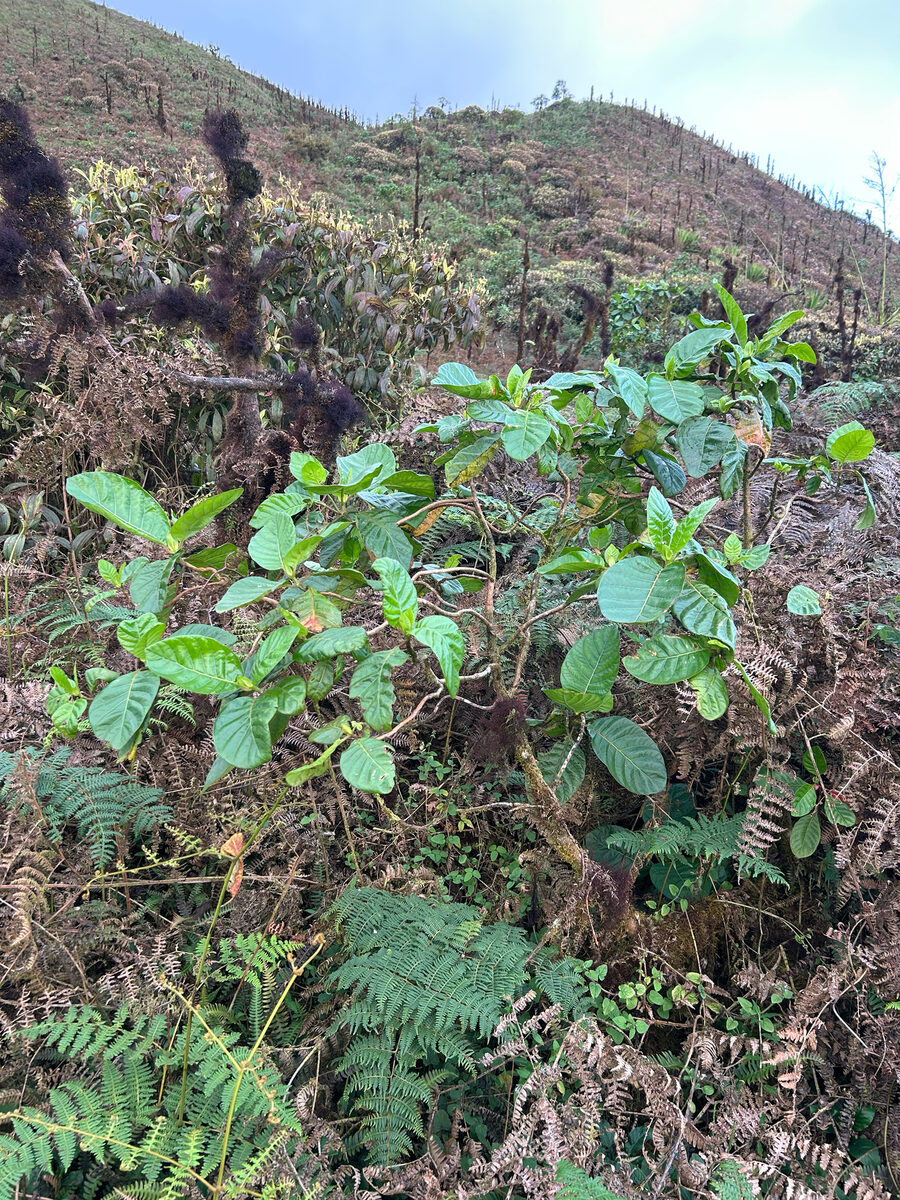
A shrub or tree. It can be 2-20 m tall. The trunk and branches have sharp spines. Young trees have spines in groups of 2-3 on the trunk. These can be 2 cm long. They occur as 2 or 3 together. The bark is grey and smooth. It loses its leaves for a short time. Old leaves turn red. The leaves are opposite or in rings or 3 or 4. They are narrowly oval and 3-14 cm long. The tip is long but blunt. The leaves are papery and dark above but paler underneath. The flowers are white to yellow. They are in loose heads that hang down. The flowers are small and tube shaped and about 25 occur in a group. They are greenish-yellow. The fruit hang in loose bunches. They have 2 lobes and a notch at the tip. They are about 2 cm long. There are 2 seeds in each.
Edible Uses
Fruit - raw. The fleshy fruits are eaten as a snack. The more or less oblong fruits are carried in loose bunches, and are about 2cm long, containing 2 seeds.
Traditional Uses
The fleshy fruit are eaten as a snack.
This uses section is brief — help expand it
Distribution
It is a tropical plant. It grows in mountain rainforest. It grows in the forest understorey. It suits humid locations. It grows in moist forest between 1,800-2,200 m above sea level in Tanzania.
Where It Grows
Africa, Burundi, Central Africa, Congo, East Africa, Ethiopia, Kenya, Malawi, Mozambique, Rwanda, Southern Africa, Sudan, Tanzania, Uganda, Zambia, Zimbabwe,
Cultivation
Plants can be grown from seeds.
Other Uses
The wood is hard and used for building poles and tool handles. The wood can be used for fuel and for making charcoal.
Production
In Tanzania fruit are collected from April to June.
Other Information
The fruit are especially eaten by children.
Notes
There are about 60-200 Canthium species.
Synonyms
Also Known As
Coralla, Kincho, Mdaia, Mhamamala, Mhomanga, Msanda, Mtabagira, Ntula-vuha
References (8)
- Asfaw, Z. and Tadesse, M., 2001, Prospects for Sustainable Use and Development of Wild Food Plants in Ethiopia. Economic Botany, Vol. 55, No. 1, pp. 47-62
- Bussman, R. W., et al, 2011, Plant Use in Odo-Bulu and Demaro, Bale region, Ethiopia. Journal of Ethnobiology and Ethnomedicine. 2011, 7:28
- Mutie, F. M., et al, 2023, Important Medicinal and Food Taxa (Orders and Families) in Kenya, Based on Three Quantitative Approaches. Plants 2023, 12, 1145
- Ruffo, C. K., Birnie, A. & Tengnas, B., 2002, Edible Wild Plants of Tanzania. RELMA p 182
- Sina, B. & Degu, H. D., 2015, Knowledge and use of Wild Edible Plants in the Hula District of the Sidama Zone. International Journal of Bio-resource and Stress Management 6(3):352-365
Show all 8 references Hide references
- White, F., Dowsett-Lemaire, F. and Chapman, J. D., 2001, Evergreen Forest Flora of Malawi. Kew. p 459
- World Checklist of Useful Plant Species 2020. Royal Botanic Gardens, Kew
- www.theplantlist.org