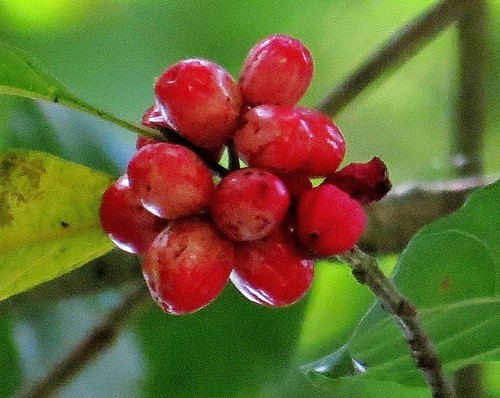
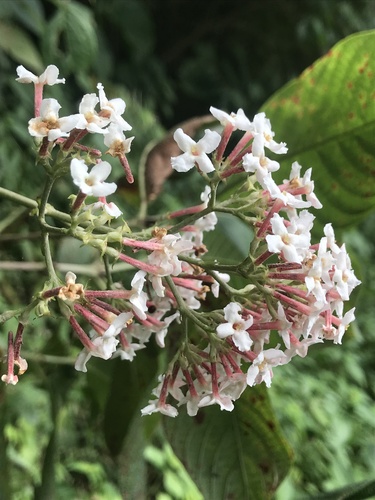
Canthium parvifolium
Roxb.
Aila, Gale
iNaturalist· cc-by-nc
(c) Troos van der Merwe, some rights reserved (CC BY-NC)
iNaturalist· cc-by-nc
(c) Troos van der Merwe, some rights reserved (CC BY-NC)
iNaturalist· cc-by-nc
(c) Troos van der Merwe, some rights reserved (CC BY-NC)
Description
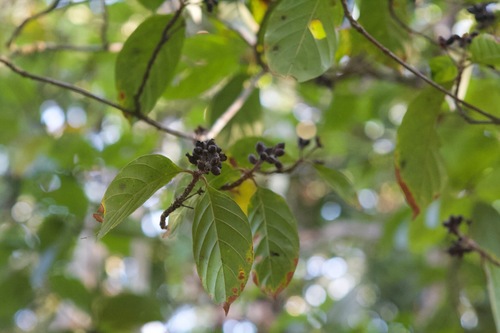
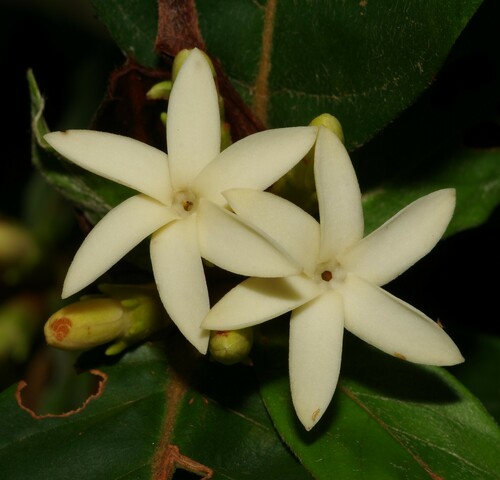
A thorny shrub. It loses its leaves during the year. It grows 7 m high. The leaves are 5.5 cm long by 3 cm wide. The flowers are in groups of 2-8. The fruit are yellow-green. They turn brown after ripening.
Edible Uses
The fruit are eaten raw, especially by children, and the leaves are eaten in curries and sold in local markets.
Traditional Uses
The fruit are eaten raw. The leaves are eaten in curries.
This uses section is brief — help expand it
Distribution
A tropical plant. In Yunnan in China it grows between 600-1500 m altitude. It grows in secondary forest. In XTBG Yunnan.
Where It Grows
Asia, China, India, Indochina, Laos, Malaysia, Myanmar, Northeastern India, SE Asia, Thailand,
Other Information
Leaves are sold in local markets. The fruit are especially eaten by children.
Notes
There are about 200 Canthium species.
Synonyms
Also Known As
Bol-thing, Kare hannu, Malukkaarai, Periyakeerai
References (9)
- Anderson, E. F., 1993, Plants and people of the Golden Triangle. Dioscorides Press. p 205
- Arinathan, V., et al, 2007, Wild edibles used by Palliyars of the western Ghats, Tamil Nadu. Indian Journal of Traditional Knowledge. 6(1) pp 163-168
- Flora and Livestock in Coastal Karnataka. 2007, Report. EMPRI p 60
- Gardner, S., et al, 2000, A Field Guide to Forest Trees of Northern Thailand, Kobfai Publishing Project. p 224
- Hedrick, U.P., 1919, (Ed.), Sturtevant's edible plants of the world. p 508
Show all 9 references Hide references
- Jin, Chen et al, 1999, Ethnobotanical studies on Wild Edible Fruits in Southern Yunnan: Folk Names: Nutritional Value and Uses. Economic Botany 53(1) pp 2-14
- Singh, B., et al, 2012, Wild edible plants used by Garo tribes of Nokrek Biosphere Reserve in Meghalaya, India. Indian Journal of Traditional Knowledge. 11(1) pp 166-171
- www.theplantlist.org
- Xu, You-Kai, et al, 2004, Wild Vegetable Resources and Market Survey in Xishuangbanna, Southwest China. Economic Botany. 58(4): 647-667.