Canthium inerme
(L.f) Kuntze
Turkey-berry, Raisin-fruited canthium
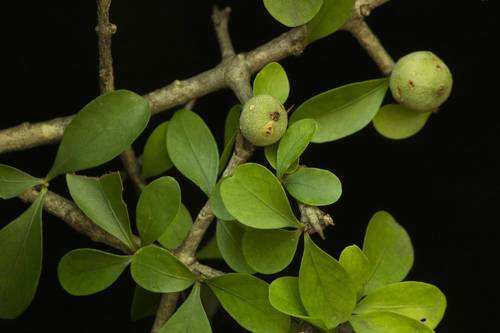
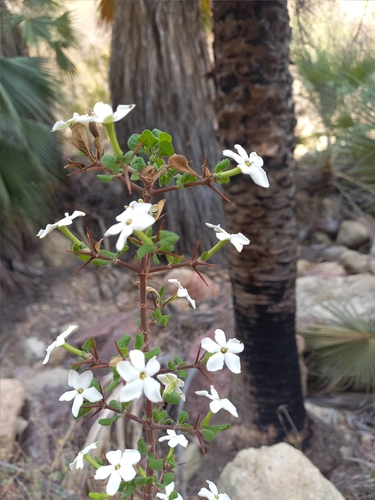
iNaturalist· cc-by-nc
(c) wonderwalker, some rights reserved (CC BY-NC), uploaded by wonderwalker
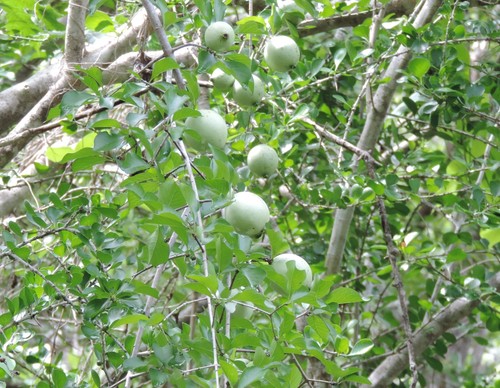
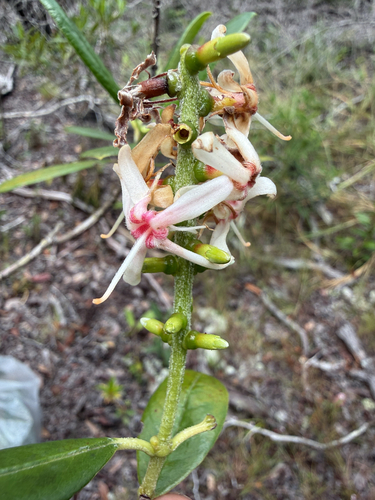
iNaturalist· cc-by-nc
(c) Craig Peter, some rights reserved (CC BY-NC), uploaded by Craig Peter
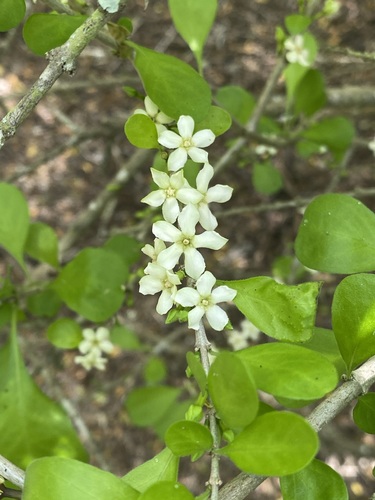
iNaturalist· cc-by-nc
(c) Mike, some rights reserved (CC BY-NC), uploaded by Mike
Summary
Source: WikipediaCanthium inerme (Turkey-berry) is a tough, adaptable medium-sized tree from South Africa. It bears small edible fruits and has a variety of uses in traditional medicine.
Description
A shrub or tree. It can grow 10 m high. The bark is dark grey and smooth. The branches are upright. They are waxy with wrinkles long their length and armed with spines. The leaves are oblong and 2.5-7.5 cm long by 1-3.8 cm wide. They have a thin texture. They are light green above and paler underneath. The edges are rolled under. The leaf stalk is 8-12 mm long. The flowers are very small and greenish. They have a slight scent. The flowers occur in many branched heads in the axils of leaves. These are 1.5-3 cm across. The fruit are oval and 1.3 cm long. They are dark brown when mature. They are slightly wrinkled.
Edible Uses
In a garden, this hardy evergreen tree attracts birds, while also serving as a possible security hedge. To assure a typical tree shape, prune off the lower branches. It is known to grow very easily from seed. The foliage and typically twisted trunk of a fully grown tree:
Traditional Uses
The bark, fruit and seeds are all eaten as snacks.
This uses section is brief — help expand it
Medicinal Uses
The leaves are used in the treatment of stomach ailments.
Distribution
A tropical plant. It occurs in patches in evergreen forest. It can also be in coastal dunes and in high altitude grassland among rocks. In Zimbabwe it grows up to 2,150 m above sea level.
Where It Grows
Africa, East Africa, Eswatini, Mozambique, South Africa*, Southern Africa, Swaziland, Zimbabwe,
Cultivation
A plant of low to moderate elevations in the tropics and subtropics. It grows best in areas of relatively low rainfall with a distinct dry season, not doing so well in very dry environments or in moister regions. A very variable species, found in a wide diversity of habitats with growth habit reflecting that habitat.
Propagation
Seed - sowing can be done in trays or seed beds in a rich, well-drained medium, with equal parts of sand and compost. Place in a warm, brightly-lit area and keep moist but not wet. Germination times may vary, depending on the time of year, from under a month to up to 2 - 3 months and growth is rapid once germinated. Following germination, allow the seedlings at least 2 - 3 weeks of growth before transplanting into bags or other suitable containers for further growing.
Other Uses
The wood, which is hard, heavy and tough, is handsome and has been used in wagon-making and for furniture.
Other Information
The fruit are edible but have little taste. They are eaten by children.
Notes
There are about 200 Canthium species.
Nutrition
| Part | Moisture | kJ | kcal | Protein | Vit A | Vit C | Iron | Zinc |
|---|---|---|---|---|---|---|---|---|
| Fruit | 84.2 | — | — | — | — | — | — | — |
| Fruit | 58.5 | — | — | 6.3 | — | — | — | — |
Synonyms
Also Known As
Bokdrolbessie, Gewone bokdrol, Mevane, Muvhibvelashdani, Tshwalala, Umnyushubele, Umvuthwamini
References (16)
- Cunningham, 1985,
- Fox, F. W. & Young, M. E. N., 1982, Food from the Veld. Delta Books. p 318
- INFOODS:FAO/INFOODS Databases
- Jardin, C., 1970, List of Foods Used In Africa, FAO Nutrition Information Document Series No 2.p 124
- Long, C., 2005, Swaziland's Flora - siSwati names and Uses http://www.sntc.org.sz/flora/
Show all 16 references Hide references
- Magwede, K., van Wyk, B.-E., & van Wyk, A. E., 2019, An inventory of Vhavenḓa useful plants. South African Journal of Botany 122 (2019) 57–89
- Ogle & Grivetti, 1985,
- Palgrave, K.C., 1996, Trees of Southern Africa. Struik Publishers. p 882
- Peters, C. R., O'Brien, E. M., and Drummond, R.B., 1992, Edible Wild plants of Sub-saharan Africa. Kew. p 168
- Ruiters-Welcome, A. K., 2019, Food plants of southern Africa. Ph.D. thesis. Univ. of Johannesburg p 95
- Shava, S., 2000, The Use of Indigenous Plants as Food by a Rural Community in the Eastern Cape: an Educational Exploration. Masters Thesis Rhodes University. p 63
- Swaziland's Flora Database http://www.sntc.org.sz/flora
- van Wyk, B, van Wyk, P, and van Wyk B., 2000, Photographic guide to Trees of Southern Africa. Briza. p 77
- Wehmeyer, A. S, 1986, Edible Wild Plants of Southern Africa. Data on the Nutrient Contents of over 300 species
- Welcome, A. K. & Van Wyk, B.-E., 2019, An inventory and analysis of the food plants of southern Africa. South African Journal of Botany 122 (2019) 136–179
- Wilson, A.L. & Downs, C. T., 2012, Fruit nutritional composition and non-nutritive traits of indigenous South African tree species. South African Journal of Botany. 78:30-36