Syneilesis aconitifolia
(Bunge) Maxim.
Hare's umbrella
iNaturalist· cc-by-nc
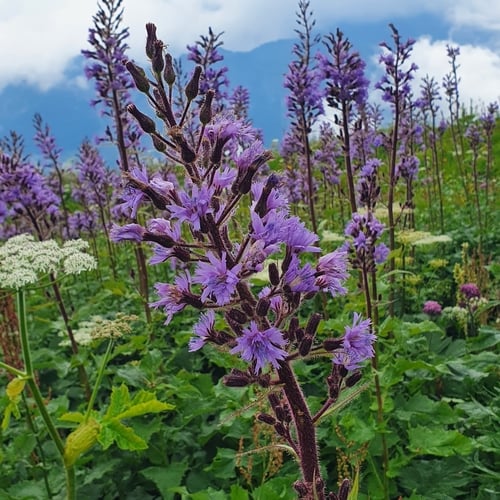
(c) Homemountain/Shan Gui, some rights reserved (CC BY-NC), uploaded by Homemountain/Shan Gui
iNaturalist· cc-by-nc
(c) jianglei, some rights reserved (CC BY-NC)
iNaturalist· cc-by-nc
(c) jianglei, some rights reserved (CC BY-NC)
Description
A herb. It grows 70-120 cm tall. It has rhizomes that are short and lie along the ground. The stem is erect and purple brown. There are usually 2 leaves on the stem. They are 20-30 cm across and divided like fingers on a hand. They are grey underneath.
Edible Uses
The leaves are eaten with oil and salt.
Traditional Uses
Leaves eaten with oil and salt.
This uses section is brief — help expand it
Distribution
It is a temperate plant. In north China it grows on the edges of forests and along roadsides between 500-1,800 m above sea level.
Where It Grows
Asia, China, Japan, Korea, Russia,
Synonyms
References (3)
- Hwang, H., et al, 2013, A Study on the Flora of 15 Islands in the Western Sea of Jeollanamdo Province, Korea. Journal of Asia-Pacific Biodiversity Vol. 6, No. 2 281-310
- READ (As Cacalia aconitifolia)
- Wujisguleng, W., & Khasbagen. K., 2010, An integrated assessment of wild vegetable resources in Inner Mongolian Autonomous Region, China. Journal of Ethnobiology and Ethnomedicine 6:34