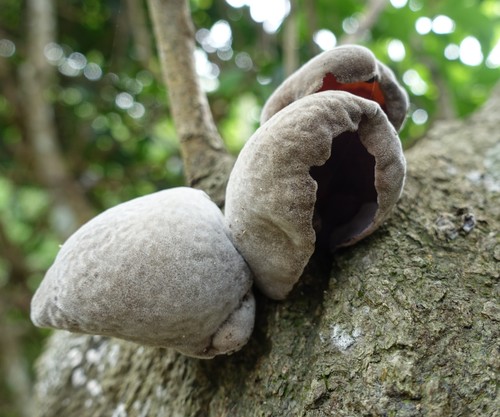
Auricularia mesenterica
(Dicks.) Pers.
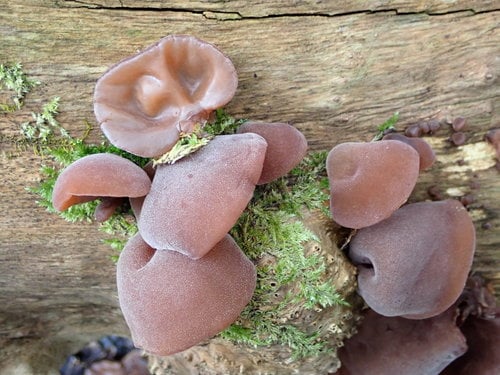
iNaturalist· cc0
no rights reserved, uploaded by Nick Blewden
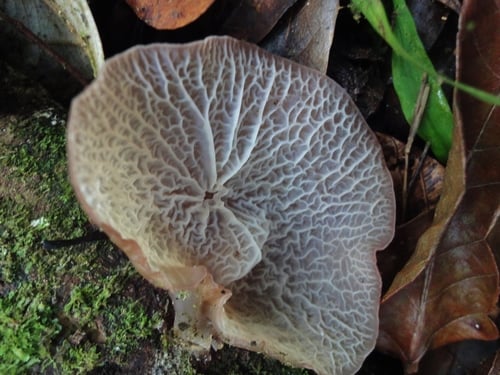
iNaturalist· cc0
no rights reserved, uploaded by Florent
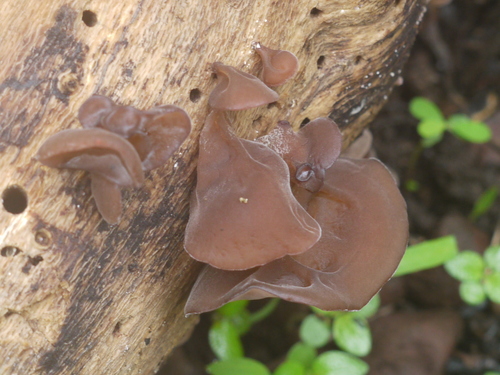
iNaturalist· cc-by-nc
(c) Иван Матершев, some rights reserved (CC BY-NC), uploaded by Иван Матершев
Summary
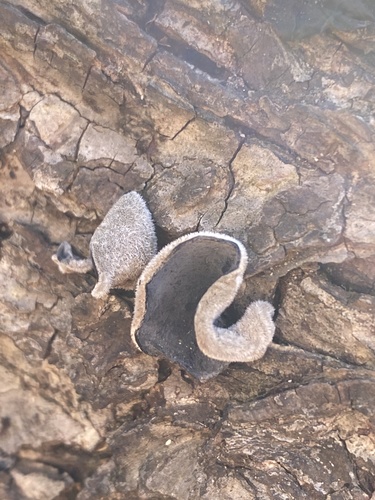
Source: WikipediaAuricularia mesenterica, commonly known as the tripe fungus, is a species of fungus in the family Auriculariaceae. Basidiocarps (fruit bodies) are gelatinous and typically formed in coalescing tiers on stumps and logs. They are partly pileate, with hirsute, zoned caps, and partly resupinate, with smooth to wrinkled undersurfaces that spread over the wood. Auricularia mesenterica is a saprotroph on dead deciduous trees and shrubs. The species is restricted to Europe and Central Asia.
Description
A mushroom.
This description is brief — help expand it
Edible Uses
Before the fruit body fully matures and hardens, young specimens are said to be edible, but in some local populations, these fungi tend to bioaccumulate high levels of heavy metals from their environment. A. mesenterica has shown to have high levels of phenols, flavonoids, and antioxidant activity, having potential as antitumor agent.
Distribution
It is a temperate plant.
Where It Grows
Asia, Europe, Himalayas, Kosovo, Laos, Mexico, Nepal, North America, SE Asia,
Other Information
It is sold in local markets.