Cephalotaxus harringtonii var. wilsoniana
(Hayata) KItam.
Wikipedia· cc-by-sa
Wikimedia Commons - Cephalotaxus_harringtonia_var._wilsoniana.jpg
iNaturalist· cc-by-nc
(c) 羅恩至, some rights reserved (CC BY-NC)
Summary
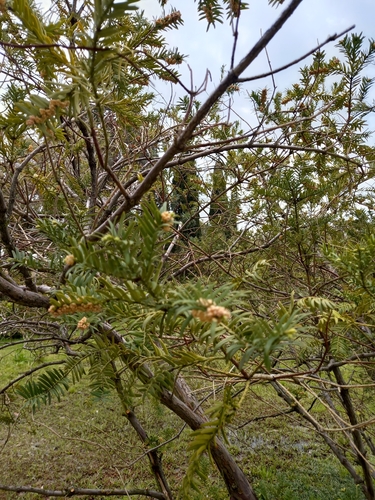
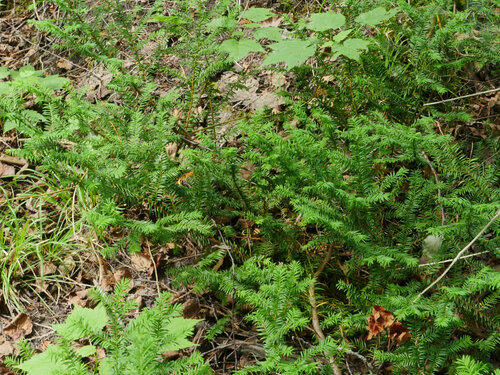
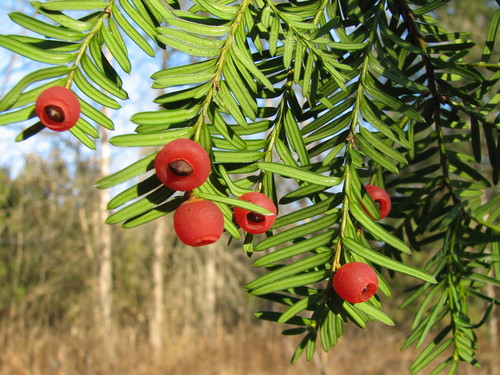
Source: WikipediaCephalotaxus harringtonii var. wilsoniana, commonly known as Taiwan plum yew, Taiwan cow's-tail pine, and Wilson plum yew, is an endangered variety of conifer endemic to Taiwan.
Description
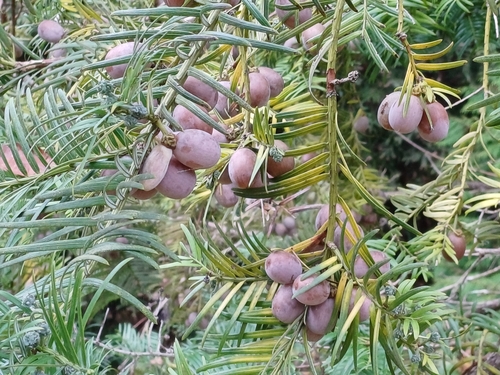
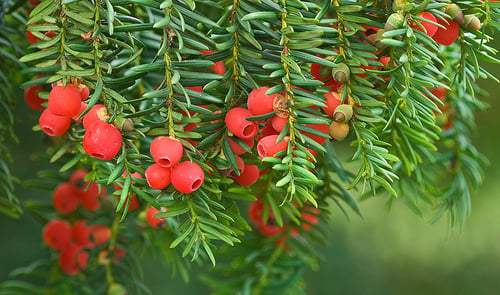
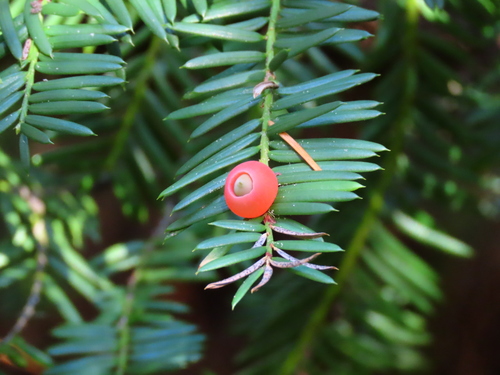
A small tree. It grows 10 m high. The trunk is 40 cm across and has smooth fibrous bark. The branches hang down. The leaves are narrow and flat. They are 3-4 cm long and about 3 mm wide. The seeds are oval and about 2 cm long by 1 cm wide.
Edible Uses
The fruit is edible.
Medicinal Uses
The wood is used for fire and medicinal purposes. The seeds from female cones are also collected for oil. It is increasingly used in medicine due to the anticancer compounds found in the vegetative tissues and seeds. Experiments have been conducted with ester alkaloids, but no therapeutic applications have been announced.
Distribution
It grows in broad leafed forest between 1,400-2,000 m altitude in Taiwan.
Where It Grows
Asia, China, Taiwan*,
Notes
There are about 10 Cephalotaxus species. Also put in the family Cephalotaxaceae. There is only one genus in the Cephalotaxaceae family.
Synonyms
References (5)
- Flora of Taiwan Vol 1:555 (As Cephalotaxus wilsoniana)
- Icon. pl. formos. 4:22. 1914 (As Cephalotaxus wilsoniana)
- Marinelli, J. (Ed), 2004, Plant. DK. p 138 (As Cephalotaxus wilsoniana)
- Plants for a Future database, The Field, Penpol, Lostwithiel, Cornwall, PL22 0NG, UK. http://www.scs.leeds.ac.uk/pfaf/ (As Cephalotaxus wilsoniana)
- www.eFloras.org Flora of China