Monodora crispata
Engl. & Diels
African nutmeg
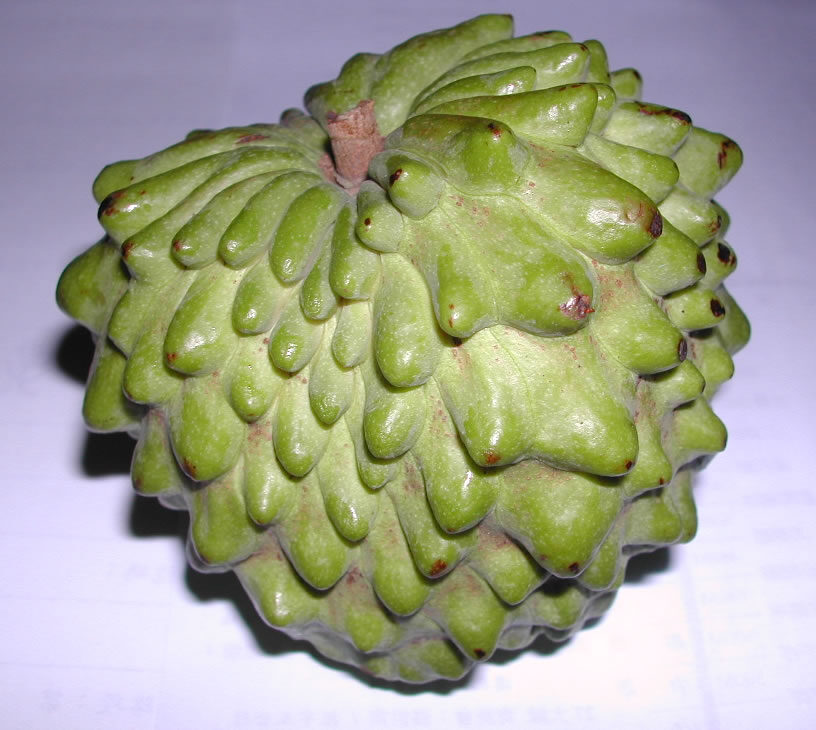
iNaturalist· cc0
no rights reserved
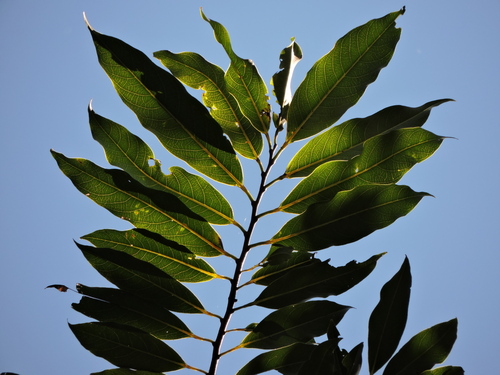
iNaturalist· cc-by-nc
(c) Joni Overbosch, some rights reserved (CC BY-NC), uploaded by Joni Overbosch
iNaturalist· cc-by-nc
(c) Peter Dunwiddie, some rights reserved (CC BY-NC), uploaded by Peter Dunwiddie
Summary
Source: WikipediaMonodora crispata is a species of plant in the family Annonaceae. It is native to Cameroon, Equatorial Guinea, Gabon, Ghana, Guinea, Ivory Coast, Liberia, Nigeria, and Sierra Leone. Heinrich Gustav Adolf Engler, the German botanist who first formally described the species, named it after its curled (crispatus in Latin) petal margins.
Description
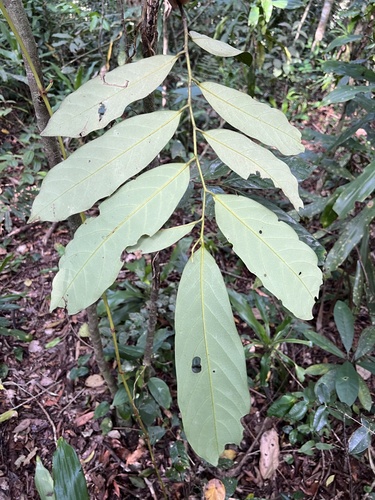
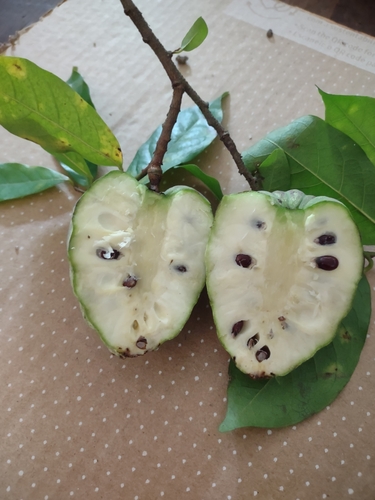
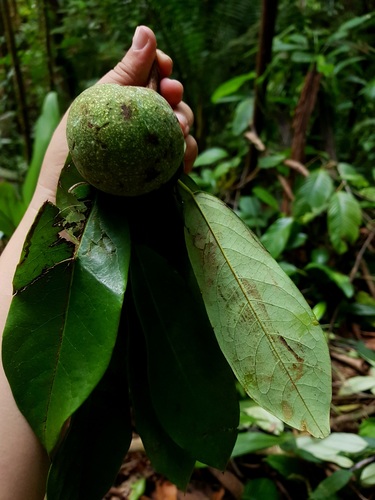
A shrub or tree. It grows 20 m tall. The trunk is 30 cm across. The outer bark is dark brown. The leaves are 5-10 cm long by 3-5 cm wide. The flowers occur singly usually opposite the leaf and they hang down. The fruit are 6-15 cm long by 4-5 cm wide. They have 6-7 ribs. The seeds are 10-13 mm long by 5-9 mm wide. They are in a white pulp.
Edible Uses
It is grown as an ornamental tree. Its wood is used in construction and its seeds have aromatic qualities.There is emerging research about the leaf composition of this tree and other members of the Monodora group. Many close relatives have been researched and found to have medicinal properties, but Monodora crispata does not have many chemicals isolated from it yet. The newest isolated compound from these leaves is (-)-xylopinine.
Traditional Uses
The seeds are used as food flavouring.
This uses section is brief — help expand it
Distribution
It is a tropical plant.
Where It Grows
Africa, Cameroon, Central Africa, Congo R, Nigeria,
References (3)
- Bele, M. Y. et al, 2011, Ethnobotanical survey of the uses of Annonaceae around mount Cameroon. African Journal of Plant Science Vol. 5(4): 237-247. http://www.academicjournals.org/ajps
- Focho, D. A., et al, 2010, An ethnobotanical investigation of the annonaceae on Mount Cameroon. Journal of Medicinal Plants Research 4(20): 2148-2158
- World Checklist of Useful Plant Species 2020. Royal Botanic Gardens, Kew