Annona coriacea
Mart.
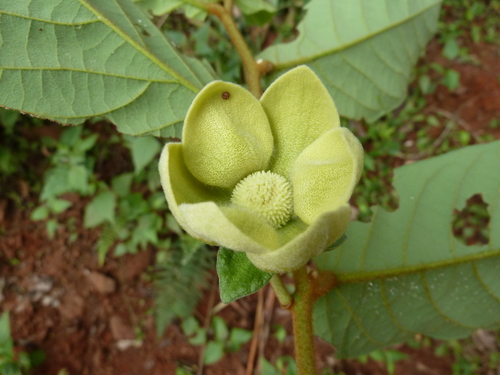
Araticum, Leathery annona
iNaturalist· cc0
no rights reserved, uploaded by Tsssss
iNaturalist· cc0
no rights reserved, uploaded by Tsssss
iNaturalist· cc-by-nc
(c) Ana Julia Peracini, some rights reserved (CC BY-NC), uploaded by Ana Julia Peracini
Summary
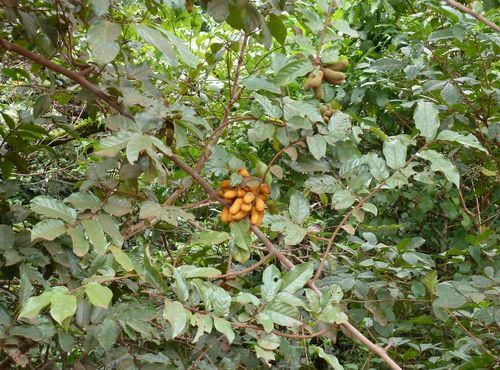
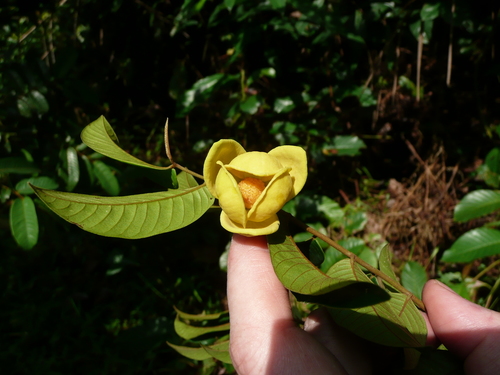
Source: WikipediaAnnona coriacea (araticum in Portuguese) is a fruit tree native to Brazil. Its original habitat includes the ecoregions of Cerrado, Caatinga, and Pantanal. There, it is typically found in scrublands and savannahs, though it is sometimes grown in orchards. Its wood is used in constructions and toys. This plant is cited in Flora Brasiliensis by Carl Friedrich Philipp von Martius. A. coriacea typically reaches 3-6 meters tall and has a globose crown. It has simple leaves and terminal flowers that produce edible fruits, which are densely hairy when young. The heavily fragrant flowers are primarily pollinated by beetles at night. This tree is susceptible to attack by the Mediterranean fruit fly.
Description
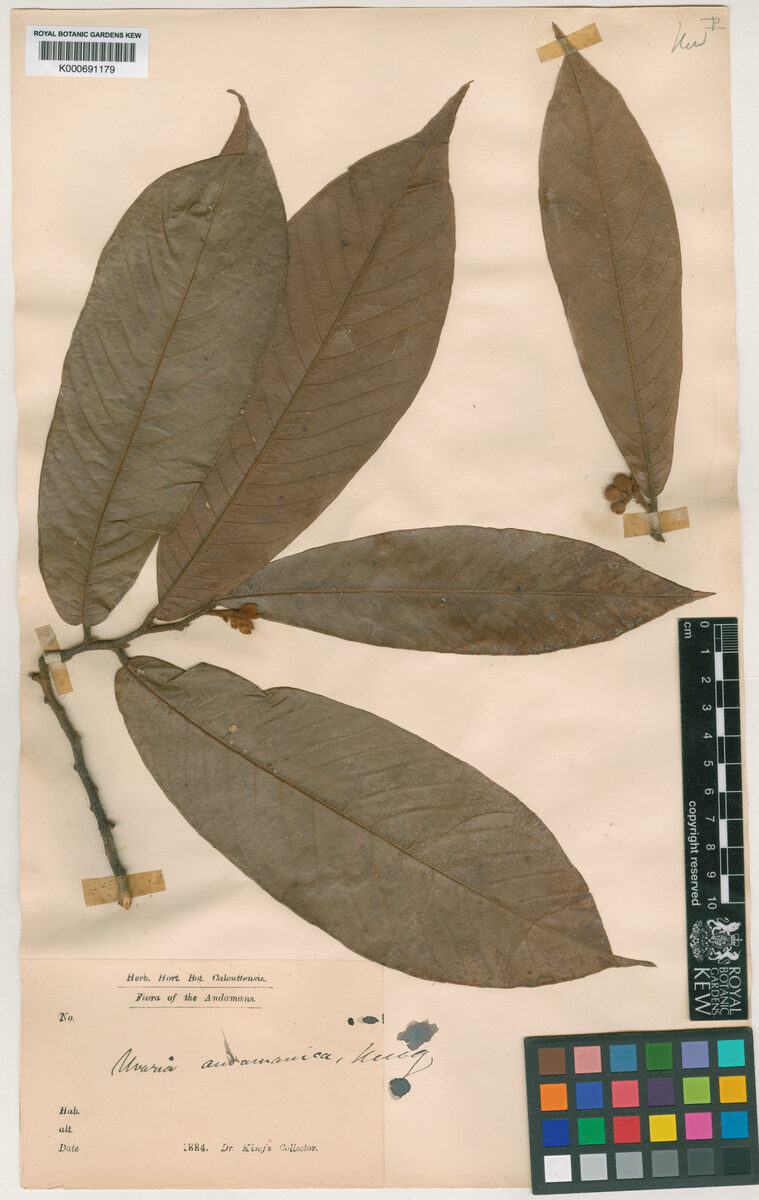
A small tree. It grows 3-6 m high. It can be taller. The trunk is 20-30 cm across. The leaves are simple and leathery. They are softly hairy underneath. The leaves are 9-15 cm long and 7-12 cm wide. The flowers occur singly. The fruit is a multiple fleshy fruit. It is heart shaped and fleshy.
Edible Uses
The fruit are eaten raw or made into juice and used for ice-cream. The fruit must become very ripe before seeds are separated from the pulp.
Traditional Uses
The fruit are eaten raw or made into juice. They are used for ice-cream. Caution: The fruit are somewhat laxative.
This uses section is brief — help expand it
Medicinal Uses
Oil from the leaves is used as medicine.
Known Hazards
The fruit are somewhat laxative.
Distribution
A tropical plant. It grows in Brazil in the savannah. It will grow in poor soils. It will grow in sandy, well-drained soils. It grows from 80-1,120 m above sea level.
Where It Grows
Bolivia*, Brazil*, Paraguay, South America,
Cultivation
The fruit are allowed to become very ripe before the seeds are washed from the pulp. Seeds will not store well for longer than 6 months. The seed should be scratched before sowing to break the hard seed coat. Seeds germinate in 30-60 days. The seedlings need good sun and can be transplanted when 30 cm high.
Propagation
Seed - it has a very hard outer layer and germinates much more easily if scarified. This can usually be done by pouring a small amount of nearly boiling water on the seeds (being careful not to cook them!) and then soaking them for 12 - 24 hours in warm water. By this time they should have imbibed moisture and swollen - if they have not, then carefully make a nick in the seedcoat (being careful not to damage the embryo) and soak for a further 12 hours before sowing. Sow the seeds in a nursery seedbed or in individual containers in a sunny position. Germination rates, even of scarified seeds, are quite low, with the seeds sprouting within 30 - 60 days. Plant out when the seedlings are 30cm tall.
Other Uses
The wood is light in weight, soft, with low mechanical properties but very durable. Easy to work, but it is of low value and is only used for making cheap objects such as packing cases, toys, pencils etc. The plant grows well, even in poor soils, and its edible fruits are also relished by the native fauna. It makes a good species to grow in reforestation projects of reclaimed and protected areas.
Production
The growth rate is slow but it can produce fruit when 2 years old.
Other Information
The fruit are not often eaten.
Notes
The oil from the leaves is used as medicine.
Synonyms
Also Known As
Araticum-de-campo, Araticum-liso, Marolinho, Marolo, Pinha-do-cerrado
References (12)
- Bioversity New World Fruits Database
- Bircher, A. G. & Bircher, W. H., 2000, Encyclopedia of Fruit Trees and Edible Flowering Plants in Egypt and the Subtropics. AUC Press. p 29
- Bortolotto, I. M., et al, 2018, Lista preliminar das plantas alimenticias nativas de Mato Grosso do Sul, Brasil. Iheringia, Serie Botanica, Porto Alegre, 73 (supl.):101-116
- Fl. bras. 13(1):6. 1841
- Grandtner, M. M. & Chevrette, J., 2013, Dictionary of Trees, Volume 2: South America: Nomenclature, Taxonomy and Ecology. Academic Press p 36
Show all 12 references Hide references
- Kermath, B. M., et al, 2014, Food Plants in the Americas: A survey of the domesticated, cultivated and wild plants used for Human food in North, Central and South America and the Caribbean. On line draft. p 68
- Leticia, Z., et al, 2015, Do Socioeconomic characteristics explain the knowledge and use of native food plants in semiarid environments in Northeastern Brazil? Journal of Arid Environments 115:53-61
- Lorenzi, H., 2002, Brazilian Trees. A Guide to the Identification and Cultivation of Brazilian Native Trees. Vol. 01 Nova Odessa, SP, Instituto Plantarum p 30
- Lorenzi, H., Bacher, L., Lacerda, M. & Sartori, S., 2006, Brazilian Fruits & Cultivated Exotics. Sao Paulo, Instituto Plantarum de Estuados da Flora Ltda. p 44
- Maas, P.J. M., et al, 2001, Annonaceae from Central-eastern Brazil. Rodriguesia 52(80): 65-98
- Martin, F. W., et al, 1987, Perennial Edible Fruits of the Tropics. USDA Handbook 642 p 80
- www.colecionandofrutas.org