Centaurea nigra
L.
Black knapweed, Lesser Knapweed
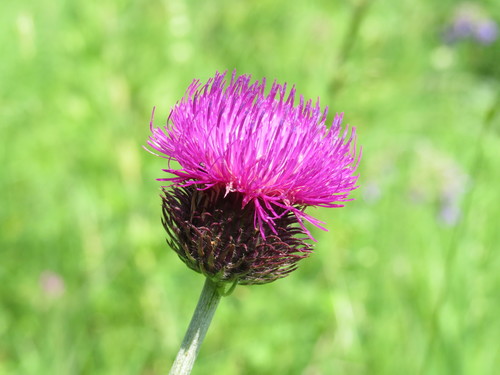
iNaturalist· cc-by-nc
(c) Christina Taylor, some rights reserved (CC BY-NC), uploaded by Christina Taylor
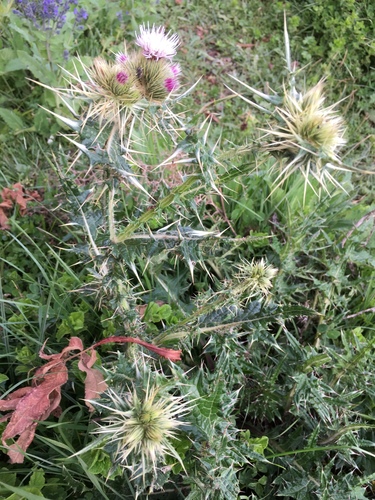
iNaturalist· cc-by-nc
(c) Cody Chapman, some rights reserved (CC BY-NC), uploaded by Cody Chapman
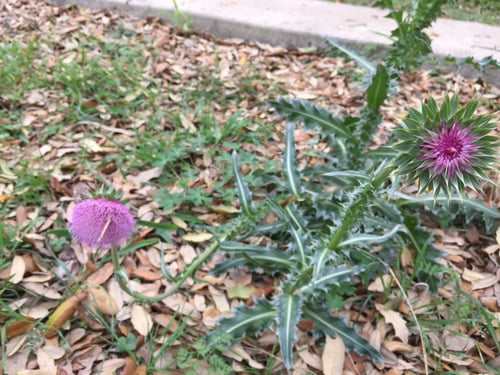
iNaturalist· cc-by
(c) Michael D. Pirie, some rights reserved (CC BY), uploaded by Michael D. Pirie
Summary
Source: WikipediaCentaurea nigra is a species of flowering plant in the family Asteraceae, and is also known as lesser knapweed, common knapweed, black knapweed and bell weed. It is native to central Europe, and has been introduced to temperate North America and Australasia, where it is usually regarded as a noxious weed due to its fast spread, hardiness and competitive potential.
Description
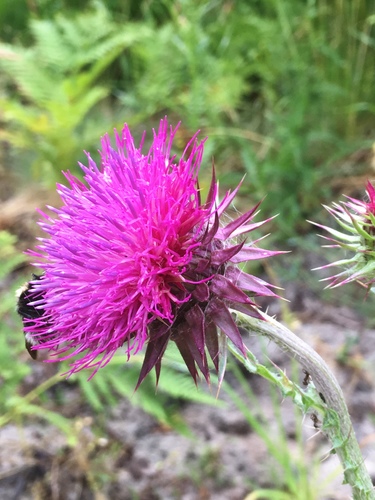
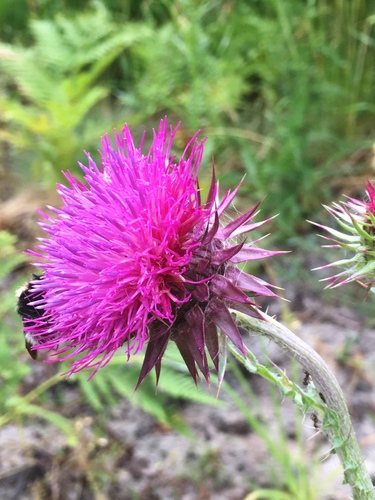
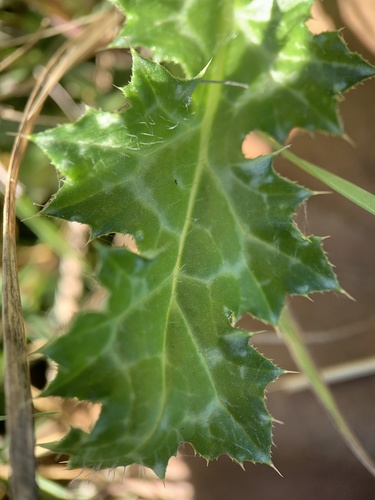
An erect and branching plant that keeps growing from year to year. It grows 1 m high and spreads 50 cm wide. It is hairy and rough to touch. The leaves at the base form a ring and are sword shaped. They have stalks and are usually undivided. The leaves on the stems do not have stalks and are undivided but may have teeth at the base. The flower heads are purple. They have dark brown or black bracts around them. There are comb like sections which cover the base of these bracts.
Edible Uses
The flower petals can be eaten raw and make a colourful addition to salads.
Traditional Uses
The flower petals are used in salads.
This uses section is brief — help expand it
Medicinal Uses
The roots and seeds are diaphoretic, diuretic, tonic, and vulnerary. The plant once held a strong reputation as a wound healer.
Distribution
A temperate plant. It will grows in most soils and under most conditions. It is resistant to drought and frost. Hobart Botanical Gardens. Tasmania Herbarium.
Where It Grows
America, Australia, Britain*, Europe, North America, Tasmania,
Cultivation
Succeeds in ordinary garden soil. Prefers a well-drained fertile soil and a sunny position. Tolerates dry, low fertility and alkaline soils. Established plants are tolerant of considerable neglect, thriving and even self-sowing in dense weed growth. Members of this genus are rarely if ever troubled by browsing deer.
Propagation
Sow seed in April in a cold frame. Once seedlings are large enough to handle, prick them out into individual pots and plant out into permanent positions during the summer. Division in autumn is easy — larger clumps can go directly into permanent positions, while smaller clumps are better potted up and grown on in a cold frame until well rooted, then planted out in summer or the following spring. Divide at least every three years to keep plants vigorous. For basal cuttings in spring, take shoots around 10–15cm long with plenty of underground stem, pot individually, and keep in light shade in a cold frame or greenhouse until rooting well before planting out in summer.
Other Uses
None known.
Notes
There are 400 to 600 Centaurea species.
Also Known As
Hardhead
References (10)
- Bodkin, F., 1991, Encyclopedia Botanica. Cornstalk publishing, p 235
- Curtis, W.M., 1963, The Students Flora of Tasmania Vol 2 p 379
- Facciola, S., 1998, Cornucopia 2: a Source Book of Edible Plants. Kampong Publications, p 35
- Hibbert, M., 2002, The Aussie Plant Finder 2002, Florilegium. p 63
- Lamp, C & Collet F., 1989, Field Guide to Weeds in Australia. Inkata Press. p 61
Show all 10 references Hide references
- Lazarides, M. & Hince, B., 1993, Handbook of Economic Plants of Australia, CSIRO. p 53
- Mabey, R., 1973, Food for Free. A Guide to the edible wild plants of Britain, Collins. p 158
- Sp. pl. 2:911. 1753
- Tasmanian Herbarium Vascular Plants list p 6
- www.wildediblefood.com