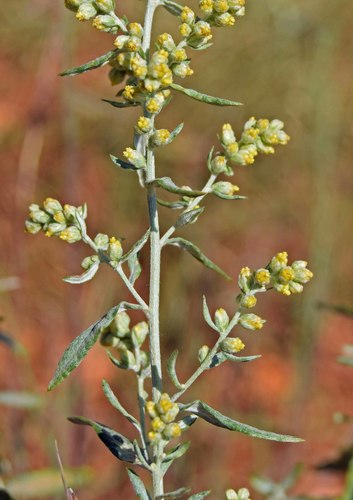
Emilia praetermissa
Milne-Redhead
iNaturalist· cc0
no rights reserved, uploaded by 葉子
iNaturalist· cc-by-nc
(c) Mike Ross, some rights reserved (CC BY-NC)
Description
An erect herb. It grows 1 m high. It grows each year from seed. The lower stem leaves have ear shaped lobes at the base. The leaves are broadly oval and 4-6 cm long by 5-6 cm wide. There are teeth along the edge. The lower leaves have stalks and the upper leaves do not. Leaves get smaller up the stem.
Edible Uses
The leaves are eaten.
Medicinal Uses
Liquid in which the plant has been boiled is used to wash new-born babies. The plant is closely related to Emilia coccinea and, until 1950, was not differentiated from it. The following medicinal uses of E. Coccinea almost certainly also apply here:- The green leaves are crushed and used externally to treat sores, sinusitis and as a poultice for wounds. The leaves are mixed with those of Ipomoea eriocarpa, then soaked in cold water and the resulting infusion used as eye drops. The roots are boiled and the decoction used to treat VD. The roots are also used to treat colic in babies and also as a chest medicine.
Distribution
A tropical plant. It grows in brackish swamps near the coast.
Where It Grows
Africa, Asia, Benin, Nigeria, Sierra Leone, Taiwan, West Africa,
Also Known As
Efonyori, Kipo, Koyagipo
References (6)
- Achigan-Dako, E, et al (Eds), 2009, Catalogue of Traditional Vegetables in Benin. International Foundation for Science.
- Burkill, H. M., 1985, The useful plants of west tropical Africa, Vol. 1. Kew.
- Codjia, J. T. C., et al, 2003, Diversity and local valorisation of vegetal edible products in Benin. Cahiers Agricultures 12:1-12
- Dansi, A., et al, 2008, Traditional leafy vegetables and their use in the Benin Republic. Genet Resour Crop Evol (2008) 55:1239–1256
- World Checklist of Useful Plant Species 2020. Royal Botanic Gardens, Kew
Show all 6 references Hide references
- Zon, A.P.M. van der, Grubben, G.J.H., 1976, Les legumes-feuilles spontanes et cultives du Sud-Dahomey, Communication 65, Royal Tropical Institute, Amsterdam, p 59