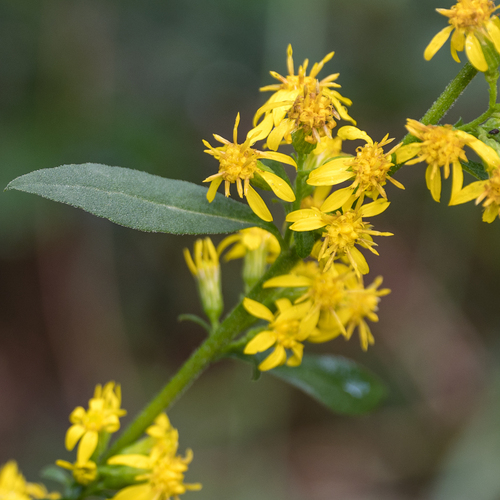
Emilia coccinea
(Sims) G. Don.
Tassel flower
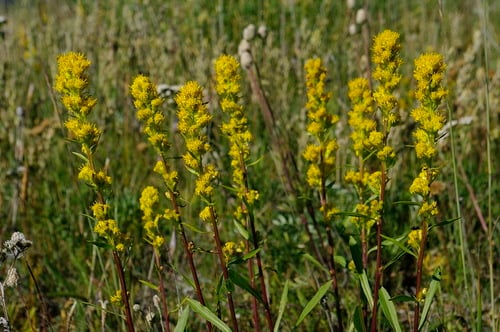
iNaturalist· cc-by
(c) Thomas Liske, some rights reserved (CC BY)
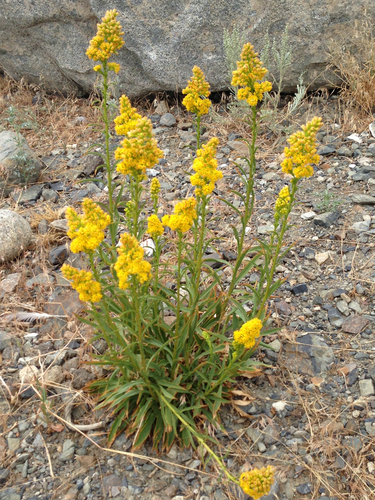
iNaturalist· cc-by-nc
(c) Liz, some rights reserved (CC BY-NC)
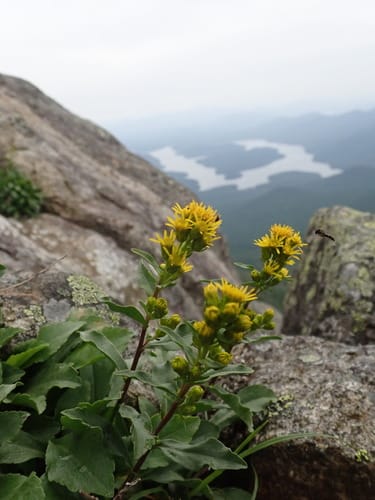
iNaturalist· cc-by-nc
(c) James K. Wetterer, some rights reserved (CC BY-NC)
Summary
A compact annual herb growing 0.6 m tall with a spread of 0.3 m. Flowers July to October, with seeds ripening August to October. Hardy to UK zone 9 but frost-tender. Self-fertile with insect pollination. Adapts to light sandy, medium loamy, and heavy clay soils, preferring good drainage. Tolerates mildly acidic through mildly alkaline pH. Requires full sun and tolerates both dry and moist soils.
Description
A herb. It grows about 30-100 cm high. It has weak stems. They are hairy in the lower parts. The leaves are often purple underneath. The lower leaves are spoon shaped and 12 cm long by 5 cm wide. Higher leaves are 20 cm long by cm wide and do not have a leaf stalk. The flowers can be yellow, orange or red. They are showy and in compact heads. These are on long stalks at the top of the plant. The fruit is dry and 2-5 mm long.
Edible Uses
Leaves - raw or cooked. Added to salads or used as a potherb. The young leaves are chopped and cooked alone or with other vegetables such as peas or beans. Coconut milk is added and the dish is then eaten with a staple food such as rice.
Traditional Uses
The leaves are eaten raw in salads. They are also chopped and cooked. The taste is slightly acid and with a touch of bitterness. They are often mixed with other vegetables.
Medicinal Uses
The plant is said to be used medicinally for children, though no further details are recorded.
Distribution
It is a tropical plant. It is best in humus-rich, moist, well-drained soils. It needs a protected position in part shade. It is damaged by frost or drought. In Tanzania it grows from sea level to 2,000 m above sea level.
Where It Grows
Africa*, Asia, Australia, Benin, Cameroon, Central Africa, Central America, China, Congo, Côte d'Ivoire, Cuba, Dominican Republic, East Africa, Equatorial-Guinea, Europe, Gabon, Ghana, Guinea, Guinée, Guyana, Haiti, Hawaii, India, Indonesia, Ivory Coast, Jamaica, Kenya, Liberia, Malawi, Mali, Mozambique, Nigeria, Pacific, Poland, SE Asia, Sierra Leone, Slovenia, Southern Africa, South America, Sudan, Tanzania, Uganda, West Africa, West Indies, Zambia, Zimbabwe,
Cultivation
Plants can be grown from seeds.
Propagation
Sow seed in early spring in a greenhouse, barely covering it. Prick seedlings out into individual pots when large enough to handle and plant out after the last expected frosts. Seed can also be sown directly outdoors in situ in mid spring.
Other Uses
None known
Production
Leaves are collected during the rainy season.
Other Information
They are not popular. It is only of local importance. They are sometimes sold in local markets.
Notes
There are 24 Emilia species. It is used in medicine. In literature it has often been confused with Emilia lisowskiana.
Nutrition
| Part | Moisture | kJ | kcal | Protein | Vit A | Vit C | Iron | Zinc |
|---|---|---|---|---|---|---|---|---|
| Leaves raw | 79.9 | 268 | 64 | 3.2 | — | — | — | — |
Synonyms
Also Known As
Aninge, Chinguwo, Cupid's paintbrush, Etiologbo, Flora’s paintbrush, Kluapo, Limijang'ombe, Mukasa, Nhatuco, Red thistle, škrlatna emilija, Ulimi wa ngombe
References (27)
- Abbiw, D.K., 1990, Useful Plants of Ghana. West African uses of wild and cultivated plants. Intermediate Technology Publications and the Royal Botanic Gardens, Kew. p 41
- Alyegba, S. S. et al, 2013, Ethnobotanical Survey of Edible Wild Plants in Tiv Communities of Benue State, Nigeria. Journal of Natural Sciences Research. Vol.3, No.7
- Ambasta, S.P. (Ed.), 2000, The Useful Plants of India. CSIR India. p 195 (As Emilia sagittata)
- Bodkin, F., 1991, Encyclopedia Botanica. Cornstalk publishing, p 379
- Boedecker, J., et al, 2014, Dietary contribution of Wild Edible Plants to women’s diets in the buffer zone around the Lama forest, Benin – an underutilized potential. Food Sec. 6:833–849
Show all 27 references Hide references
- Brickell, C. (Ed.), 1999, The Royal Horticultural Society A-Z Encyclopedia of Garden Plants. Convent Garden Books. p 395
- Burkill, H. M., 1985, The useful plants of west tropical Africa, Vol. 2. Kew.
- Codjia, J. T. C., et al, 2003, Diversity and local valorisation of vegetal edible products in Benin. Cahiers Agricultures 12:1-12
- Dalziel, J. M., 1937, The Useful plants of west tropical Africa. Crown Agents for the Colonies London.
- Food Composition Tables for use in Africa FAO http://www.fao.org/infoods/directory No. 822
- Fowler, D. G., 2007, Zambian Plants: Their Vernacular Names and Uses. Kew. p 77
- Grubben, G. J. H. and Denton, O. A. (eds), 2004, Plant Resources of Tropical Africa 2. Vegetables. PROTA, Wageningen, Netherlands. p 292
- Harkonen, M. & Vainio-Mattila, K., 1998, Some examples of Natural Products in the Eastern Arc Mountains. Journal of East African Natural History 87:265-278
- Jardin, C., 1970, List of Foods Used In Africa, FAO Nutrition Information Document Series No 2.p 76
- Martin, F.W. & Ruberte, R.M., 1979, Edible Leaves of the Tropics. Antillian College Press, Mayaguez, Puerto Rico. p 184 (As Emilia sagittata)
- Morley, B. & Everard, B., 1970, Wild Flowers of the World. Ebury press. Plate 65
- Msuya, T. S., et al, 2010, Availability, Preference and Consumption of Indigenous Foods in the Eastern Arc Mountains, Tanzania, Ecology of Food and Nutrition, 49:3, 208-227
- Peters, C. R., O'Brien, E. M., and Drummond, R.B., 1992, Edible Wild plants of Sub-saharan Africa. Kew. p 90
- Plants for a Future database, The Field, Penpol, Lostwithiel, Cornwall, PL22 0NG, UK. http://www.scs.leeds.ac.uk/pfaf/
- Plants of Haiti Smithsonian Institute http://botany.si.edu
- R. Sweet, Hort. brit. ed. 3:382. 1839
- Ruffo, C. K., Birnie, A. & Tengnas, B., 2002, Edible Wild Plants of Tanzania. RELMA p 298
- Seidemann J., 2005, World Spice Plants. Economic Usage, Botany, Taxonomy. Springer. p 146
- Terra, G.J.A., 1973, Tropical Vegetables. Communication 54e Royal Tropical Institute, Amsterdam, p 45 (As Emilia sagittata)
- Vainio-Mattila, K., 2000, Wild vegetables used by the Sambaa in the Usumbara Mountains, NE Tanzania. Ann. Bot. Fennici 37:57-67
- Williamson, J., 2005, Useful Plants of Malawi. 3rd. Edition. Mdadzi Book Trust. p 108
- World Checklist of Useful Plant Species 2020. Royal Botanic Gardens, Kew