Emilia marlothiana
(O. Hoffm.) C. Jeffrey
iNaturalist· cc-by-nc
(c) jambobwana, some rights reserved (CC BY-NC)
iNaturalist· cc-by-nc
(c) Alex Dreyer, some rights reserved (CC BY-NC)
iNaturalist· cc-by-nc
(c) Alex Dreyer, some rights reserved (CC BY-NC)
Description
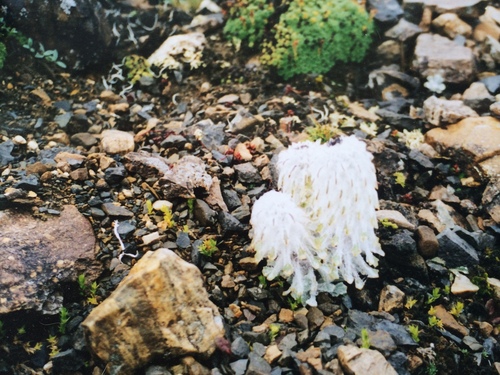
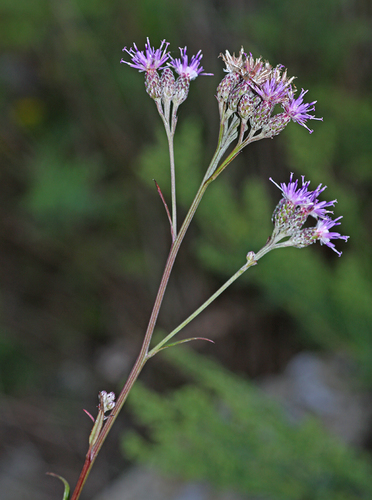
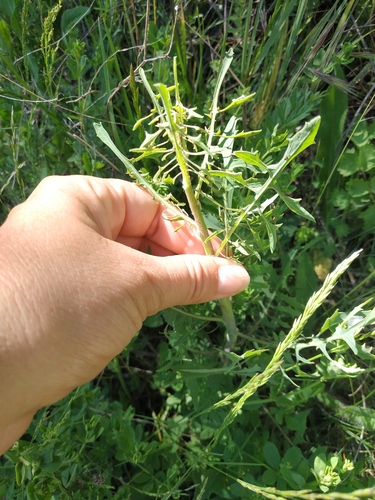
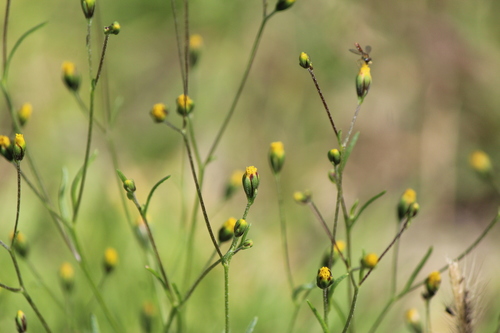
A herb. It is hairy. The leaves are egg shaped. There are teeth along the edge. The flower heads are white to yellow. They occur singly on long stalks 10-25 cm long. The flower heads are cylinder shaped and 1 cm across.
Edible Uses
The roots are dried in the sun, crushed, and added to beer for flavoring.
Traditional Uses
The roots are put in the sun, crushed and then added to beer for flavour.
This uses section is brief — help expand it
Distribution
It is a tropical plant. It grows in the more humid areas of Namibia.
Where It Grows
Africa, Namibia, Southern Africa,
Synonyms
Also Known As
Ga gaub
References (4)
- Ruiters-Welcome, A. K., 2019, Food plants of southern Africa. Ph.D. thesis. Univ. of Johannesburg p 34
- Van Damme, P et al, 1922, Plant Uses by the Topnaar of the Kuiseb Valley Namib Desert. Afrika Focus Vol. 8(3-4):223-252 (As Senecio marlothianus)
- Welcome, A. K. & Van Wyk, B.-E., 2019, An inventory and analysis of the food plants of southern Africa. South African Journal of Botany 122 (2019) 136–179
- World Checklist of Useful Plant Species 2020. Royal Botanic Gardens, Kew