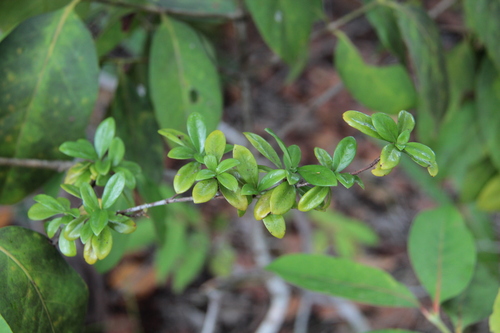
Benkara malabarica
(Lam.) Tirveng.
Malabar benkara
iNaturalist· cc-by
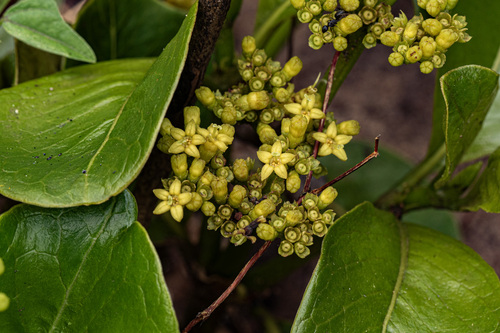
(c) Siddarth Machado, some rights reserved (CC BY), uploaded by Siddarth Machado
iNaturalist· cc-by
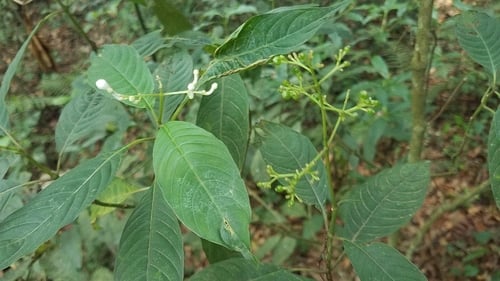
(c) Hopeland, some rights reserved (CC BY)
Summary
Source: WikipediaBenkara malabarica is a shrub found in India and Sri Lanka. Simple or branched thorns are seen on the stem. The leaves are simple, opposite, and decussate. It has creamy white flowers, and the fruit is a berry containing multiple seeds.
Description
A shrub or small tree. It grows 2-3 m tall. The stems have short thorns. These can be simple or branched. The bark is grey. The leaves are simple and overlap at the base. They are broadly oval and 7 cm long. They are leathery. The flowers are in the axils of leaves. They are white and have a corolla tube with a ring of hairs inside. They have a scent. The fruit is a round, red berry.
Edible Uses
The flowers are washed and stir-fried in oil and spices. The fruit is also eaten.
Traditional Uses
The flowers are washed and then stir-fried in oil and spices.
This uses section is brief — help expand it
Medicinal Uses
The flowers are traditionally prepared by washing before cooking.
Distribution
It is a tropical plant. It grows in semi-evergreen forests up to 600 m above sea level.
Where It Grows
Asia, India, Indonesia, SE Asia, Sri Lanka,
Cultivation
Plants can be grown from seeds.
Synonyms
Also Known As
Perdu benkara, Pudan sirukarai, Tella mullu chettu
References (3)
- Chauhan, S. H., et al, 2018, Consumption patterns of wild edibles by the Vasavas: a case study from Gujarat, India. Journal of Ethnobiology and Ethnomedicine (2018) 14:57 (As Benkara pundulacakai)
- Reddy, K. N. et al, 2007, Traditional knowledge on wild food plants in Andhra Pradesh. Indian Journal of Traditional Knowledge. Vol. 6(1): 223-229 (As Benkera)
- Sukarya, D. G., (Ed.) 2013, 3,500 Plant Species of the Botanic Gardens of Indonesia. LIPI p 590