Dalbergia melanoxylon
Guill. & Perr.
African blackwood
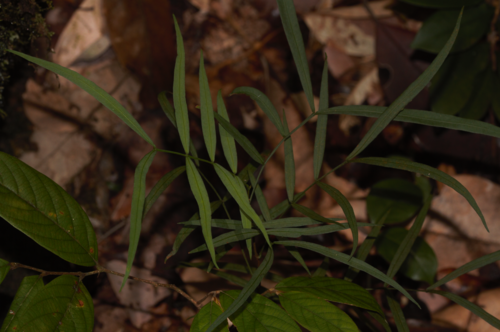
iNaturalist· cc-by-nc-sa
(c) Marco Schmidt, some rights reserved (CC BY-NC-SA)
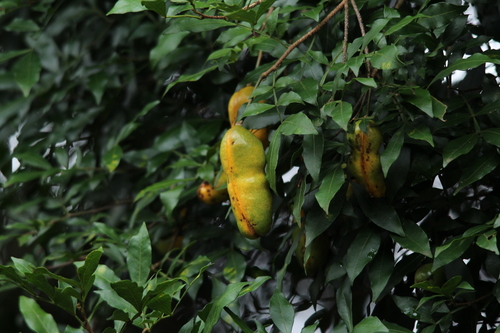
iNaturalist· cc-by-nc
(c) Duncan McKenzie, some rights reserved (CC BY-NC), uploaded by Duncan McKenzie
iNaturalist· cc-by-nc
(c) David Renoult, some rights reserved (CC BY-NC), uploaded by David Renoult
Summary
Source: WikipediaDalbergia melanoxylon (African blackwood, grenadilla, or mpingo) in French Grenadille d'Afrique is a flowering plant in the subfamily Faboideae of the family Fabaceae, native to seasonally dry regions of Africa from Senegal east to Eritrea, to southern regions of Tanzania to Mozambique and south to the north-eastern parts of South Africa. The tree is an important timber species in its native areas; it is used in the manufacture of musical instruments, sculptures vinyago in Swahili language and fine furniture. Populations and genomic resources for genetic biodiversity maintenance in parts of its native range are threatened by overharvesting due to poor or absent conservation planning and by the species' low germination rates. African blackwood is a small tree, reaching 4–15 m tall, with grey bark and spiny shoots. The leaves are deciduous in the dry season, alternate, 6–22 cm long, pinnately compound, with 6–9 alternately arranged leaflets. The flowers are white and produced in dense clusters. The fruit is a pod 3–7 cm long, containing one to two seeds. It is often cited as one of the most expensive woods in the world.
Description
A climber. It can be a shrub or straggling tree. It grows 10 m high. It has many branches and many spines. The crown is irregular. The bark is rough and grey. It flakes off in small scales. The leaves are 8-20 cm long. There are 6-12 leaflets. The are 1-4 cm long by 1-3 cm wide and almost round. The group of flowers are in the axils of leaves or at the ends of branches. They can be 8 cm long. The flowers are white and have a sweet scent. They are small. The fruit is a 1-3 seeded pod. It is 3-7 cm long by 1-2 cm wide. It is thin and stiff and has lumps over the seeds. There are 8-10 seeds. They are 7-8 mm long by 1.5 mm wide. They are reddish-brown and glossy.
Edible Uses
No edible uses are known for this plant.
Medicinal Uses
The roots are said to be anthelmintic and aphrodisiac. A decoction is used to prevent miscarriage and to treat abdominal pain, diarrhoea, gonorrhoea, and syphilis. Wood smoke is inhaled to treat headaches, colds, and bronchitis. The stem and root bark is used in traditional medicine to treat diarrhoea, often in combination with baobab or tamarind fruits, and a bark decoction or bark powder is used to clean wounds. A leaf decoction is used to relieve joint pain, and the leaf sap is taken to treat inflammations of the mouth and throat. Bark extracts have demonstrated antibacterial and antifungal activity, supporting the traditional use of the bark for wound cleansing.
Distribution
A tropical plant. It grows at low altitude in seasonally dry mixed woodland. It grows in Miombo woodland. It grows up to 1,450 m altitude. It is rare in Swaziland. It often grows on termite mounds. In XTBG Yunnan.
Where It Grows
Africa, Angola, Asia, Botswana, Burkina Faso, Cameroon, Central Africa, Chad, China, East Africa, Eritrea, Eswatini, Ethiopia, Guinea, Guinée, India, Indochina, Malawi, Mali, Mozambique, Namibia, Sahel, SE Asia, Senegal, South Africa, Southern Africa, South Sudan, Swaziland, Tanzania, Togo, Vietnam, West Africa, Zambia, Zimbabwe,
Cultivation
A plant of low to moderate elevations in the tropics, being found at elevations from sea level to 1,200 metres. It grows in areas where the mean annual temperature is in the range 18 - 35°c and the mean annual rainfall is 700 - 1,200 mm. Succeeds in a variety of soils, from loamy sands to clayey Vertisols (black cotton soils). This species demands water and light and therefore is common near water and will not regenerate under heavy cover. When introduced into India and Australia, the plant became naturalized. In western Australia it behaved as a very aggressive weed and was quickly eradicated. The species is extremely slow growing. Seven year old trees are only up to 4 metres tall and it takes 70 - 100 years for trees to attain timber size. Trees coppice successfully and also produce root suckers. Trees generally exhibit heavy annual seed production. Mature trees are fire tolerant. This species has a symbiotic relationship with certain soil bacteria, these bacteria form nodules on the roots and fix atmospheric nitrogen. Some of this nitrogen is utilized by the growing plant but some can also be used by other plants growing nearby. Small growers in Naples, Florida have been successful in growing African blackwood there. Growth habit in Florida yields taller, larger trees, and the rich soil combined with ample nutrients and long growing season yields timber of superior quality at more sustainable rates.
Propagation
Seeds extracted from pods germinate readily without pre-treatment. Keep them in shade for 2 weeks after sowing, then move to full sun. Germination occurs 8–20 days after sowing at a rate of 50–60%, though soaking in water before sowing will accelerate this. Experimental work in Tanzania indicates that survival and growth are improved by planting 2-year-old stumps 14 cm long — comprising 12 cm of root and 2 cm of shoot — in the early to middle part of the rainy season, followed by intensive weeding. Potted seedlings can also be used but tend to grow more slowly; when raising seedlings in pots, frequent root pruning is essential, as delayed pruning leads to seedling shock. Seeds dried for storage may benefit from scarification — pour a small amount of nearly boiling water over the seed, soak in warm water for 12–24 hours, and nick the seedcoat if the seed has not swollen, then soak for a further 12 hours before sowing. Seed storage behaviour is orthodox; viability can be maintained for several years in hermetic storage at 3°C with 9–12% moisture content.
Other Uses
The tree provides good mulch and may improve soil through nitrogen fixation. Its extensive root system helps prevent soil erosion, and it is useful in windbreaks and live fences. The heartwood is purplish black — sometimes darker towards the outside with light streaks — and is sharply demarcated from a band of white or yellowish-white sapwood up to 12 cm wide. The timber is slightly oily, exceptionally hard, very heavy, brittle, and somewhat fissile. The heartwood is extremely durable and resistant to all forms of biological deterioration, while the sapwood is susceptible to fungal and insect attack. Dry wood is difficult to saw or plane, blunts cutting tools, and cannot be nailed or screwed without pre-drilling, but it is among the finest of all turnery timbers — cutting precisely and finishing to a brilliantly polished, lustrous, dry surface. Products include carvings, turnery, and marquetry used in sculptures, musical instruments, ornaments, inlays, chess pieces, walking sticks, bearings, and many other items. Its primary industrial use, long the basis of an export trade from East Africa and Mozambique, is the manufacture of woodwind instruments; the wood's high density and fine texture produce a beautiful musical tone, it is stable, withstands metalwork processes, and takes an excellent finish. The wood is also used as fuel and for charcoal production, with a calorific value exceeding 49,000 kcal/kg — heat generation is so high that fires of this species have been reported to melt cooking utensils.
Production
Trees are 4 m high after 7 years.
Notes
The wood is important for carvings and instruments. This tree legume forms nodules.
Synonyms
Also Known As
Kansalu-salu, Mpingo, M'pivi, Mukulete, Pau-preto, Phingo, Rubo, Zebra-wood
References (11)
- Baidu-Forson, J.J., et al ,2014,. Assessment of agrobiodiversity resources in the Borotse flood plain, Zambia. CGIAR Research Program on Aquatic Agricultural Systems. Penang, Malaysia. Working Paper: AAS-2014-12.
- Ballal, M. E., et al, 2014, Ethno-botany of Natural Forests of Nuba Mountains, South Kordofan State, Sudan. Journal of Forest Poducts & Industries. 3(1):13-19
- East African herbarium records, 1981,
- Flora Zambesiaca. http://apps.kew.org/efloras
- Fowler, D. G., 2007, Zambian Plants: Their Vernacular Names and Uses. Kew. p 36
Show all 11 references Hide references
- Maydell, H. von, 1990, Trees and shrubs of the Sahel: their characteristics and uses. Margraf. p 249
- Njana, M. A., et al, 2013, Are miombo woodlands vital to livelihoods of rural households? Evidence from Urumwa and surrounding communities, Tabora, Tanzania. Forests, Trees and Livelihoods, 22:2, 124-140
- Peters, C. R., O'Brien, E. M., and Drummond, R.B., 1992, Edible Wild plants of Sub-saharan Africa. Kew. p 133
- Swaziland's Flora Database http://www.sntc.org.sz/flora
- Storrs, A. E. C., 1995 reprint, Know Your Trees. Some Common Trees found in Zambia, Forestry Division. Regional Soil Conservation Unit, Nairobi, p 53
- World Checklist of Useful Plant Species 2020. Royal Botanic Gardens, Kew