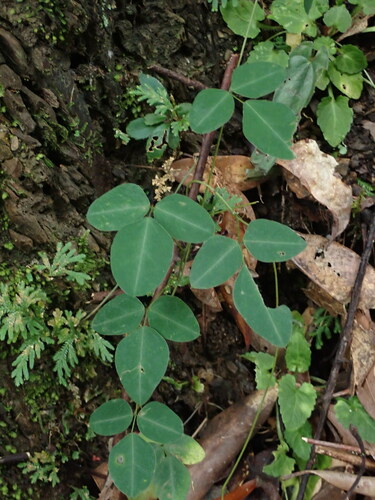
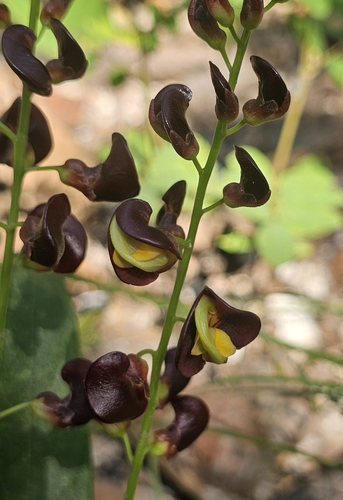
Dalbergia latifolia
Roxb.
Rosewood
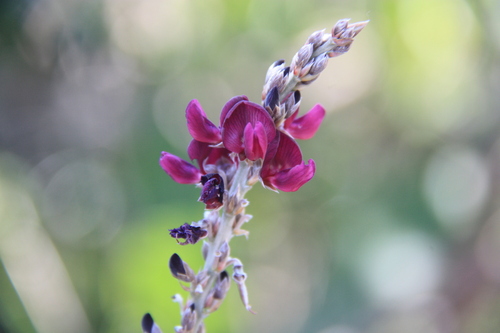
iNaturalist· cc-by-nc
(c) Shiwalee Samant, some rights reserved (CC BY-NC), uploaded by Shiwalee Samant
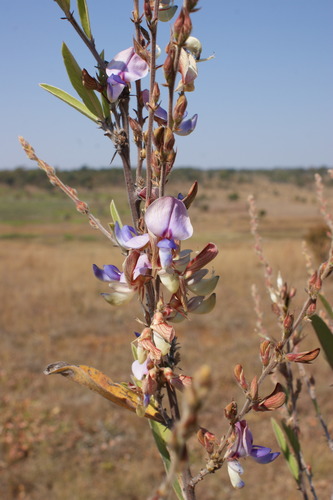
iNaturalist· cc-by-nc
(c) SunGW, some rights reserved (CC BY-NC), uploaded by SunGW
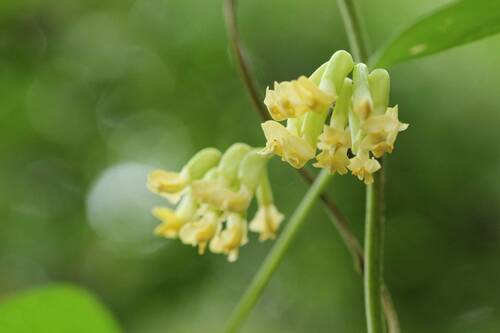
iNaturalist· cc-by
(c) Siddarth Machado, some rights reserved (CC BY), uploaded by Siddarth Machado
Summary
Source: WikipediaDalbergia latifolia (synonym Dalbergia emarginata) is a premier timber species, also known as the Indian rosewood (Tamil / தமிழ்: Eetti / ஈட்டி) (Telugu / తెలుగు: Irugudu/ ఇరుగుడు). It is native to low-elevation tropical monsoon forests of south east India. Some common names in English include rosewood, Bombay blackwood, roseta rosewood, East Indian rosewood, reddish-brown rosewood, Indian palisandre, and Java palisandre. Its Indian common names are beete, and satisal or sitsal. The tree grows to 40 metres (130 ft) in height and is evergreen, but locally deciduous in drier subpopulations.
Description
A deciduous tree reaching 30 m tall and wide at medium growth rate, hardy to UK zone 10. Produces bee-pollinated flowers and fixes nitrogen. Grows in light sandy, medium loamy, and heavy clay soils with good drainage, tolerating mildly acid to very alkaline and saline conditions. Requires full sun, prefers moist soil but tolerates drought, and withstands strong winds but not coastal exposure.
Edible Uses
No edible uses are known for this plant.
Medicinal Uses
The bark is used in traditional medicine in India to treat diarrhoea, indigestion, and leprosy, and as a vermifuge.
Distribution
It is a tropical plant.
Where It Grows
Asia, India, Nepal,
Cultivation
A species of tropical, lowland monsoonal areas, it has been successfully cultivated at elevations up to 1,000 metres. The annual rainfall in its natural habitat ranges from 750 - 5,000 mm. The tree thrives in areas with up to 6 dry months with mean monthly rainfall of less than 40 mm. It tolerates minimum temperatures as low as 0 - 6°c. Grows best on deep, well-drained, moist soils. The species thrives in a variety of soil conditions including alluvial, lateritic and gneissic soils and broken rock. Requires a sunny position. A moderate light demander, seedlings can withstand moderate shade. In too open locations trees tend to become crooked and branchy. Older trees are very drought resistant. Rotations of between 60 - 150 years are required for the production of high-grade timber. Seedlings of Dalbergia latifolia have a strong taproot and are practically devoid of any secondary roots when young. Initial growth of the seedlings is slow. Nodules which are the result of symbiosis with nitrogen-fixing bacteria are already found on the roots of seedlings. Young trees are also relatively slow growing, but reported growth rates differ considerably. In Java (Indonesia) an annual height growth of 2 metres and an annual volume increment of 15 cubic metres/ha have been recorded for young plantations on favourable sites, but in India 10-year-old stands had an average height of 6 metres with a bole diameter of 4 - 5 cm. In India the average age of reaching a diameter of 60 cm has been estimated at no less than 240 years!. The root system of older trees is well developed with deep tap roots and long lateral roots. When near the soil surface, the roots can produce suckers, many of which develop into trees. Trees can be coppiced and pollarded. Two varieties are recognised in Java:- 'Sonokeling' This is the native variety, it is straight-stemmed and used in agroforestry. It seldom produces seeds and is reproduced by suckers. 'Sonobrits' This is the naturalised variety of Indian origin, it produces seed yearly. The tree is crooked-stemmed, fast growing and is used in land rehabilitation. The wood of sonobrits is less valuable because of crooked form and a more dull colour.. This species has a symbiotic relationship with certain soil bacteria, these bacteria form nodules on the roots and fix atmospheric nitrogen. Some of this nitrogen is utilized by the growing plant but some can also be used by other plants growing nearby.
Propagation
Seed can be sown in situ. Fresh seed has no dormancy and pre-treatment is not required, though pre-soaking in water for 12–24 hours accelerates germination. Fresh seed germinates in 7–25 days at a rate of 45–80%. For nursery production, sow in well-raised seedbeds of porous sandy loam or in polythene bags. Seeds that have been dried for storage may benefit from scarification — pour a small amount of nearly boiling water over the seed, then soak in warm water for 12–24 hours. If the seed has not swollen by then, carefully nick the seedcoat without damaging the embryo and soak for a further 12 hours before sowing. Seeds remain viable for up to 6 months. Under natural conditions, regeneration is generally satisfactory, with seeds germinating at the start of the rainy season, though seedlings should be protected from fire and grazing. Propagation is also possible from root suckers of 1–2.5 cm diameter, and from root and stem cuttings. Buds of root suckers and stem cuttings begin to sprout around 9 days after planting; root cuttings take about 15 days, but after 2 months all young plants reach approximately the same height.
Other Uses
In agroforestry, the tree is used as a shade tree in India and Indonesia, for reforestation of eroded soils, and as a soil improver — fixing nitrogen and providing mulch. It is planted as a roadside tree and as shade in coffee plantations. During the first three years, trees are interplanted with rice, maize, beans, or cassava; once canopies begin to close, shade-tolerant crops such as coffee, turmeric, and ginger are grown beneath. In other systems it is combined with fruit trees including mango, annona, jackfruit, and guava. The heartwood ranges from rose to dark brown with darker purple-black lines, or deep purple with black lines — the darker streaks giving the timber an attractive figure. It is clearly demarcated from the yellowish or pale yellowish-white sapwood, which often has a purple tinge. The wood is light in weight, close, and firm, with exceptional dimensional stability and good shape retention after seasoning. It is somewhat difficult to work by hand but machines well, planing to a smooth surface; turning, screwing, polishing, and gluing all give good results, and it can be peeled or sliced into decorative veneer and plywood. The heartwood is durable, resistant to dry-wood termites and wood-rotting fungi, though difficult to treat with preservatives. The sapwood is perishable but readily treatable. Uses include fine furniture, cabinet making, decorative panelling for passenger ships, instrument cases, musical instruments, turnery, flooring, decorative veneers, high-grade plywood, doors, window frames, and wagon building. It is used for handles of heavy-duty hammers and axes, and for agricultural implements such as ploughs, harrows, and rollers. In cart and carriage building it provides wheel rims, spokes, poles, and shafts. It is among the most popular woods for carving and engraving, and is excellent for bentwood furniture, walking sticks, and umbrella handles.
Synonyms
Also Known As
Satisal, Sisam
References (1)
- Kuhnlein, H. V., et al, 2009, Indigenous Peoples' food systems. FAO Rome p 213